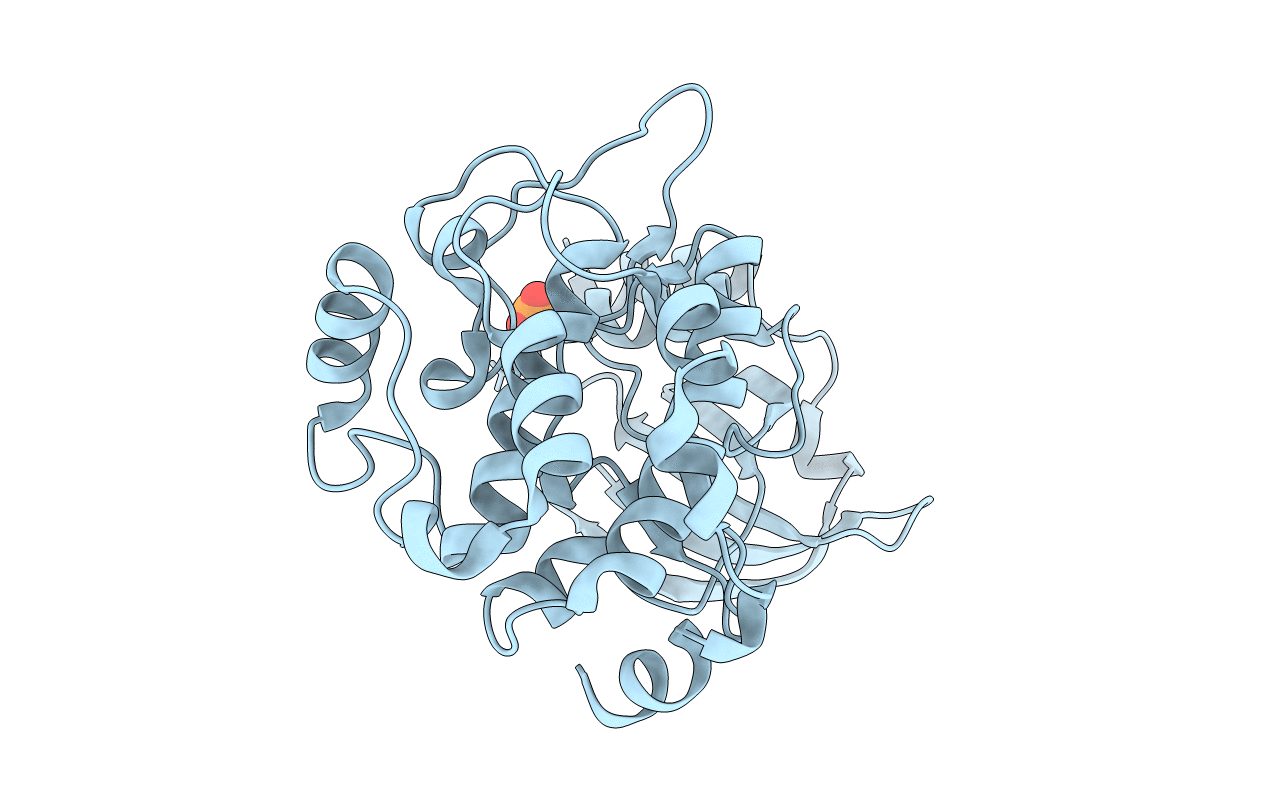
2C30 image
Deposition Date 2005-10-02
Release Date 2006-02-08
Last Version Date 2024-10-23
Entry Detail
PDB ID:
2C30
Keywords:
Title:
Crystal Structure Of The Human P21-Activated Kinase 6
Biological Source:
Source Organism:
HOMO SAPIENS (Taxon ID: 9606)
Host Organism:
Method Details:
Experimental Method:
Resolution:
1.60 Å
R-Value Free:
0.22
R-Value Work:
0.19
R-Value Observed:
0.19
Space Group:
P 21 21 21
Macromolecular Entities
Structures with similar UniProt ID
Protein Blast
Polymer Type:polypeptide(L)
Molecule:SERINE/THREONINE-PROTEIN KINASE PAK 6
Gene (Uniprot):PAK6
Chain IDs:A
Chain Length:321
Number of Molecules:1
Biological Source:HOMO SAPIENS
Modified Residue
Compound ID Chain ID Parent Comp ID Details 2D Image
SEP A SER PHOSPHOSERINE
Primary Citation
Crystal Structures of the P21-Activated Kinases Pak4, Pak5, and Pak6 Reveal Catalytic Domain Plasticity of Active Group II Paks.
Structure 15 201 ? (2007)
PMID: 17292838 DOI: 10.1016/J.STR.2007.01.001

Abstact

p21-activated kinases have been classified into two groups based on their domain architecture. Group II PAKs (PAK4-6) regulate a wide variety of cellular functions, and PAK deregulation has been linked to tumor development. Structural comparison of five high-resolution structures comprising all active, monophosphorylated group II catalytic domains revealed a surprising degree of domain plasticity, including a number of catalytically productive and nonproductive conformers. Rearrangements of helix alphaC, a key regulatory element of kinase function, resulted in an additional helical turn at the alphaC N terminus and a distortion of its C terminus, a movement hitherto unseen in protein kinases. The observed structural changes led to the formation of interactions between conserved residues that structurally link the glycine-rich loop, alphaC, and the activation segment and firmly anchor alphaC in an active conformation. Inhibitor screening identified six potent PAK inhibitors from which a tri-substituted purine inhibitor was cocrystallized with PAK4 and PAK5.

Legend

Protein

Chemical

Disease

Primary Citation of related structures
Feedback Form
Name
Email
Institute
Feedback