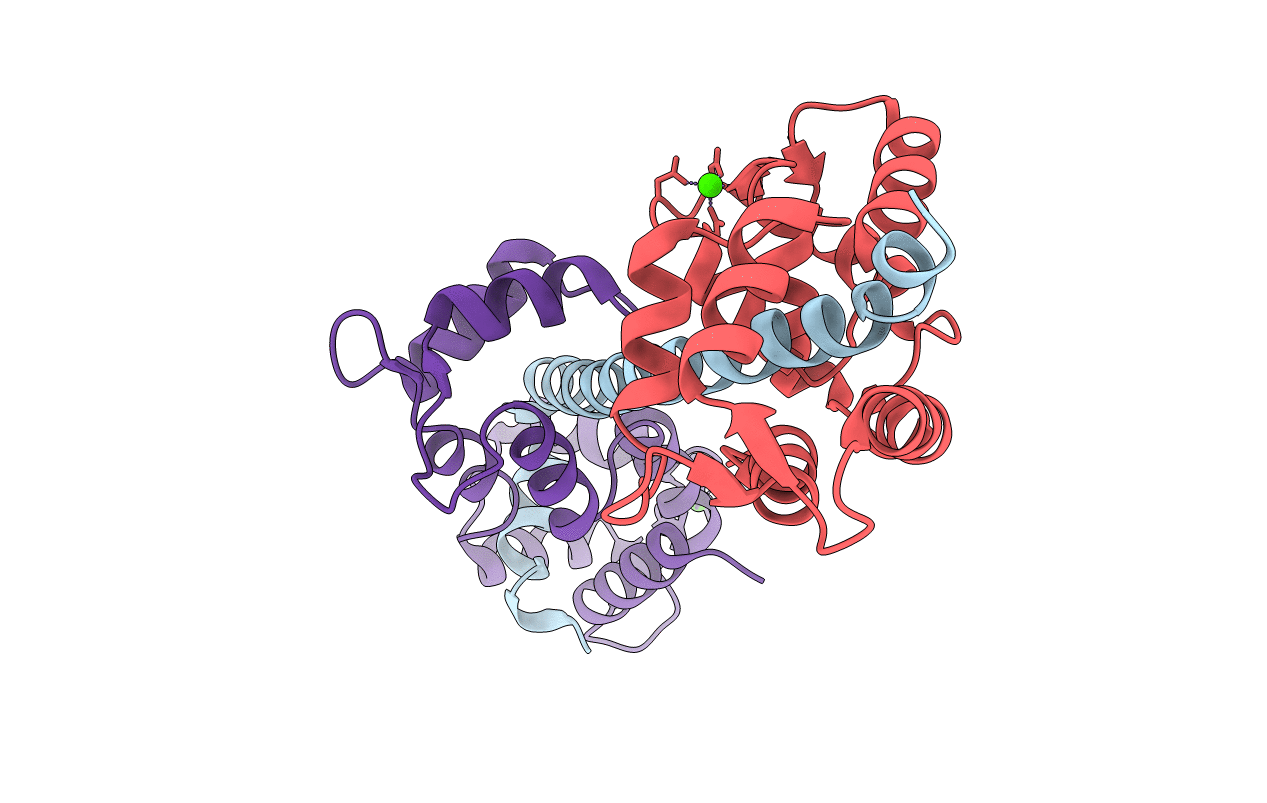
2BL0 image
Deposition Date 2005-02-23
Release Date 2005-10-13
Last Version Date 2024-05-08
Entry Detail
PDB ID:
2BL0
Keywords:
Title:
Physarum polycephalum myosin II regulatory domain
Biological Source:
Source Organism:
Host Organism:
Method Details:
Experimental Method:
Resolution:
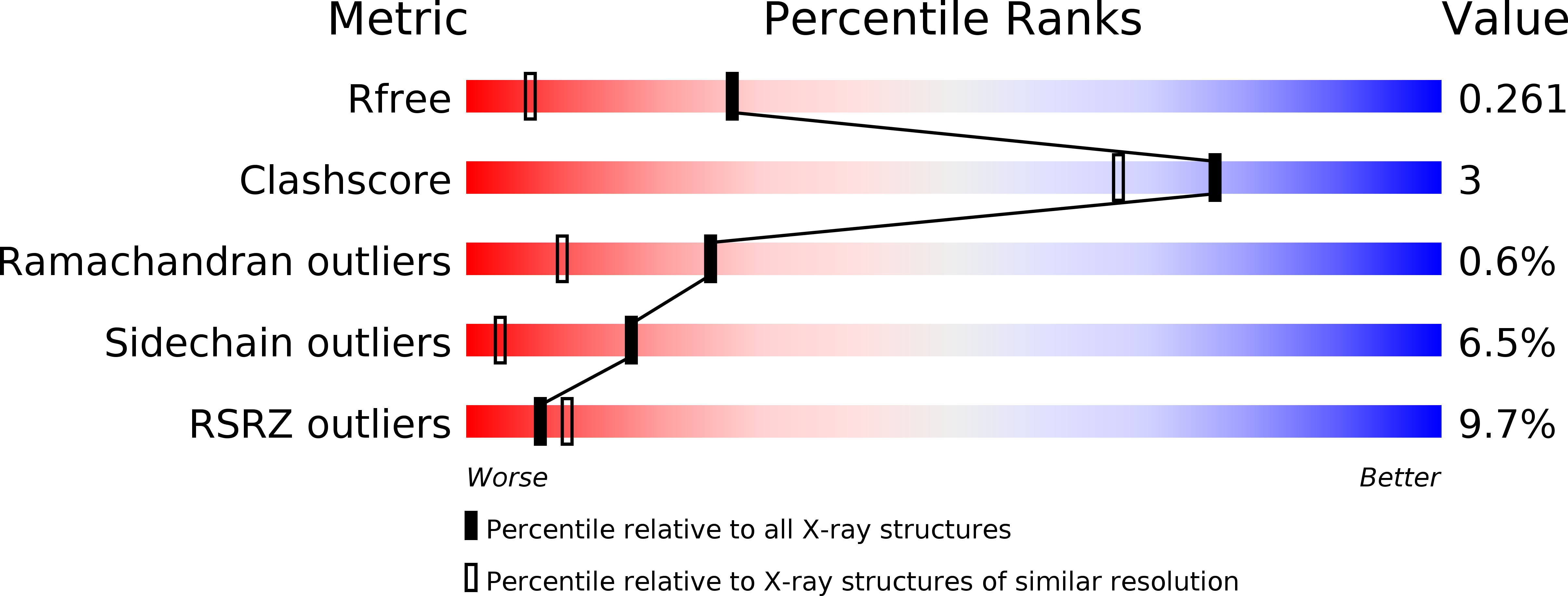
1.75 Å
R-Value Free:
0.25
R-Value Work:
0.21
R-Value Observed:
0.22
Space Group:
P 21 21 21
Macromolecular Entities
Structures with similar UniProt ID
Protein Blast
Polymer Type:polypeptide(L)
Molecule:MAJOR PLASMODIAL MYOSIN HEAVY CHAIN
Gene (Uniprot):mynP1
Chain IDs:A
Chain Length:63
Number of Molecules:1
Biological Source:PHYSARUM POLYCEPHALUM
Structures with similar UniProt ID
Protein Blast
Polymer Type:polypeptide(L)
Molecule:MYOSIN REGULATORY LIGHT CHAIN
Chain IDs:B
Chain Length:145
Number of Molecules:1
Biological Source:PHYSARUM POLYCEPHALUM
Structures with similar UniProt ID
Protein Blast
Polymer Type:polypeptide(L)
Molecule:MYOSIN REGULATORY LIGHT CHAIN
Gene (Uniprot):RMLC
Chain IDs:C
Chain Length:142
Number of Molecules:1
Biological Source:PHYSARUM POLYCEPHALUM
Ligand Molecules
Primary Citation
Structural Evidence for Non-Canonical Binding of Ca2+ to a Canonical EF-Hand of a Conventional Myosin.
J.Biol.Chem. 280 41458 ? (2005)
PMID: 16227209 DOI: 10.1074/JBC.M506315200

Abstact

We have previously identified a single inhibitory Ca2+-binding site in the first EF-hand of the essential light chain of Physarum conventional myosin (Farkas, L., Malnasi-Csizmadia, A., Nakamura, A., Kohama, K., and Nyitray, L. (2003) J. Biol. Chem. 278, 27399-27405). As a general rule, conformation of the EF-hand-containing domains in the calmodulin family is "closed" in the absence and "open" in the presence of bound cations; a notable exception is the unusual Ca2+-bound closed domain in the essential light chain of the Ca2+-activated scallop muscle myosin. Here we have reported the 1.8 A resolution structure of the regulatory domain (RD) of Physarum myosin II in which Ca2+ is bound to a canonical EF-hand that is also in a closed state. The 12th position of the EF-hand loop, which normally provides a bidentate ligand for Ca2+ in the open state, is too far in the structure to participate in coordination of the ion. The structure includes a second Ca2+ that only mediates crystal contacts. To reveal the mechanism behind the regulatory effect of Ca2+, we compared conformational flexibilities of the liganded and unliganded RD. Our working hypothesis, i.e. the modulatory effect of Ca2+ on conformational flexibility of RD, is in line with the observed suppression of hydrogen-deuterium exchange rate in the Ca2+-bound form, as well as with results of molecular dynamics calculations. Based on this evidence, we concluded that Ca2+-induced change in structural dynamics of RD is a major factor in Ca2+-mediated regulation of Physarum myosin II activity.

Legend

Protein

Chemical

Disease

Primary Citation of related structures
Feedback Form
Name
Email
Institute
Feedback