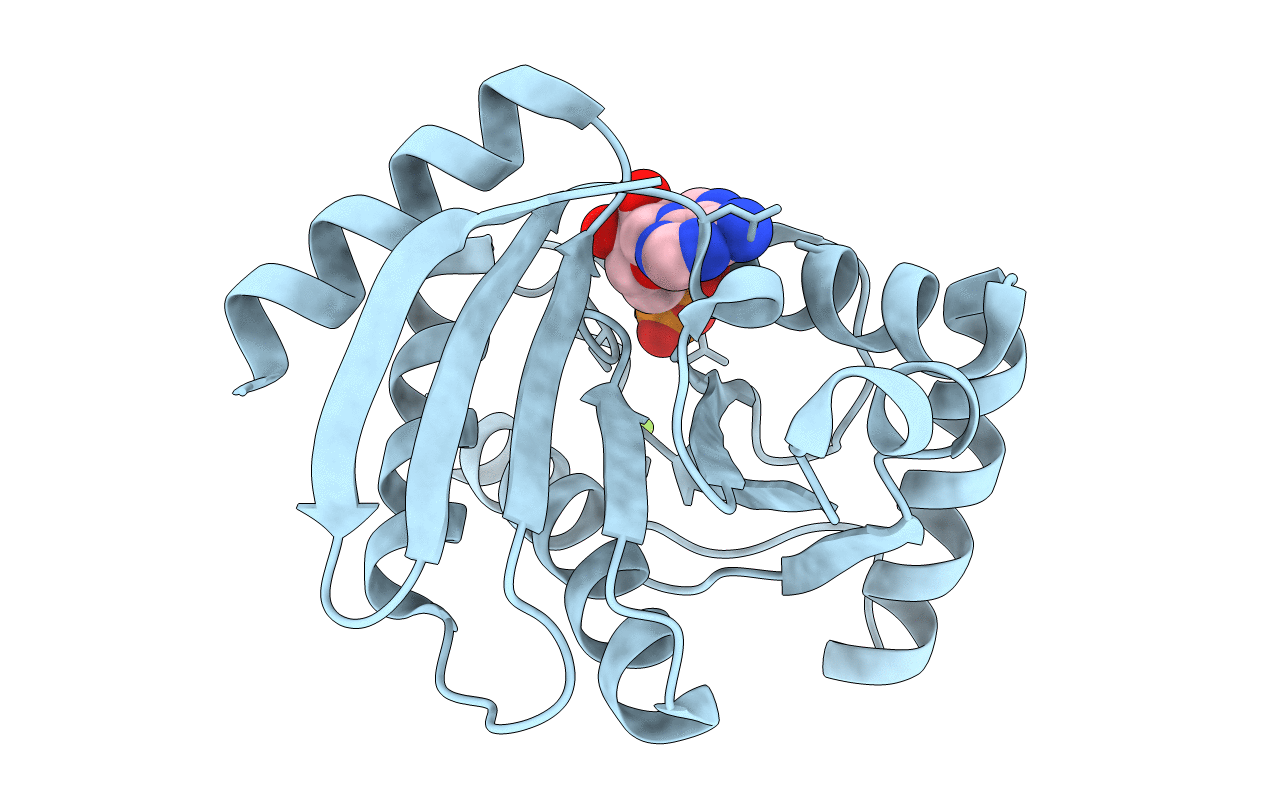
2BFR image
Deposition Date 2004-12-10
Release Date 2004-12-16
Last Version Date 2024-11-20
Entry Detail
PDB ID:
2BFR
Title:
The Macro domain is an ADP-ribose binding module
Biological Source:
Source Organism:
Host Organism:
Method Details:
Experimental Method:
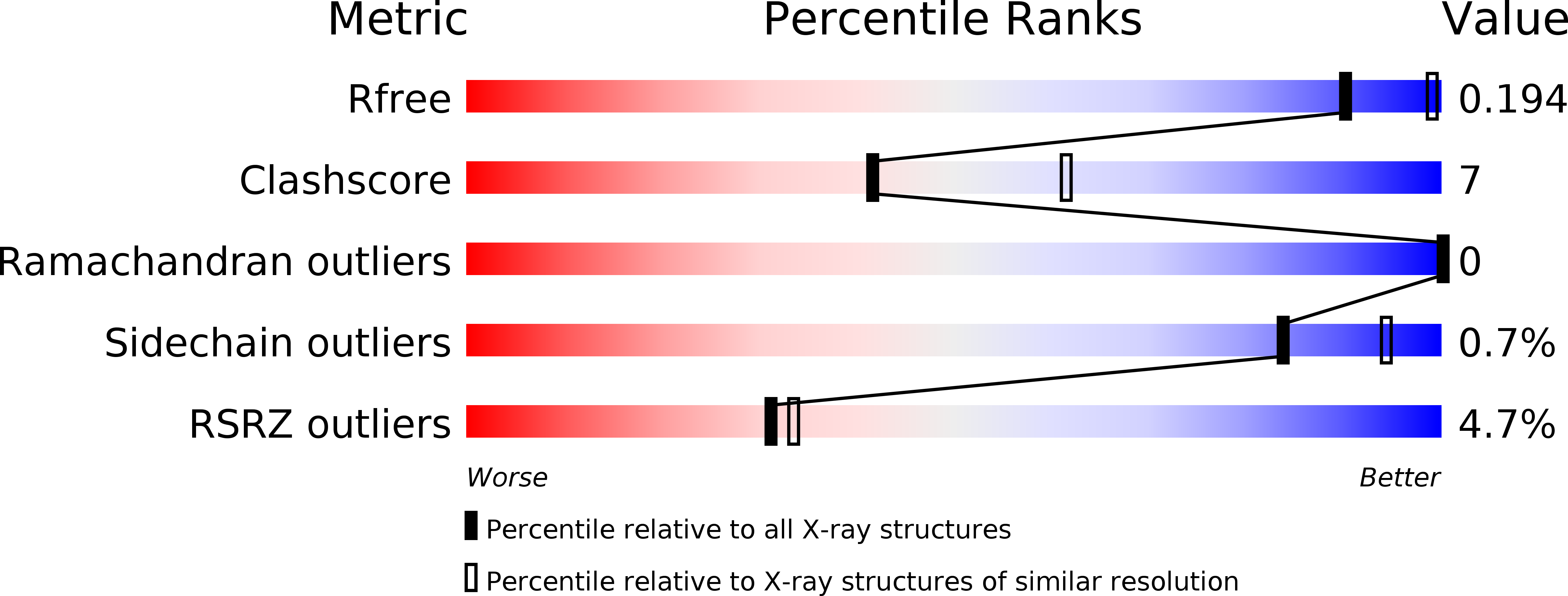
Resolution:
2.50 Å
R-Value Free:
0.23
R-Value Work:
0.20
R-Value Observed:
0.20
Space Group:
P 61
Macromolecular Entities
Structures with similar UniProt ID
Protein Blast
Polymer Type:polypeptide(L)
Molecule:HYPOTHETICAL PROTEIN AF1521
Gene (Uniprot):AF_1521
Chain IDs:A
Chain Length:192
Number of Molecules:1
Biological Source:ARCHAEOGLOBUS FULGIDUS
Modified Residue
Compound ID Chain ID Parent Comp ID Details 2D Image
FME A MET N-FORMYLMETHIONINE
Primary Citation
The Macro Domain is an Adp-Ribose Binding Module.
Embo J. 24 1911 ? (2005)
PMID: 15902274 DOI: 10.1038/SJ.EMBOJ.7600664

Abstact

The ADP-ribosylation of proteins is an important post-translational modification that occurs in a variety of biological processes, including DNA repair, transcription, chromatin biology and long-term memory formation. Yet no protein modules are known that specifically recognize the ADP-ribose nucleotide. We provide biochemical and structural evidence that macro domains are high-affinity ADP-ribose binding modules. Our structural analysis reveals a conserved ligand binding pocket among the macro domain fold. Consistently, distinct human macro domains retain their ability to bind ADP-ribose. In addition, some macro domain proteins also recognize poly-ADP-ribose as a ligand. Our data suggest an important role for proteins containing macro domains in the biology of ADP-ribose.

Legend

Protein

Chemical

Disease

Primary Citation of related structures
Feedback Form
Name
Email
Institute
Feedback