2BCX image
Deposition Date 2005-10-19
Release Date 2006-10-31
Last Version Date 2024-02-14
Entry Detail
PDB ID:
2BCX
Title:
Crystal structure of calmodulin in complex with a ryanodine receptor peptide
Biological Source:
Source Organism:
Gallus gallus (Taxon ID: 9031)
Host Organism:
Method Details:
Experimental Method:
Resolution:
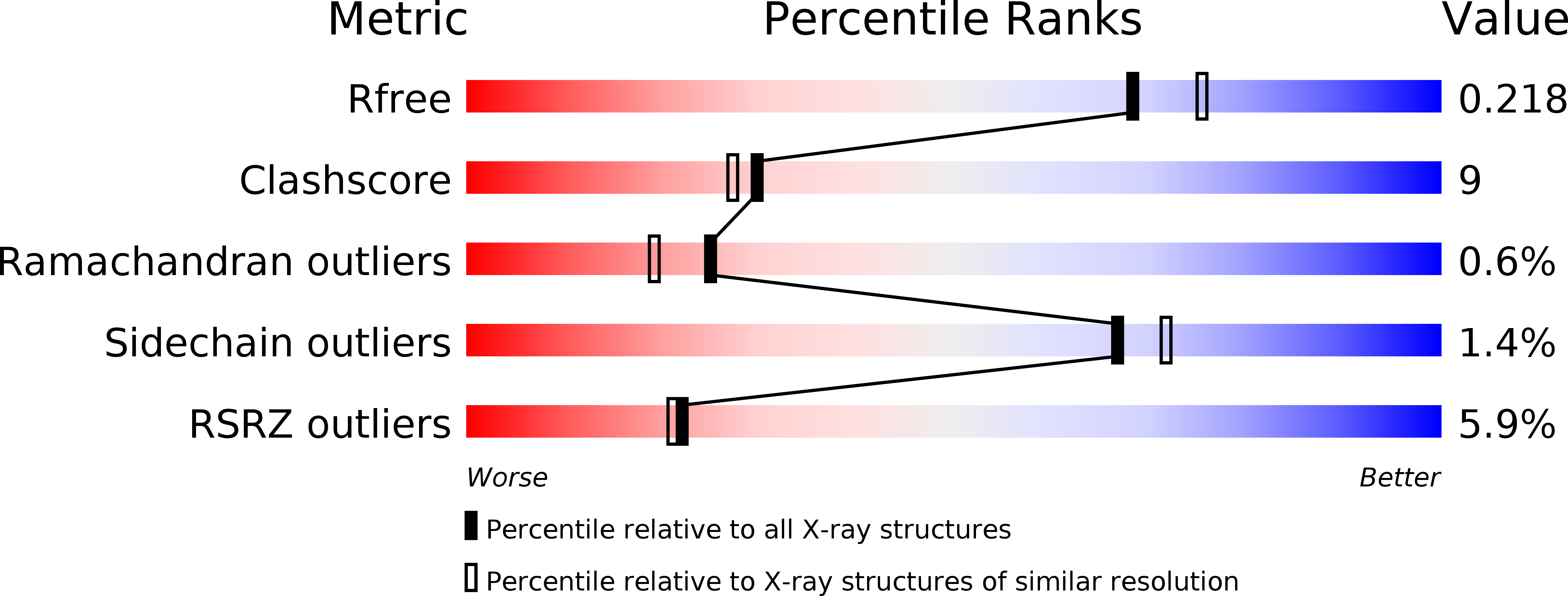
2.00 Å
R-Value Free:
0.24
R-Value Work:
0.21
R-Value Observed:
0.21
Space Group:
P 21 21 21
Macromolecular Entities
Structures with similar UniProt ID
Protein Blast
Polymer Type:polypeptide(L)
Molecule:Calmodulin
Gene (Uniprot):CALM
Chain IDs:A
Chain Length:148
Number of Molecules:1
Biological Source:Gallus gallus
Structures with similar UniProt ID
Protein Blast
Polymer Type:polypeptide(L)
Molecule:Ryanodine receptor 1
Gene (Uniprot):RYR1
Chain IDs:B
Chain Length:30
Number of Molecules:1
Biological Source:
Ligand Molecules
Primary Citation
Complex of calmodulin with a ryanodine receptor target reveals a novel, flexible binding mode.
Structure 14 1547 1556 (2006)
PMID: 17027503 DOI: 10.1016/j.str.2006.08.011

Abstact

Calmodulin regulates ryanodine receptor-mediated Ca(2+) release through a conserved binding site. The crystal structure of Ca(2+)-calmodulin bound to this conserved site reveals that calmodulin recognizes two hydrophobic anchor residues at a novel "1-17" spacing that brings the calmodulin lobes close together but prevents them from contacting one another. NMR residual dipolar couplings demonstrate that the detailed structure of each lobe is preserved in solution but also show that the lobes experience domain motions within the complex. FRET measurements confirm the close approach of the lobes in binding the 1-17 target and show that calmodulin binds with one lobe to a peptide lacking the second anchor. We suggest that calmodulin regulates the Ca(2+) channel by switching between the contiguous binding mode seen in our crystal structure and a state where one lobe of calmodulin contacts the conserved binding site while the other interacts with a noncontiguous site on the channel.

Legend

Protein

Chemical

Disease

Primary Citation of related structures
Feedback Form
Name
Email
Institute
Feedback