2BCG image
Deposition Date 2005-10-19
Release Date 2006-01-17
Last Version Date 2023-08-23
Entry Detail
PDB ID:
2BCG
Title:
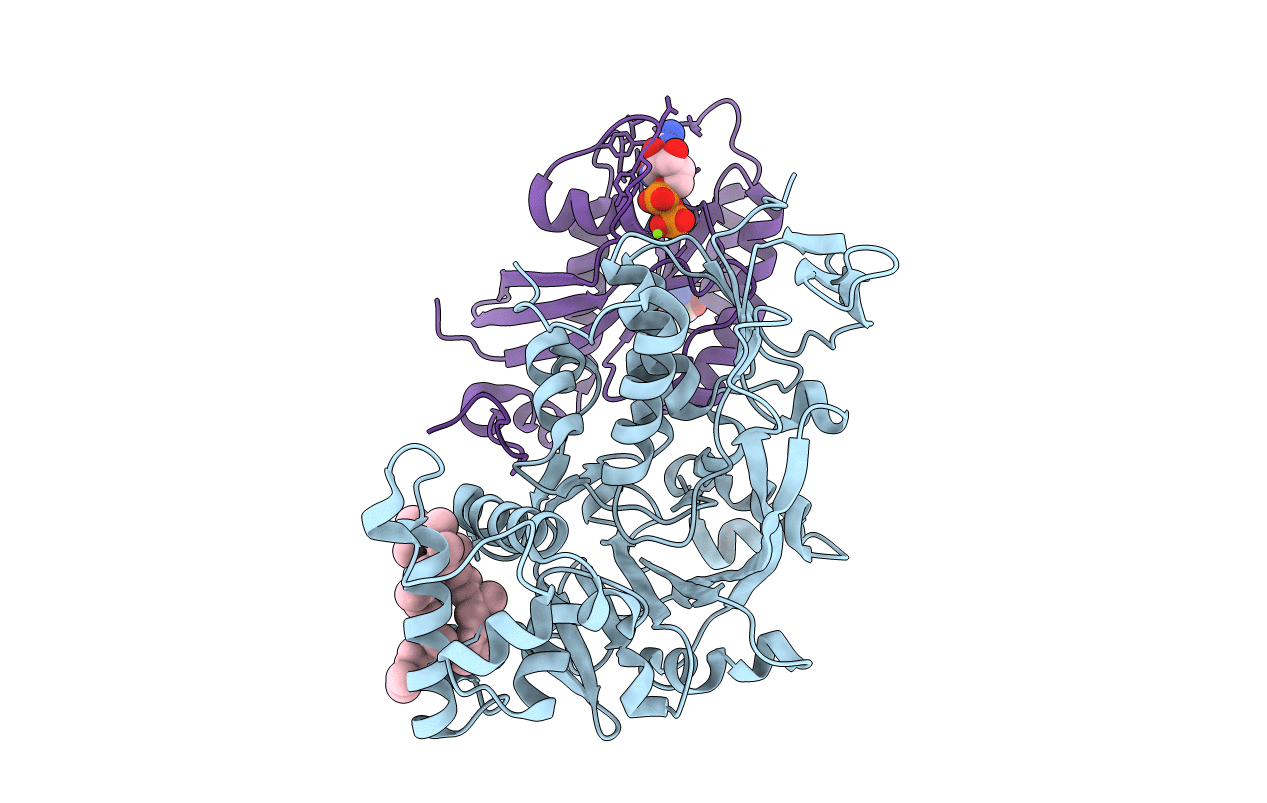
Structure of doubly prenylated Ypt1:GDI complex
Biological Source:
Source Organism:
Method Details:
Experimental Method:
Resolution:
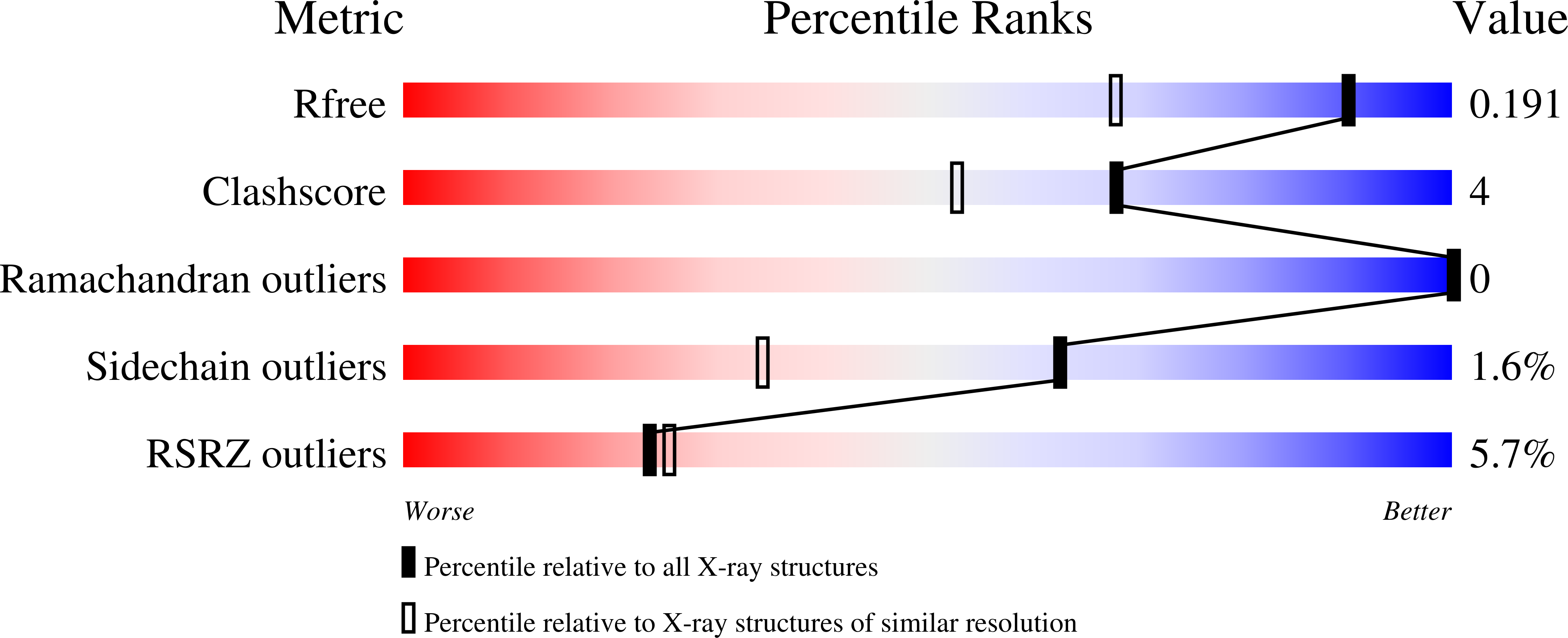
1.48 Å
R-Value Free:
0.19
R-Value Work:
0.16
R-Value Observed:
0.16
Space Group:
P 1 21 1
Macromolecular Entities
Structures with similar UniProt ID
Protein Blast
Polymer Type:polypeptide(L)
Molecule:Secretory pathway GDP dissociation inhibitor
Gene (Uniprot):GDI1
Chain IDs:A (auth: G)
Chain Length:453
Number of Molecules:1
Biological Source:Saccharomyces cerevisiae
Structures with similar UniProt ID
Protein Blast
Polymer Type:polypeptide(L)
Molecule:GTP-binding protein YPT1
Gene (Uniprot):YPT1
Mutagens:G204C
Chain IDs:B (auth: Y)
Chain Length:206
Number of Molecules:1
Biological Source:Saccharomyces cerevisiae
Primary Citation
Structure of doubly prenylated Ypt1:GDI complex and the mechanism of GDI-mediated Rab recycling
Embo J. 25 13 23 (2006)
PMID: 16395334 DOI: 10.1038/sj.emboj.7600921

Abstact

In eukaryotic cells Rab/Ypt GTPases represent a family of key membrane traffic controllers that associate with their targeted membranes via C-terminally conjugated geranylgeranyl groups. GDP dissociation inhibitor (GDI) is a general and essential regulator of Rab recycling that extracts prenylated Rab proteins from membranes at the end of their cycle of activity and facilitates their delivery to the donor membranes. Here, we present the structure of a complex between GDI and a doubly prenylated Rab protein. We show that one geranylgeranyl residue is deeply buried in a hydrophobic pocket formed by domain II of GDI, whereas the other lipid is more exposed to solvent and is skewed across several atoms of the first moiety. Based on structural information and biophysical measurements, we propose mechanistic and thermodynamic models for GDI and Rab escort protein-mediated interaction of RabGTPase with intracellular membranes.

Legend

Protein

Chemical

Disease

Primary Citation of related structures
Feedback Form
Name
Email
Institute
Feedback