2B3D image
Deposition Date 2005-09-20
Release Date 2006-08-29
Last Version Date 2023-09-20
Entry Detail
PDB ID:
2B3D
Keywords:
Title:
Crystal structure of Modulator of Drug activity B in complex with flavin adenine dinucleotide
Biological Source:
Source Organism:
Escherichia coli (Taxon ID: 562)
Host Organism:
Method Details:
Experimental Method:
Resolution:
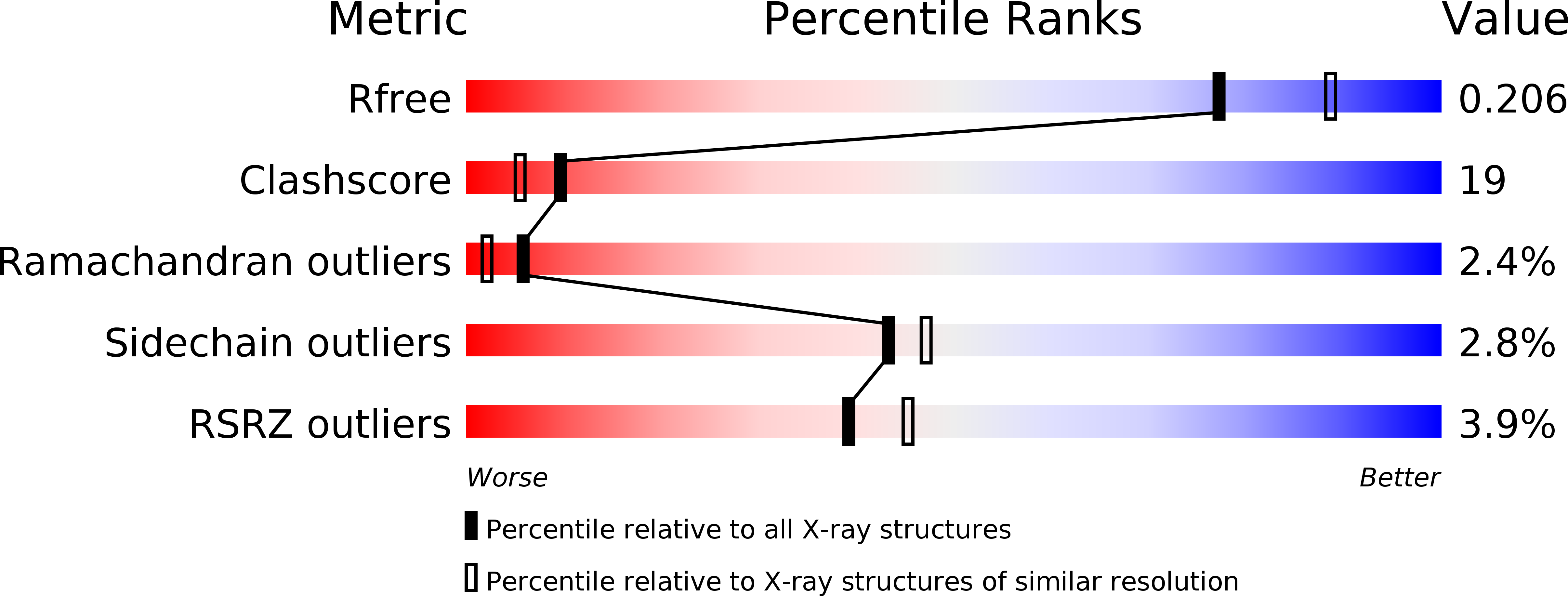
2.10 Å
R-Value Free:
0.26
R-Value Work:
0.19
R-Value Observed:
0.19
Space Group:
P 1 21 1
Macromolecular Entities
Structures with similar UniProt ID
Protein Blast
Polymer Type:polypeptide(L)
Molecule:Modulator of drug activity B
Gene (Uniprot):mdaB
Chain IDs:A, B
Chain Length:204
Number of Molecules:2
Biological Source:Escherichia coli
Ligand Molecules
Primary Citation
Modulator of drug activity B from Escherichia coli: crystal structure of a prokaryotic homologue of DT-diaphorase.
J.Mol.Biol. 359 455 465 (2006)
PMID: 16630630 DOI: 10.1016/j.jmb.2006.03.053

Abstact

Modulator of drug activity B (MdaB) is a putative member of the DT-diaphorase family of NAD(P)H:oxidoreductases that afford cellular protection against quinonoid compounds. While there have been extensive investigations of mammalian homologues, putative prokaryotic members of this enzyme family have received little attention. The three-dimensional crystal structure of apo-MdaB reported herein exhibits significant structural similarity to a number of flavoproteins, including the mammalian DT-diaphorases. We have shown by mass spectrometry that the endogenously associated cofactor is flavin adenine dinucleotide and we present here the structure of MdaB in complex with this compound. Growth of Escherichia coli carrying null mutations in the genes encoding MdaB or quinol monooxygenase, the gene for which shares the mdaB promoter, were not affected by the presence of menadione. However, over-expression of recombinant quinol monooxygenase conferred a state of resistance against both tetracycline and adriamycin. This work suggests that the redox cycle formed by these proteins protects E. coli from the toxic effects of polyketide compounds rather than the oxidative stress of menadione alone.

Legend

Protein

Chemical

Disease

Primary Citation of related structures
Feedback Form
Name
Email
Institute
Feedback