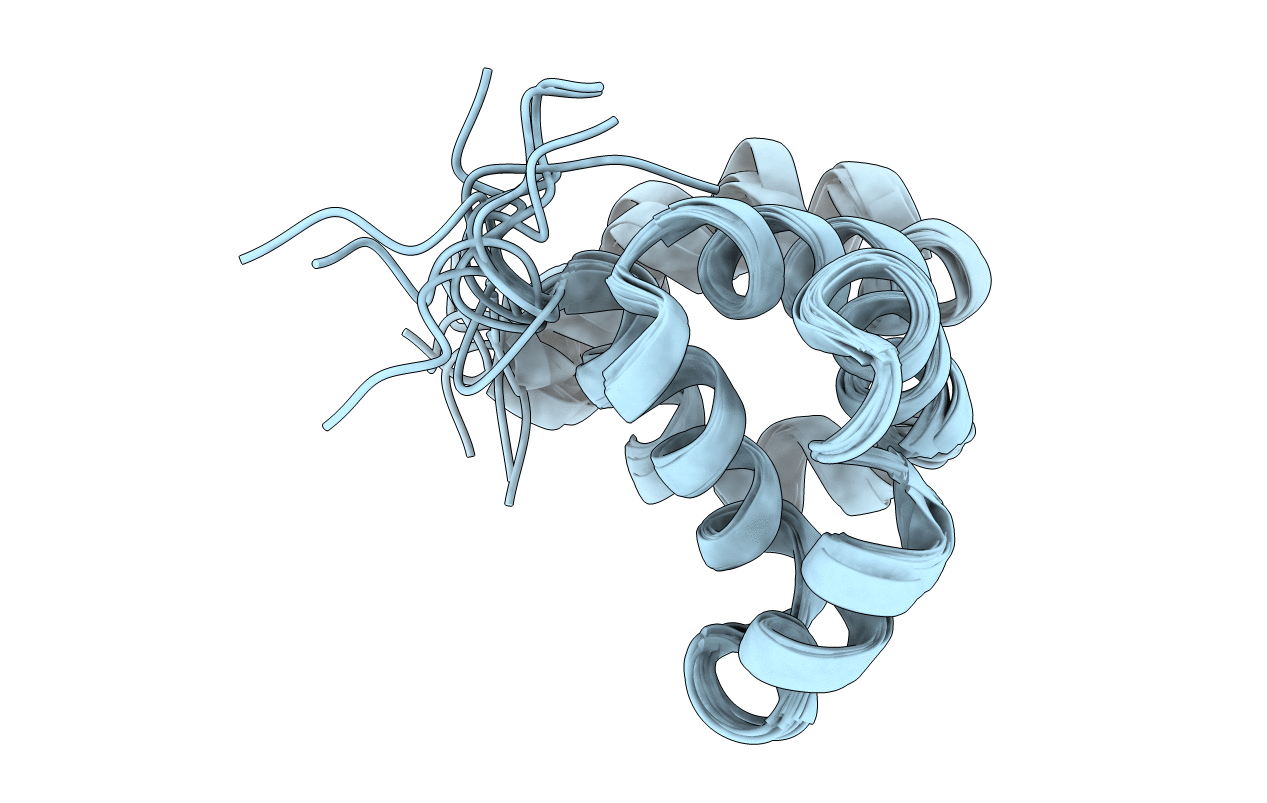
2B1W image
Deposition Date 2005-09-16
Release Date 2006-09-26
Last Version Date 2024-05-01
Entry Detail
PDB ID:
2B1W
Keywords:
Title:
Solution structure of the NOD1 Caspase Activating and Recruitment Domain
Biological Source:
Source Organism:
Homo sapiens (Taxon ID: 9606)
Host Organism:
Method Details:
Experimental Method:
Conformers Calculated:
1000
Conformers Submitted:
10
Selection Criteria:
structures with the lowest energy
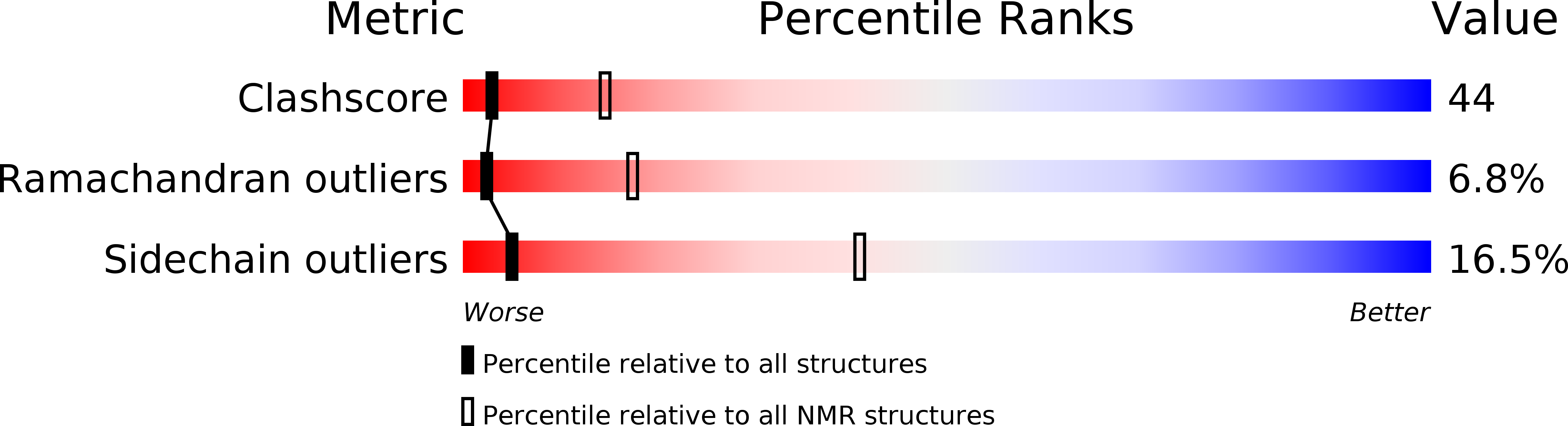
Macromolecular Entities
Structures with similar UniProt ID
Protein Blast
Polymer Type:polypeptide(L)
Molecule:Caspase recruitment domain protein 4
Gene (Uniprot):NOD1
Chain IDs:A
Chain Length:127
Number of Molecules:1
Biological Source:Homo sapiens
Ligand Molecules
Primary Citation
Solution structure of NOD1 CARD and mutational analysis of its interaction with the CARD of downstream kinase RICK.
J.Mol.Biol. 365 160 174 (2007)
PMID: 17054981 DOI: 10.1016/j.jmb.2006.09.067

Abstact

NOD1 is a cytosolic signalling host pattern-recognition receptor composed of a caspase-activating and recruitment domain (CARD), a nucleotide-binding and oligomerization domain (NOD) and leucine-rich repeats. It plays a crucial role in innate immunity by activating the NF-kappaB pathway via its downstream effector the kinase RICK (RIP2) following the recognition of a specific bacterial ligand. RICK is recruited by NOD1 through interaction of their respective CARDs. Here we present the high resolution NMR structure of the NOD1 CARD. It is generally similar to other CARDs of known structure, consisting of six tightly packed helices, although the length and orientation of the last helix is unusual. Mutations in both the NOD1 and RICK CARD domains were assayed by immuno-precipitation of cell lysates and in vivo NF-kappaB activation in order to define residues important for CARD-CARD interaction and downstream signalling. The results show that the interaction is critically dependent on three acidic residues on NOD1 CARD and three basic residues on RICK CARD and thus is likely to have a strong electrostatic component, similar to other characterised CARD-CARD interactions.

Legend

Protein

Chemical

Disease

Primary Citation of related structures
Feedback Form
Name
Email
Institute
Feedback