2AR3 image
Deposition Date 2005-08-19
Release Date 2006-06-06
Last Version Date 2024-02-14
Entry Detail
PDB ID:
2AR3
Keywords:
Title:
E90A mutant structure of PlyL
Biological Source:
Source Organism:
Method Details:
Experimental Method:
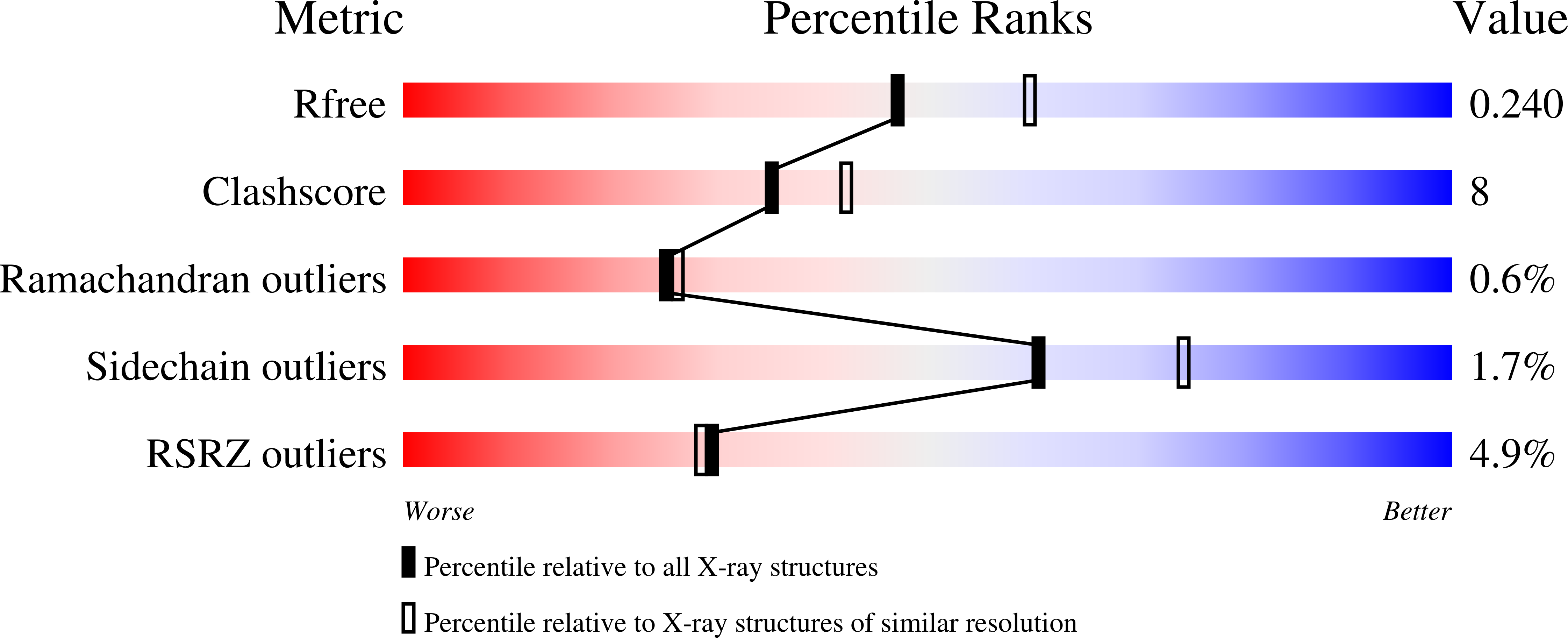
Resolution:
2.20 Å
R-Value Free:
0.25
R-Value Work:
0.22
R-Value Observed:
0.22
Space Group:
P 61
Macromolecular Entities
Structures with similar UniProt ID
Protein Blast
Polymer Type:polypeptide(L)
Molecule:prophage lambdaba02, n-acetylmuramoyl-l-alanine amidase, family 2
Mutagens:E90A
Chain IDs:A, B, C
Chain Length:160
Number of Molecules:3
Biological Source:Bacillus anthracis
Primary Citation
Structure and lytic activity of a Bacillus anthracis prophage endolysin.
J.Biol.Chem. 280 35433 35439 (2005)
PMID: 16103125 DOI: 10.1074/jbc.M502723200

Abstact

We report a structural and functional analysis of the lambda prophage Ba02 endolysin (PlyL) encoded by the Bacillus anthracis genome. We show that PlyL comprises two autonomously folded domains, an N-terminal catalytic domain and a C-terminal cell wall-binding domain. We determined the crystal structure of the catalytic domain; its three-dimensional fold is related to that of the cell wall amidase, T7 lysozyme, and contains a conserved zinc coordination site and other components of the catalytic machinery. We demonstrate that PlyL is an N-acetylmuramoyl-L-alanine amidase that cleaves the cell wall of several Bacillus species when applied exogenously. We show, unexpectedly, that the catalytic domain of PlyL cleaves more efficiently than the full-length protein, except in the case of Bacillus cereus, and using GFP-tagged cell wall-binding domain, we detected strong binding of the cell wall-binding domain to B. cereus but not to other species tested. We further show that a related endolysin (Ply21) from the B. cereus phage, TP21, shows a similar pattern of behavior. To explain these data, and the species specificity of PlyL, we propose that the C-terminal domain inhibits the activity of the catalytic domain through intramolecular interactions that are relieved upon binding of the C-terminal domain to the cell wall. Furthermore, our data show that (when applied exogenously) targeting of the enzyme to the cell wall is not a prerequisite of its lytic activity, which is inherently high. These results may have broad implications for the design of endolysins as therapeutic agents.

Legend

Protein

Chemical

Disease

Primary Citation of related structures
Feedback Form
Name
Email
Institute
Feedback