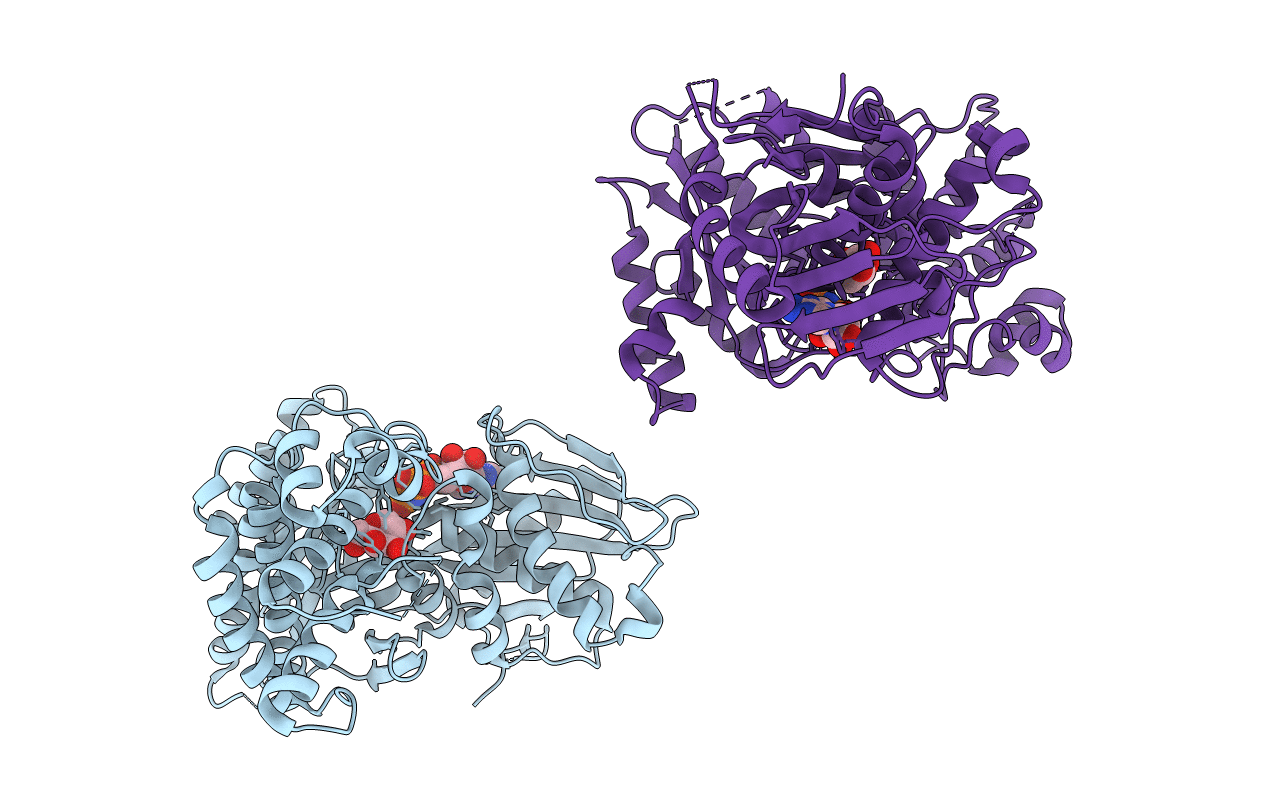
2AJ4 image
Deposition Date 2005-08-01
Release Date 2005-08-30
Last Version Date 2023-08-23
Entry Detail
PDB ID:
2AJ4
Keywords:
Title:
Crystal structure of Saccharomyces cerevisiae Galactokinase in complex with galactose and Mg:AMPPNP
Biological Source:
Source Organism:
Host Organism:
Method Details:
Experimental Method:
Resolution:
2.40 Å
R-Value Free:
0.20
R-Value Work:
0.17
R-Value Observed:
0.17
Space Group:
P 1 21 1
Macromolecular Entities
Structures with similar UniProt ID
Protein Blast
Polymer Type:polypeptide(L)
Molecule:Galactokinase
Gene (Uniprot):GAL1
Chain IDs:A, B
Chain Length:548
Number of Molecules:2
Biological Source:Saccharomyces cerevisiae
Primary Citation
Molecular structure of Saccharomyces cerevisiae Gal1p, a bifunctional galactokinase and transcriptional inducer
J.Biol.Chem. 280 36905 36911 (2005)
PMID: 16115868 DOI: 10.1074/jbc.M508446200

Abstact

Gal1p of Saccharomyces cerevisiae is capable of performing two independent cellular functions. First, it is a key enzyme in the Leloir pathway for galactose metabolism where it catalyzes the conversion of alpha-d-galactose to galactose 1-phosphate. Second, it has the capacity to induce the transcription of the yeast GAL genes in response to the organism being challenged with galactose as the sole source of carbon. This latter function is normally performed by a highly related protein, Gal3p, but in its absence Gal1p can induce transcription, albeit inefficiently, both in vivo and in vitro. Here we report the x-ray structure of Gal1p in complex with alpha-d-galactose and Mg-adenosine 5'-(beta,gamma-imido)triphosphate (AMPPNP) determined to 2.4 Angstrom resolution. Overall, the enzyme displays a marked bilobal appearance with the active site being wedged between distinct N- and C-terminal domains. Despite being considerably larger than other galactokinases, Gal1p shares a similar molecular architecture with these enzymes as well as with other members of the GHMP superfamily. The extraordinary levels of similarity between Gal1p and Gal3p (approximately 70% amino acid identity and approximately 90% similarity) have allowed a model for Gal3p to be constructed. By identifying the locations of mutations of Gal3p that result in altered transcriptional properties, we suggest potential models for Gal3p function and mechanisms for its interaction with the transcriptional inhibitor Gal80p. The GAL genetic switch has long been regarded as a paradigm for the control of gene expression in eukaryotes. Understanding the manner in which two of the proteins that function in transcriptional regulation interact with one another is an important step in determining the overall molecular mechanism of this switch.

Legend

Protein

Chemical

Disease

Primary Citation of related structures
Feedback Form
Name
Email
Institute
Feedback