2A7M image
Deposition Date 2005-07-05
Release Date 2005-08-16
Last Version Date 2024-02-14
Entry Detail
PDB ID:
2A7M
Keywords:
Title:
1.6 Angstrom Resolution Structure of the Quorum-Quenching N-Acyl Homoserine Lactone Hydrolase of Bacillus thuringiensis
Biological Source:
Source Organism:
Host Organism:
Method Details:
Experimental Method:
Resolution:
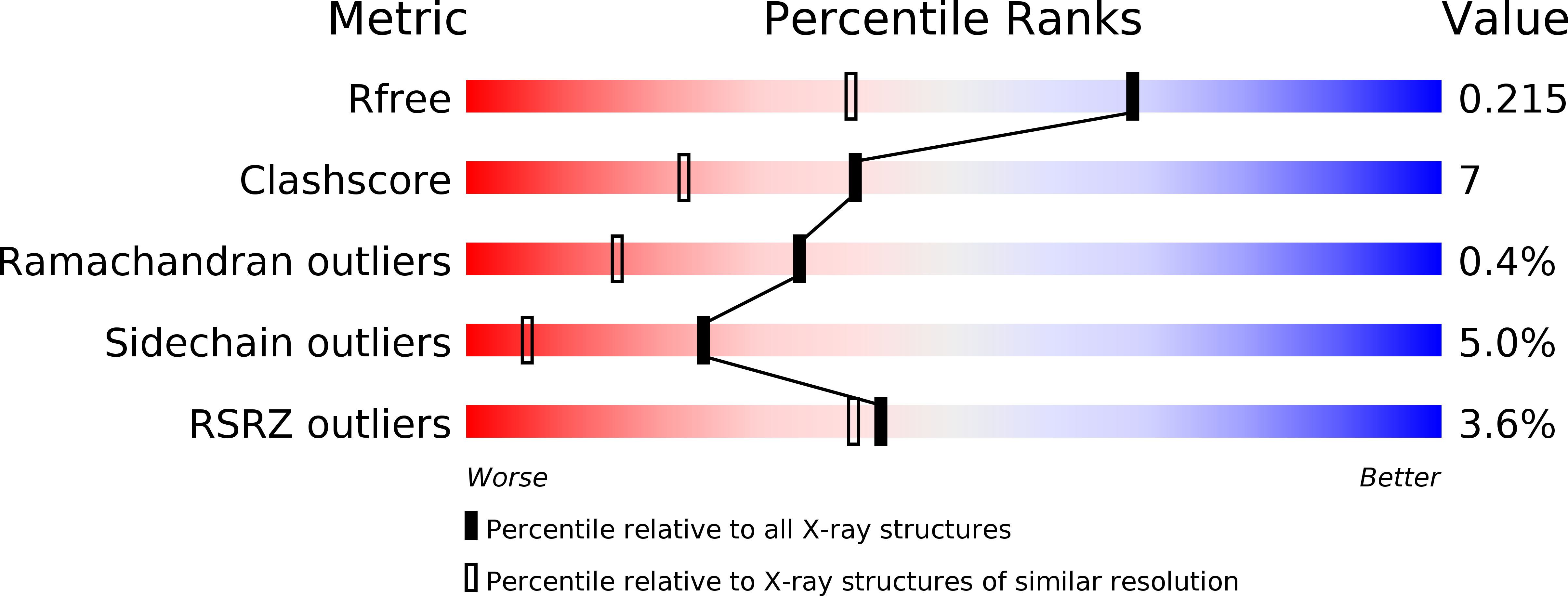
1.60 Å
R-Value Free:
0.21
R-Value Work:
0.16
R-Value Observed:
0.17
Space Group:
P 21 21 21
Macromolecular Entities
Structures with similar UniProt ID
Protein Blast
Polymer Type:polypeptide(L)
Molecule:N-acyl homoserine lactone hydrolase
Chain IDs:A
Chain Length:250
Number of Molecules:1
Biological Source:Bacillus thuringiensis serovar kurstaki
Primary Citation
Three-dimensional structure of the quorum-quenching N-acyl homoserine lactone hydrolase from Bacillus thuringiensis
Proc.Natl.Acad.Sci.Usa 102 11882 11887 (2005)
PMID: 16087890 DOI: 10.1073/pnas.0505255102

Abstact

The three-dimensional structure of the N-acyl-l-homoserine lactone hydrolase (AHL lactonase) from Bacillus thuringiensis has been determined, by using single-wavelength anomalous dispersion (SAD) phasing, to 1.6-angstroms resolution. AHLs are produced by many Gram-negative bacteria as signaling molecules used in quorum-sensing pathways that indirectly sense cell density and regulate communal behavior. Because of their importance in pathogenicity, quorum-sensing pathways have been suggested as potential targets for the development of novel therapeutics. Quorum-sensing can be disrupted by enzymes evolved to degrade these lactones, such as AHL lactonases. These enzymes are members of the metallo-beta-lactamase superfamily and contain two zinc ions in their active sites. The zinc ions are coordinated to a number of ligands, including a single oxygen of a bridging carboxylate and a bridging water/hydroxide ion, thought to be the nucleophile that hydrolyzes the AHLs to ring-opened products, which can no longer act as quorum signals.

Legend

Protein

Chemical

Disease

Primary Citation of related structures
Feedback Form
Name
Email
Institute
Feedback