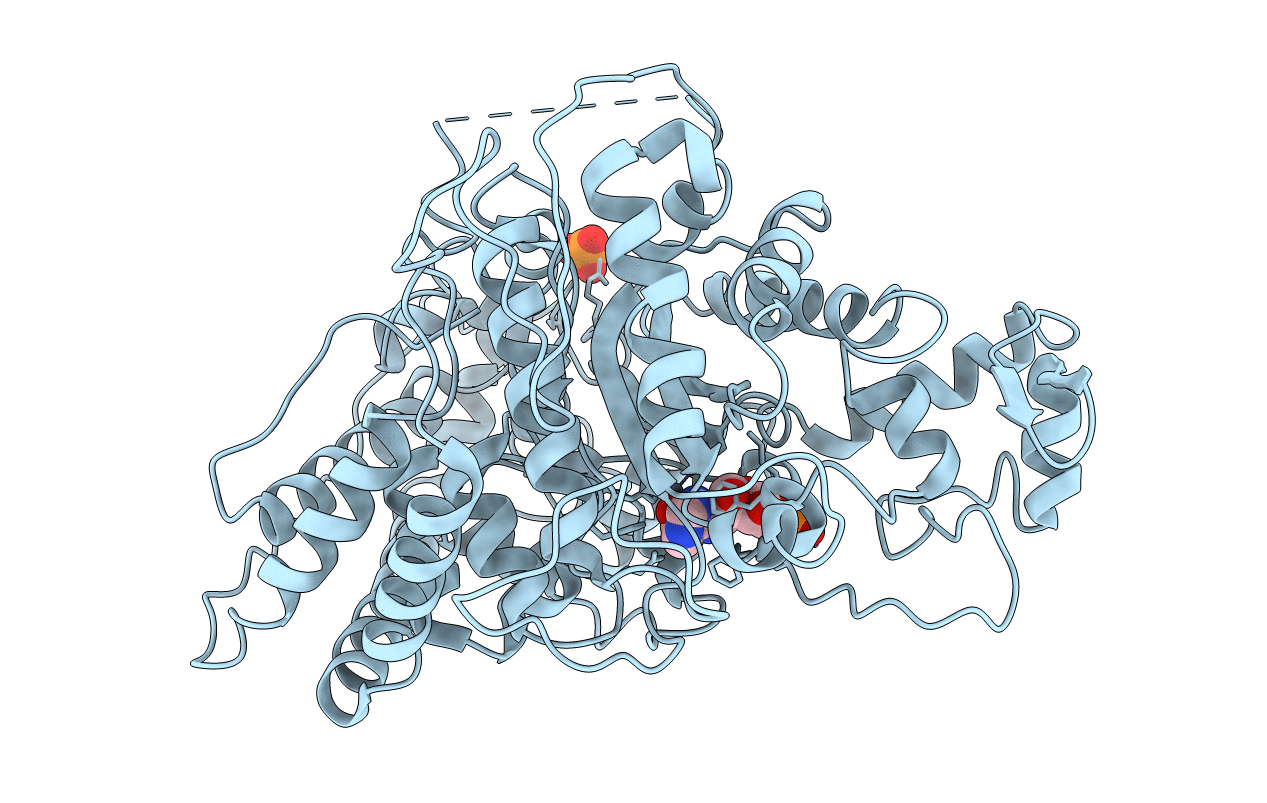
2A3L image
Deposition Date 2005-06-25
Release Date 2005-07-19
Last Version Date 2024-04-03
Entry Detail
PDB ID:
2A3L
Keywords:
Title:
X-Ray Structure of Adenosine 5'-Monophosphate Deaminase from Arabidopsis Thaliana in Complex with Coformycin 5'-Phosphate
Biological Source:
Source Organism:
Host Organism:
Method Details:
Experimental Method:
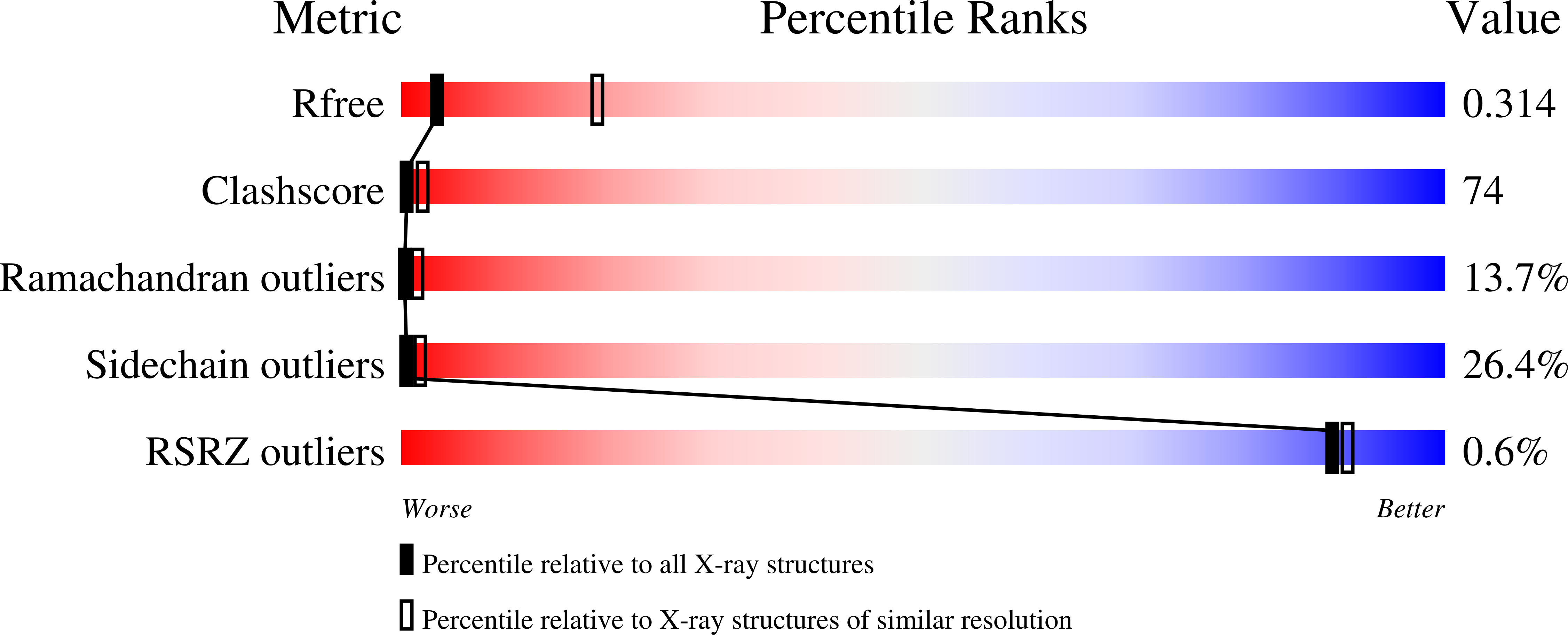
Resolution:
3.34 Å
R-Value Free:
0.32
R-Value Work:
0.23
R-Value Observed:
0.23
Space Group:
P 62 2 2
Macromolecular Entities
Structures with similar UniProt ID
Protein Blast
Polymer Type:polypeptide(L)
Molecule:AMP deaminase
Gene (Uniprot):AMPD
Chain IDs:A
Chain Length:701
Number of Molecules:1
Biological Source:Arabidopsis thaliana
Primary Citation
Membrane association, mechanism of action, and structure of Arabidopsis embryonic factor 1 (FAC1).
J.Biol.Chem. 281 14939 14947 (2006)
PMID: 16543243 DOI: 10.1074/jbc.M513009200

Abstact

Embryonic factor 1 (FAC1) is one of the earliest expressed plant genes and encodes an AMP deaminase (AMPD), which is also an identified herbicide target. This report identifies an N-terminal transmembrane domain in Arabidopsis FAC1, explores subcellular fractionation, and presents a 3.3-A globular catalytic domain x-ray crystal structure with a bound herbicide-based transition state inhibitor that provides the first glimpse of a complete AMPD active site. FAC1 contains an (alpha/beta)(8)-barrel characterized by loops in place of strands 5 and 6 that places it in a small subset of the amidohydrolase superfamily with imperfect folds. Unlike tetrameric animal orthologs, FAC1 is a dimer and each subunit contains an exposed Walker A motif that may be involved in the dramatic combined K(m) (25-80-fold lower) and V(max) (5-6-fold higher) activation by ATP. Normal mode analysis predicts a hinge motion that flattens basic surfaces on each monomer that flank the dimer interface, which suggests a reversible association between the FAC1 globular catalytic domain and intracellular membranes, with N-terminal transmembrane and disordered linker regions serving as the anchor and attachment to the globular catalytic domain, respectively.

Legend

Protein

Chemical

Disease

Primary Citation of related structures
Feedback Form
Name
Email
Institute
Feedback