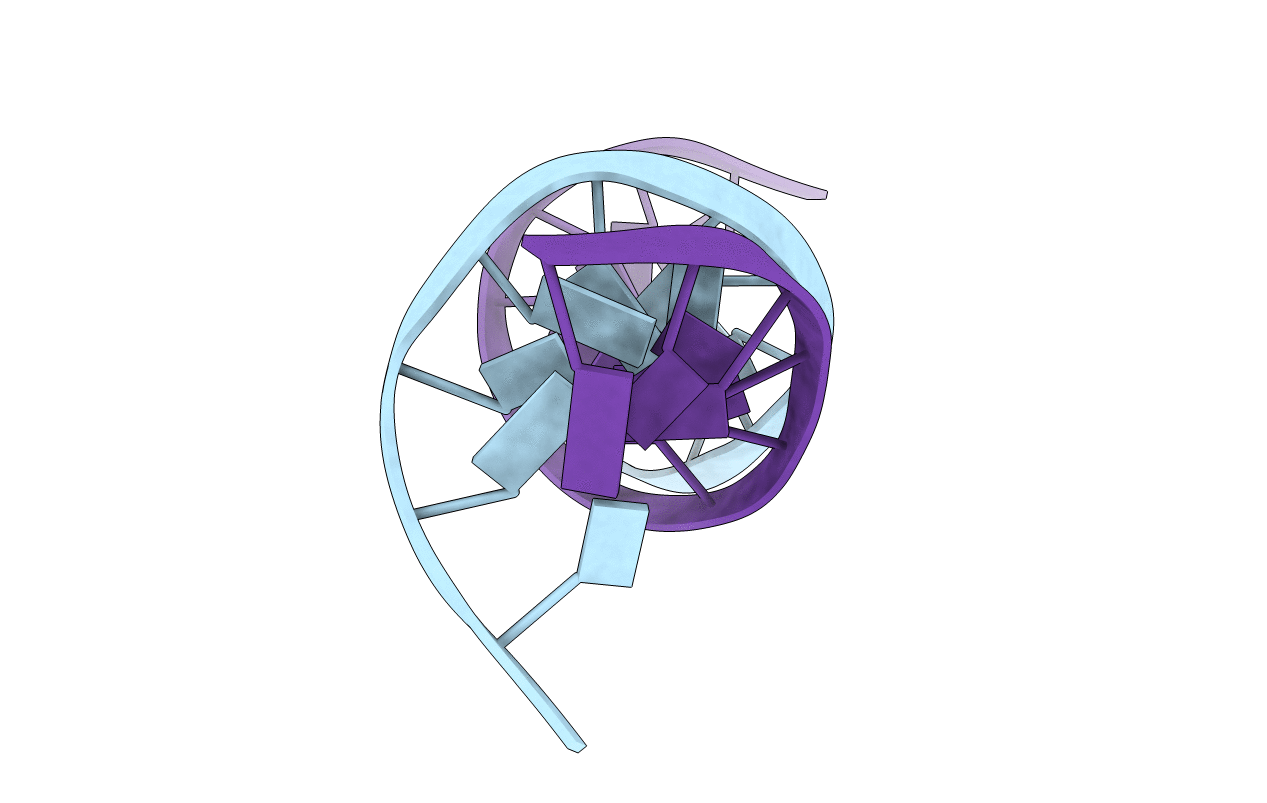
297D image
Deposition Date 1996-11-19
Release Date 1997-02-19
Last Version Date 2024-02-14
Entry Detail
PDB ID:
297D
Keywords:
Title:
X-RAY AND SOLUTION STUDIES OF DNA OLIGOMERS AND IMPLICATIONS FOR THE STRUCTURAL BASIS OF A-TRACT-DEPENDENT CURVATURE
Biological Source:
Source Organism:
Method Details:
Experimental Method:
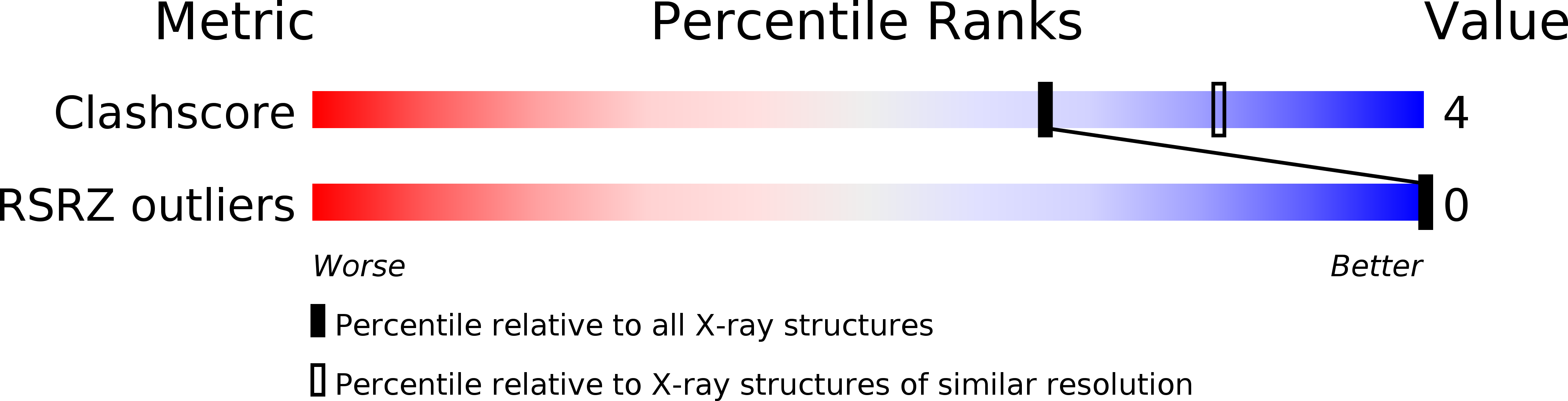
Resolution:
2.50 Å
R-Value Free:
0.21
R-Value Observed:
0.22
Space Group:
P 21 21 21
Macromolecular Entities
Polymer Type:polydeoxyribonucleotide
Molecule:DNA (5'-D(*CP*GP*CP*AP*IP*AP*TP*(5CM)P*TP*GP*CP*G)-3')
Chain IDs:A, B
Chain Length:12
Number of Molecules:2
Biological Source:
Modified Residue
Compound ID Chain ID Parent Comp ID Details 2D Image
5CM A DC ?
Primary Citation
X-ray and solution studies of DNA oligomers and implications for the structural basis of A-tract-dependent curvature.
J.Mol.Biol. 267 595 623 (1997)
PMID: 9126841 DOI: 10.1006/jmbi.1996.0878

Abstact

DNA containing short periodic stretches of adenine residues (known as A-tracts), which are aligned with the helical repeat, exhibit a pronounced macroscopic curvature. This property is thought to arise from the cumulative effects of a distinctive structure of the A-tract. It has also been observed by gel electrophoresis that macroscopic curvature is largely retained when inosine bases are introduced singly into A-tracts but decreases abruptly for pure I-tracts. The structural basis of this effect is unknown. Here we describe X-ray and gel electrophoretic analyses of several oligomers incorporating adenine or inosine bases or both. We find that macroscopic curvature is correlated with a distinctive base-stacking geometry characterized by propeller twisting of the base-pairs. Regions of alternating adenine and inosine bases display large propeller twisting comparable to that of pure A-tracts, whereas the values observed for pure I-tracts are significantly smaller. We also observe in the crystal structures that propeller twist leads to close cross-strand contacts between amino groups from adenine and cytosine bases, indicating an attractive NH-N interaction, which is analogous to the NH-O interaction proposed for A-tracts. This interaction also occurs between adenine bases across an A-T step and may explain in part the different behavior of A-T versus T-A steps in the context of A-tract-induced curvature. We also note that hydration patterns may contribute to propeller-twisted conformation. Based on the present data and other structural and biophysical studies, we propose that DNA macroscopic curvature is related to the structural invariance of A-tract and A-tract-like regions conferred by high propeller twist, cross-strand interactions and characteristic hydration. The implications of these findings to the mechanism of DNA bending are discussed.

Legend

Protein

Chemical

Disease

Primary Citation of related structures
Feedback Form
Name
Email
Institute
Feedback