1syq image
Deposition Date 2004-04-01
Release Date 2004-07-20
Last Version Date 2024-02-14
Entry Detail
PDB ID:
1SYQ
Keywords:
Title:
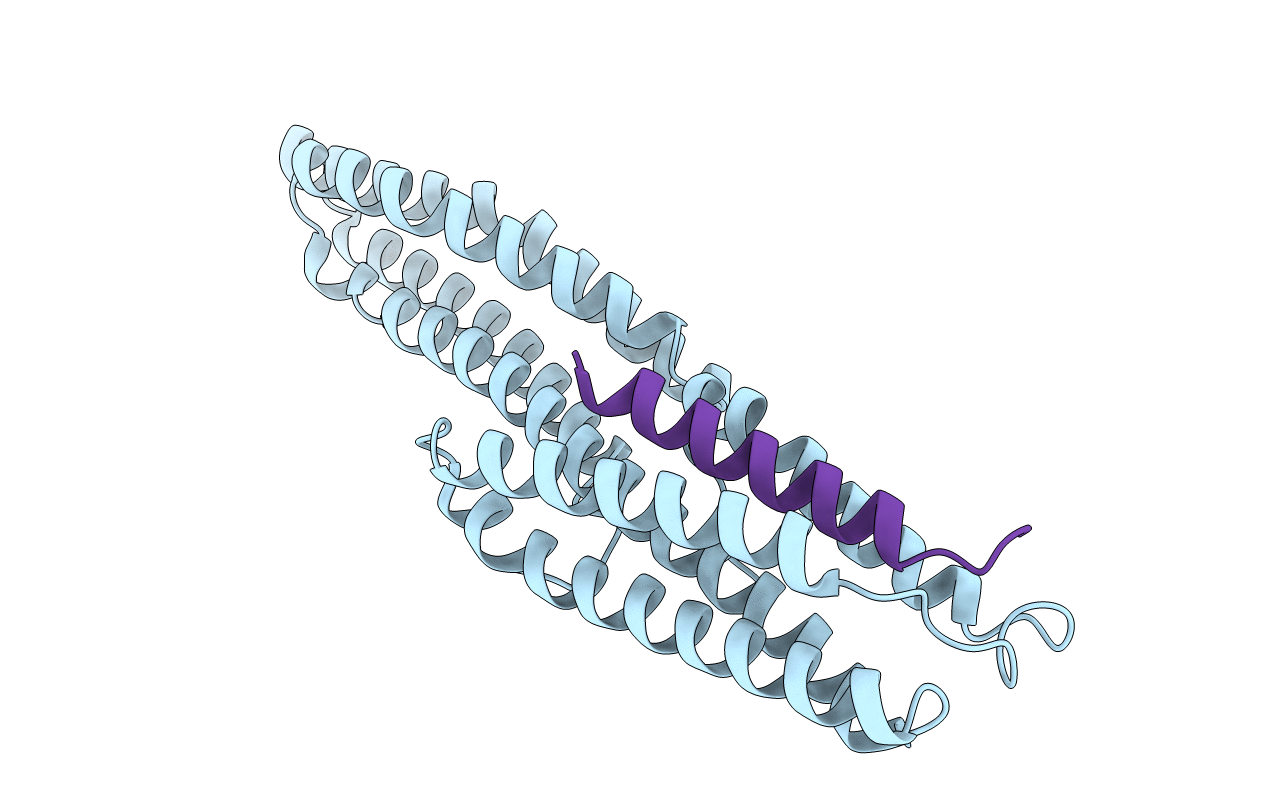
Human vinculin head domain VH1, residues 1-258, in complex with human talin's vinculin binding site 1, residues 607-636
Biological Source:
Source Organism:
Homo sapiens (Taxon ID: 9606)
Host Organism:
Method Details:
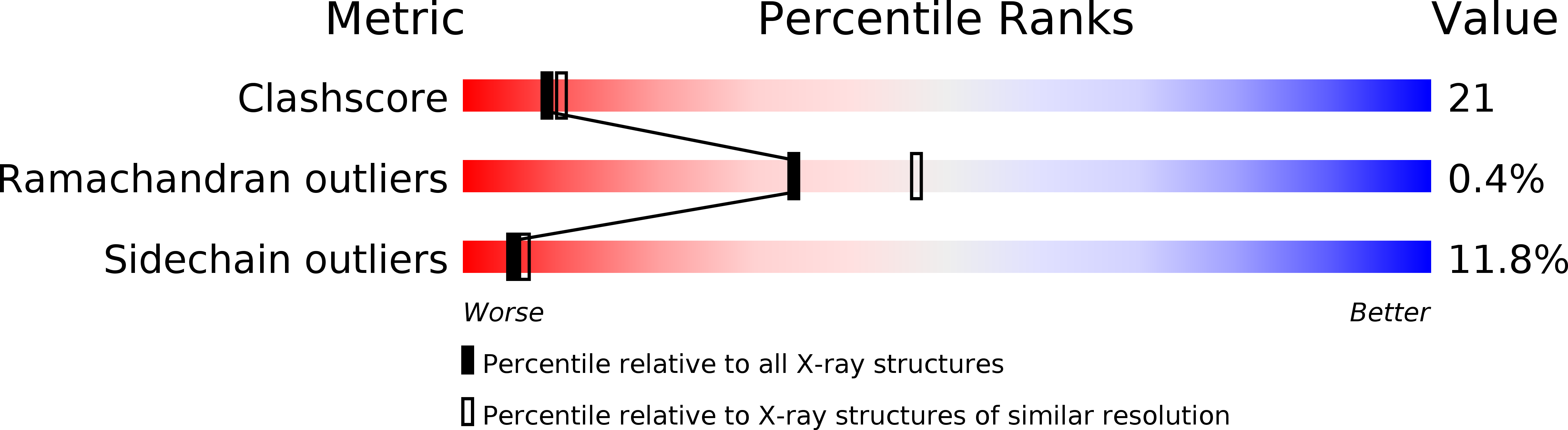
Experimental Method:
Resolution:
2.42 Å
R-Value Free:
0.23
R-Value Work:
0.18
R-Value Observed:
0.19
Space Group:
H 3 2
Macromolecular Entities
Structures with similar UniProt ID
Protein Blast
Polymer Type:polypeptide(L)
Molecule:vinculin isoform VCL
Gene (Uniprot):VCL
Chain IDs:A
Chain Length:264
Number of Molecules:1
Biological Source:Homo sapiens
Primary Citation
Structural basis for amplifying vinculin activation by talin
J.Biol.Chem. 279 27667 27678 (2004)
PMID: 15070891 DOI: 10.1074/jbc.M403076200

Abstact

Talin interactions with vinculin are essential for focal adhesions. Curiously, talin contains three noncontiguous vinculin binding sites (VBS) that can bind individually to the vinculin head (Vh) domain. Here we report the crystal structure of the human Vh.VBS1 complex, a validated model of the Vh.VBS2 structure, and biochemical studies that demonstrate that all of talin VBSs activate vinculin by provoking helical bundle conversion of the Vh domain, which displaces the vinculin tail (Vt) domain. Thus, helical bundle conversion is a structurally conserved response in talin-vinculin interactions. Furthermore, talin VBSs bind to Vh in a mutually exclusive manner but do differ in their affinity for Vh and in their ability to displace Vt, suggesting that the strengths of these interactions could lead to differences in signaling outcome. These findings support a model in which talin binds to and activates multiple vinculin molecules to provoke rapid reorganization of the actin cytoskeleton.

Legend

Protein

Chemical

Disease

Primary Citation of related structures
Feedback Form
Name
Email
Institute
Feedback