1qub image
Deposition Date 1999-07-01
Release Date 1999-10-08
Last Version Date 2024-10-30
Entry Detail
PDB ID:
1QUB
Title:
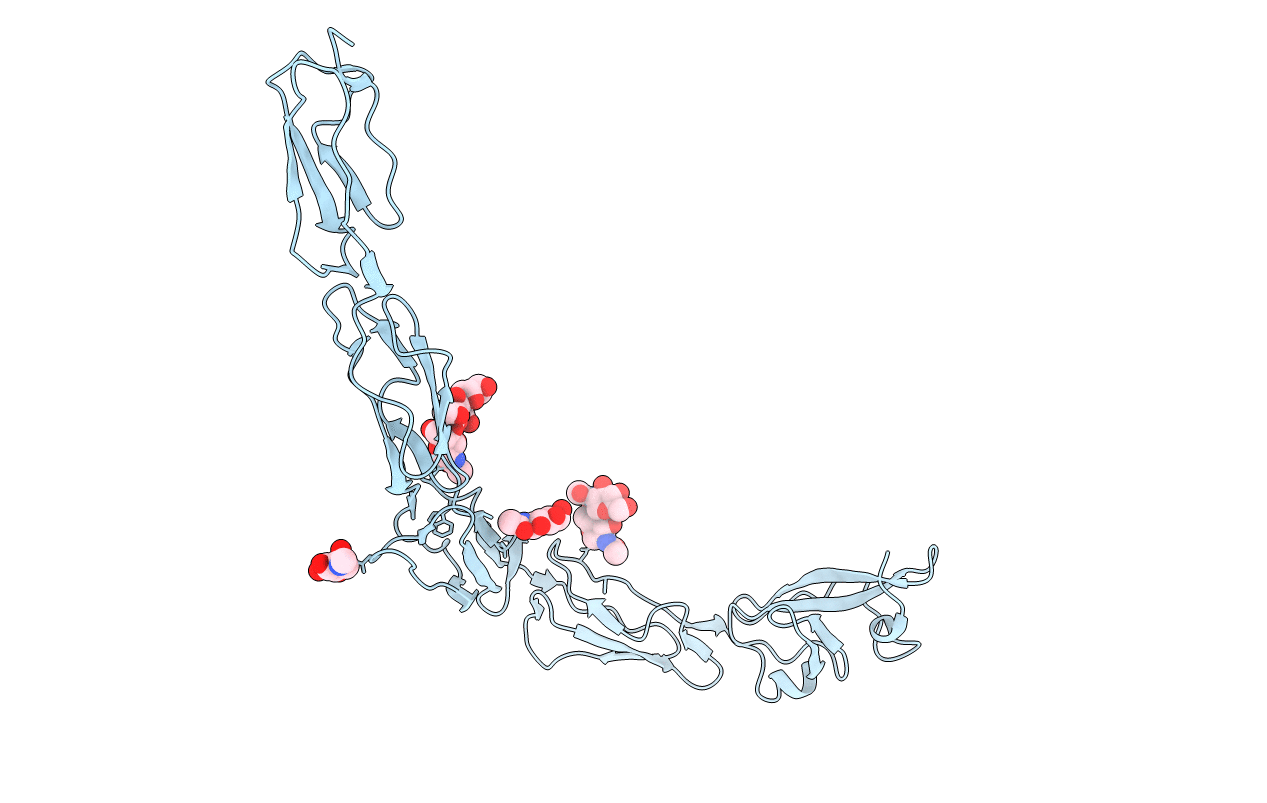
CRYSTAL STRUCTURE OF THE GLYCOSYLATED FIVE-DOMAIN HUMAN BETA2-GLYCOPROTEIN I PURIFIED FROM BLOOD PLASMA
Biological Source:
Source Organism:
Homo sapiens (Taxon ID: 9606)
Method Details:
Experimental Method:
Resolution:
2.70 Å
R-Value Free:
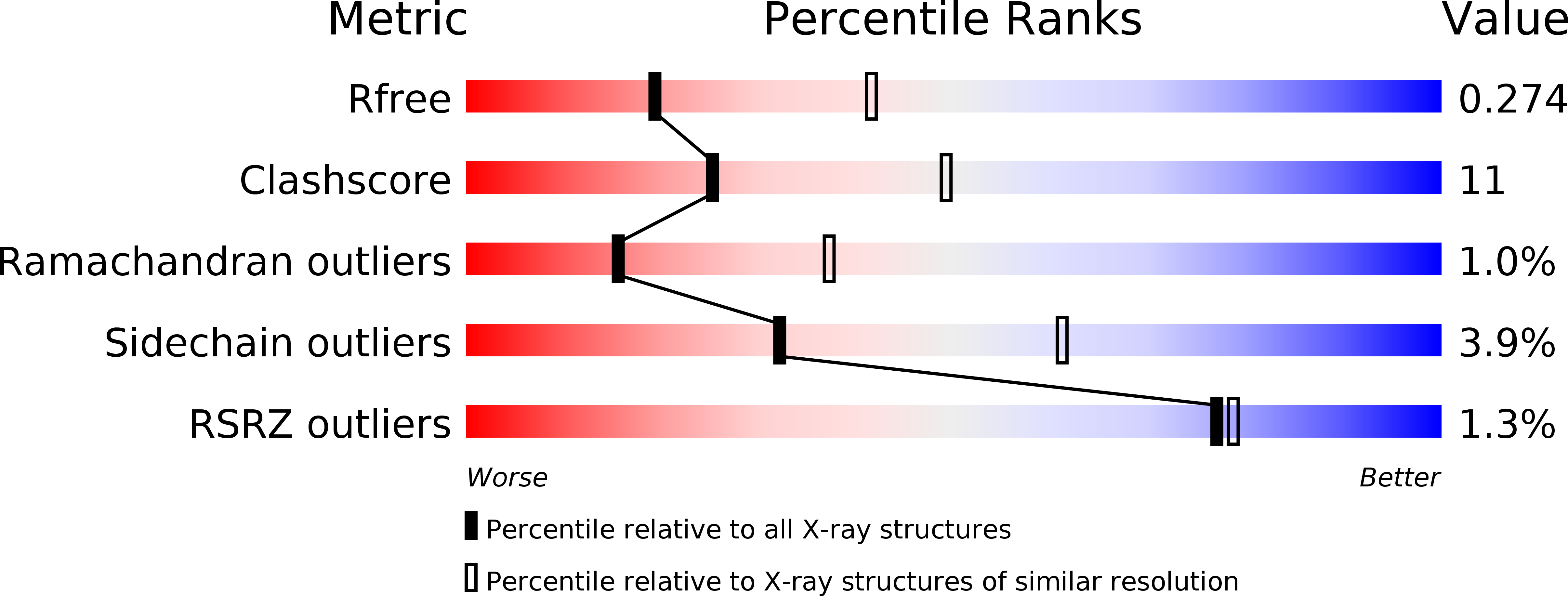
0.26
R-Value Work:
0.24
R-Value Observed:
0.25
Space Group:
C 2 2 21
Macromolecular Entities
Structures with similar UniProt ID
Protein Blast
Polymer Type:polypeptide(L)
Molecule:PROTEIN (human beta2-Glycoprotein I)
Gene (Uniprot):APOH
Chain IDs:A
Chain Length:319
Number of Molecules:1
Biological Source:Homo sapiens
Modified Residue
Compound ID Chain ID Parent Comp ID Details 2D Image
ASN A ASN GLYCOSYLATION SITE
Ligand Molecules
Primary Citation
Adhesion mechanism of human beta(2)-glycoprotein I to phospholipids based on its crystal structure.
EMBO J. 18 5166 5174 (1999)
PMID: 10508150 DOI: 10.1093/emboj/18.19.5166

Abstact

Human beta(2)-glycoprotein I is a heavily glycosylated five-domain plasma membrane-adhesion protein, which has been implicated in blood coagulation and clearance of apoptotic bodies from the circulation. It is also the key antigen in the autoimmune disease anti-phospholipid syndrome. The crystal structure of beta(2)-glycoprotein I isolated from human plasma reveals an elongated fish-hook-like arrangement of the globular short consensus repeat domains. Half of the C-terminal fifth domain deviates strongly from the standard fold, as observed in domains one to four. This aberrant half forms a specific phospholipid-binding site. A large patch of 14 positively charged residues provides electrostatic interactions with anionic phospholipid headgroups and an exposed membrane-insertion loop yields specificity for lipid layers. The observed spatial arrangement of the five domains suggests a functional partitioning of protein adhesion and membrane adhesion over the N- and C-terminal domains, respectively, separated by glycosylated bridging domains. Coordinates are in the Protein Data Bank (accession No. 1QUB).

Legend

Protein

Chemical

Disease

Primary Citation of related structures
Feedback Form
Name
Email
Institute
Feedback