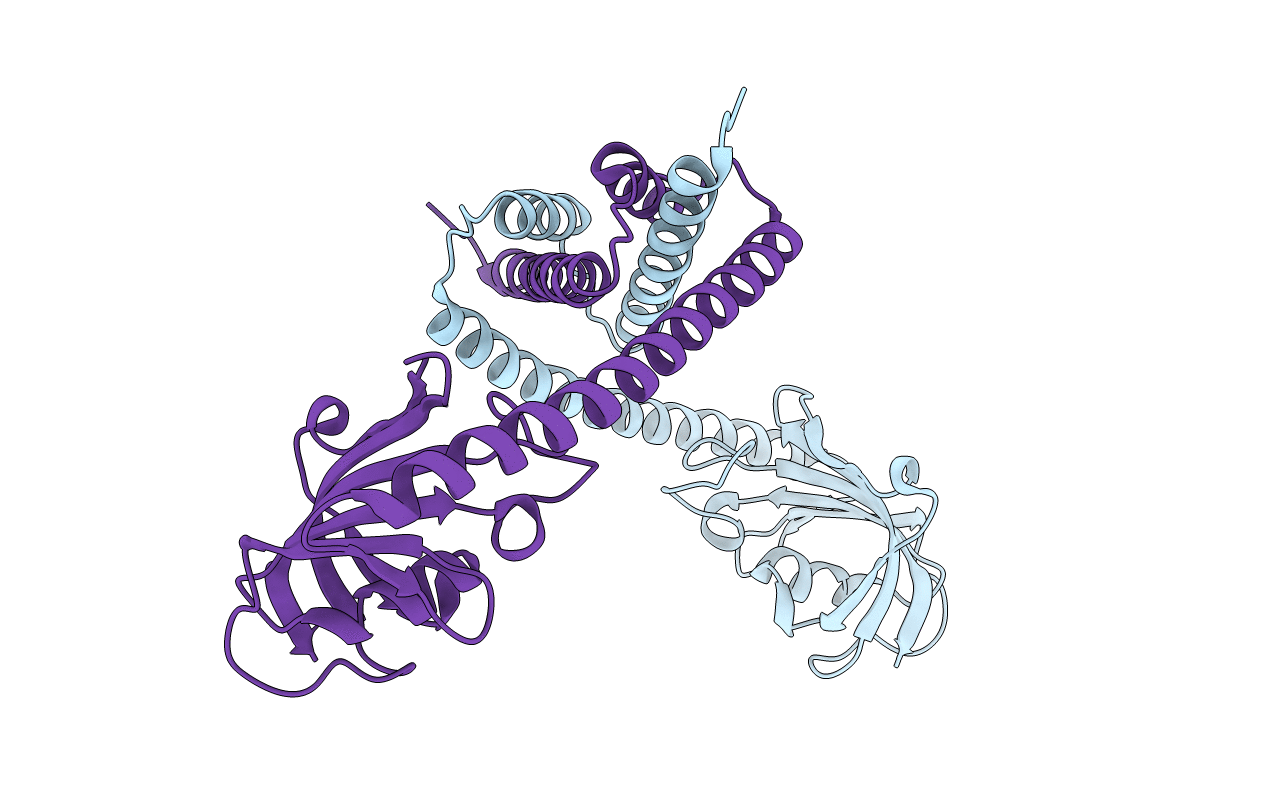
1q6h image
Deposition Date 2003-08-13
Release Date 2004-01-13
Last Version Date 2024-10-09
Entry Detail
PDB ID:
1Q6H
Keywords:
Title:
Crystal structure of a truncated form of FkpA from Escherichia coli
Biological Source:
Source Organism(s):
Escherichia coli (Taxon ID: 562)
Expression System(s):
Method Details:
Experimental Method:
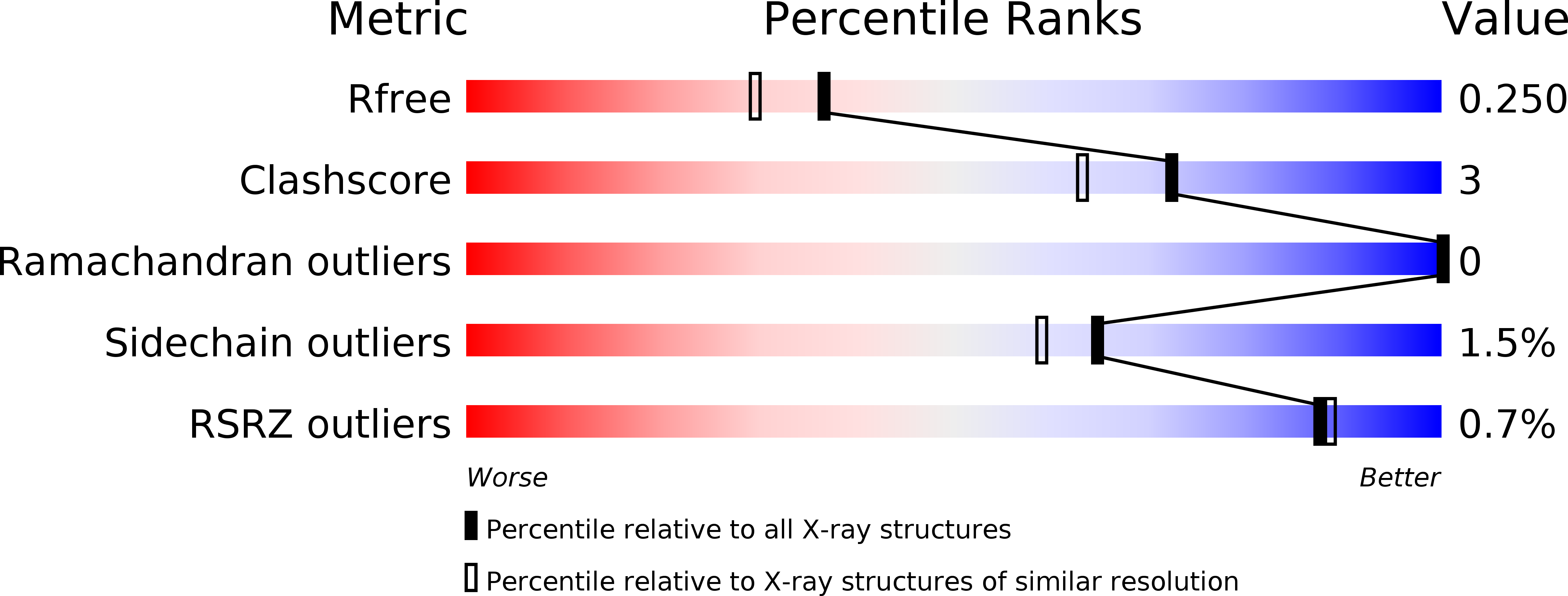
Resolution:
1.97 Å
R-Value Free:
0.22
R-Value Work:
0.18
R-Value Observed:
0.18
Space Group:
P 21 21 21
Macromolecular Entities
Structures with similar UniProt ID
Protein Blast
Polymer Type:polypeptide(L)
Molecule:FKBP-type peptidyl-prolyl cis-trans isomerase fkpA
Gene (Uniprot):fkpA
Chain IDs:A, B
Chain Length:224
Number of Molecules:2
Biological Source:Escherichia coli
Modified Residue
Compound ID Chain ID Parent Comp ID Details 2D Image
MSE A MET SELENOMETHIONINE
Primary Citation
Structural and functional studies of FkpA from Escherichia coli, a cis/trans peptidyl-prolyl isomerase with chaperone activity.
J.Mol.Biol. 335 595 608 (2004)
PMID: 14672666 DOI: 10.1016/j.jmb.2003.10.056

Abstact

The protein FkpA from the periplasm of Escherichia coli exhibits both cis/trans peptidyl-prolyl isomerase (PPIase) and chaperone activities. The crystal structure of the protein has been determined in three different forms: as the full-length native molecule, as a truncated form lacking the last 21 residues, and as the same truncated form in complex with the immunosuppressant ligand, FK506. FkpA is a dimeric molecule in which the 245-residue subunit is divided into two domains. The N-terminal domain includes three helices that are interlaced with those of the other subunit to provide all inter-subunit contacts maintaining the dimeric species. The C-terminal domain, which belongs to the FK506-binding protein (FKBP) family, binds the FK506 ligand. The overall form of the dimer is V-shaped, and the different crystal structures reveal a flexibility in the relative orientation of the two C-terminal domains located at the extremities of the V. The deletion mutant FkpNL, comprising the N-terminal domain only, exists in solution as a mixture of monomeric and dimeric species, and exhibits chaperone activity. By contrast, a deletion mutant comprising the C-terminal domain only is monomeric, and although it shows PPIase activity, it is devoid of chaperone function. These results suggest that the chaperone and catalytic activities reside in the N and C-terminal domains, respectively. Accordingly, the observed mobility of the C-terminal domains of the dimeric molecule could effectively adapt these two independent folding functions of FkpA to polypeptide substrates.

Legend

Protein

Chemical

Disease

Primary Citation of related structures
Feedback Form
Name
Email
Institute
Feedback