1mlz image
Deposition Date 2002-09-02
Release Date 2002-12-04
Last Version Date 2024-02-14
Entry Detail
PDB ID:
1MLZ
Keywords:
Title:
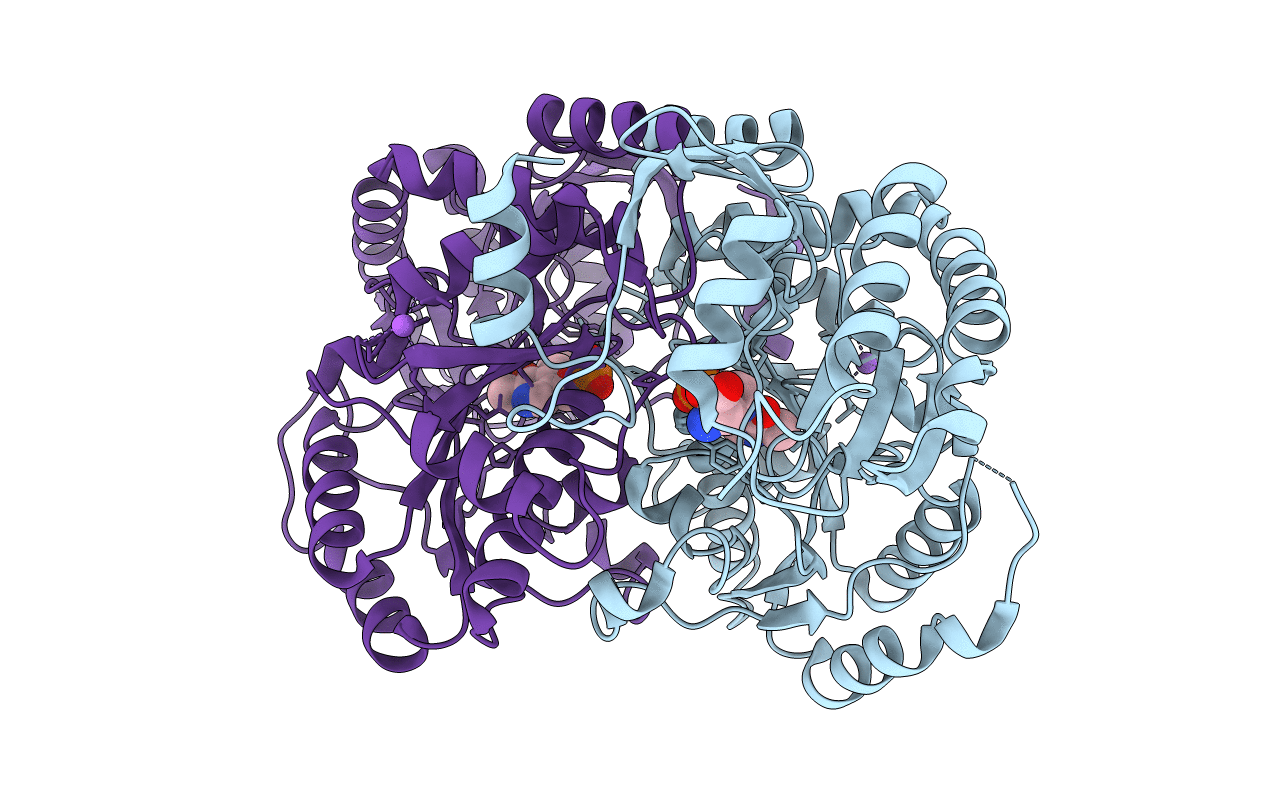
Crystal Structure of 7,8-Diaminopelargonic Acid Synthase in complex with the trans-isomer of amiclenomycin.
Biological Source:
Source Organism:
Escherichia coli (Taxon ID: 562)
Method Details:
Experimental Method:
Resolution:
2.15 Å
R-Value Free:
0.24
R-Value Work:
0.20
R-Value Observed:
0.20
Space Group:
C 1 2 1

Macromolecular Entities
Structures with similar UniProt ID
Protein Blast
Polymer Type:polypeptide(L)
Molecule:7,8-diamino-pelargonic acid aminotransferase
Gene (Uniprot):bioA
Chain IDs:A, B
Chain Length:429
Number of Molecules:2
Biological Source:Escherichia coli
Primary Citation
Structural basis for the inhibition of the biosynthesis of biotin by the antibiotic amiclenomycin
J.Biol.Chem. 277 43352 43358 (2002)
PMID: 12218056 DOI: 10.1074/jbc.M207239200

Abstact

The antibiotic amiclenomycin blocks the biosynthesis of biotin by inhibiting the pyridoxal-phosphate-dependent enzyme diaminopelargonic acid synthase. Inactivation of the enzyme is stereoselective, i.e. the cis isomer of amiclenomycin is a potent inhibitor, whereas the trans isomer is much less reactive. The crystal structure of the complex of the holoenzyme and amiclenomycin at 1.8 A resolution reveals that the internal aldimine linkage between the cofactor and the side chain of the catalytic residue Lys-274 is broken. Instead, a covalent bond is formed between the 4-amino nitrogen of amiclenomycin and the C4' carbon atom of pyridoxal-phosphate. The electron density for the bound inhibitor suggests that aromatization of the cyclohexadiene ring has occurred upon formation of the covalent adduct. This process could be initiated by proton abstraction at the C4 carbon atom of the cyclohexadiene ring, possibly by the proximal side chain of Lys-274, leading to the tautomer Schiff base followed by the removal of the second allylic hydrogen. The carboxyl tail of the amiclenomycin moiety forms a salt link to the conserved residue Arg-391 in the substrate-binding site. Modeling suggests steric hindrance at the active site as the determinant of the weak inhibiting potency of the trans isomer.

Legend

Protein

Chemical

Disease

Primary Citation of related structures
Feedback Form
Name
Email
Institute
Feedback