1i8k image
Deposition Date 2001-03-14
Release Date 2002-03-14
Last Version Date 2024-11-13
Entry Detail
PDB ID:
1I8K
Keywords:
Title:
CRYSTAL STRUCTURE OF DSFV MR1 IN COMPLEX WITH THE PEPTIDE ANTIGEN OF THE MUTANT EPIDERMAL GROWTH FACTOR RECEPTOR, EGFRVIII, AT LIQUID NITROGEN TEMPERATURE
Biological Source:
Source Organism:
Mus musculus (Taxon ID: 10090)
Host Organism:
Method Details:
Experimental Method:
Resolution:
1.80 Å
R-Value Free:
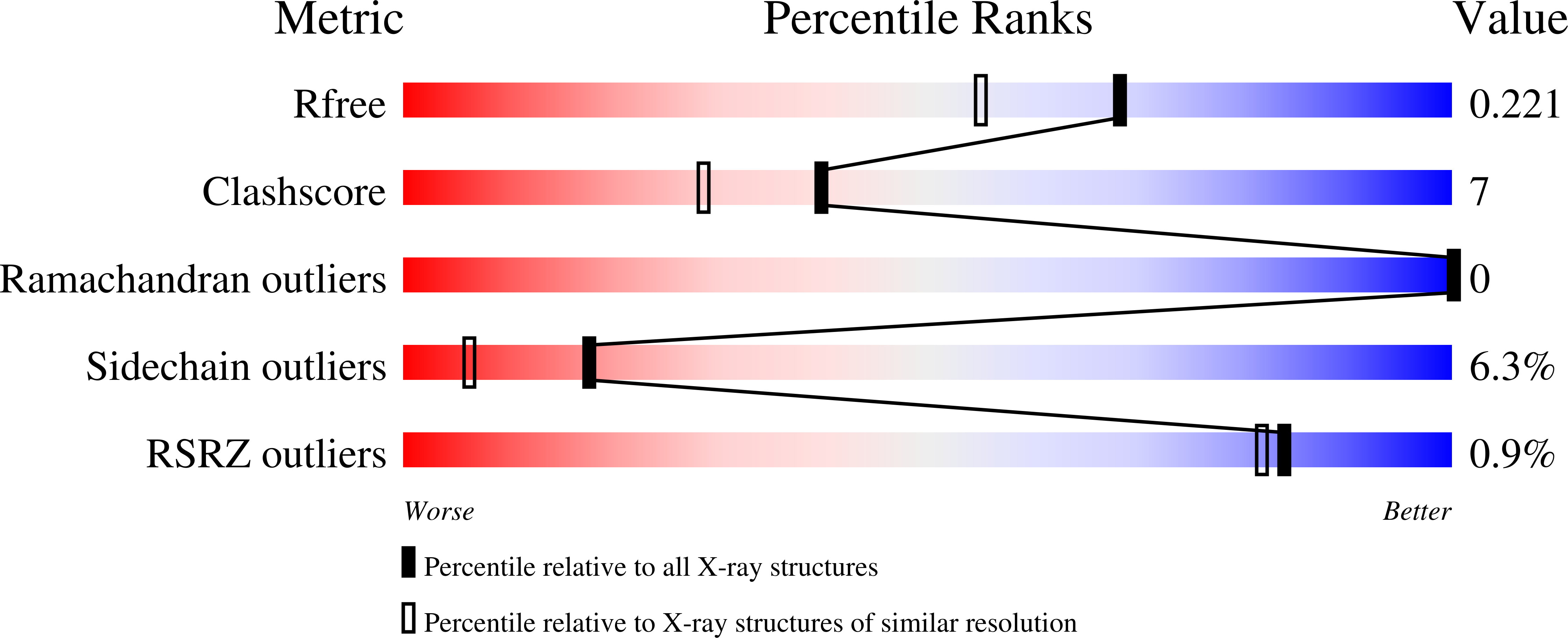
0.22
R-Value Work:
0.17
R-Value Observed:
0.17
Space Group:
C 2 2 21
Macromolecular Entities
Structures with similar UniProt ID
Protein Blast
Polymer Type:polypeptide(L)
Molecule:EPIDERMAL GROWTH FACTOR RECEPTOR ANTIBODY MR1SCFV LIGHT CHAIN
Mutagens:D100C
Chain IDs:A
Chain Length:107
Number of Molecules:1
Biological Source:Mus musculus
Structures with similar UniProt ID
Protein Blast
Polymer Type:polypeptide(L)
Molecule:EPIDERMAL GROWTH FACTOR RECEPTOR ANTIBODY MR1SCFV HEAVY CHAIN
Mutagens:R344C
Chain IDs:B
Chain Length:124
Number of Molecules:1
Biological Source:Mus musculus
Polymer Type:polypeptide(L)
Molecule:EPIDERMAL GROWTH FACTOR RECEPTOR, EGFRVIII PEPTIDE ANTIGEN
Chain IDs:C
Chain Length:12
Number of Molecules:1
Biological Source:
Primary Citation
Antibody recognition of a conformational epitope in a peptide antigen: Fv-peptide complex of an antibody fragment specific for the mutant EGF receptor, EGFRvIII.
J.Mol.Biol. 308 883 893 (2001)
PMID: 11352579 DOI: 10.1006/jmbi.2001.4628

Abstact

Epitope mapping studies and the determination of the structure to 1.8 A resolution have been carried out for the antigen-binding fragment MR1 in complex with peptide antigen. MR1 is specific for the novel fusion junction of the mutant epidermal growth factor receptor EGFRvIII and has been reported to have a high degree of specificity for the mutant EGFRvIII over the wild-type EGF receptor. The structure of the complex shows that the peptide antigen residue side-chains found by epitope mapping studies to be critical for recognition are accommodated in pockets on the surface of the Fv. However, the most distinctive portion of the peptide antigen, the novel fusion glycine residue, makes no contact to the Fv and does not contribute directly to the epitope. The specificity of MR1 lies in the ability of this glycine residue to assume the restricted conformation needed to form a type II' beta-hairpin turn more easily, and demonstrates that a peptide antigen can be used to generate a conformational epitope.

Legend

Protein

Chemical

Disease

Primary Citation of related structures
Feedback Form
Name
Email
Institute
Feedback