1ca4 image
Deposition Date 1999-02-23
Release Date 1999-04-12
Last Version Date 2023-12-27
Entry Detail
PDB ID:
1CA4
Keywords:
Title:
STRUCTURE OF TNF RECEPTOR ASSOCIATED FACTOR 2 (TRAF2)
Biological Source:
Source Organism(s):
Homo sapiens (Taxon ID: 9606)
Expression System(s):
Method Details:
Experimental Method:
Resolution:
2.20 Å
R-Value Free:
0.25
R-Value Work:
0.20
Space Group:
C 1 2 1
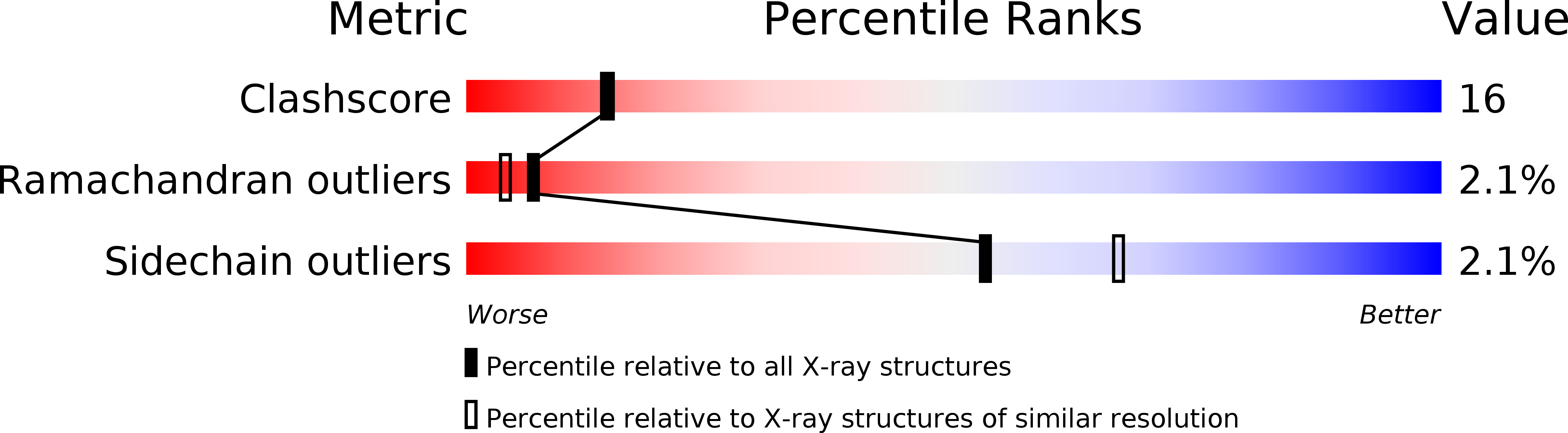
Macromolecular Entities
Structures with similar UniProt ID
Protein Blast
Polymer Type:polypeptide(L)
Molecule:PROTEIN (TNF RECEPTOR ASSOCIATED FACTOR 2)
Gene (Uniprot):TRAF2
Chain IDs:A, B, C, D, E, F
Chain Length:168
Number of Molecules:6
Biological Source:Homo sapiens
Primary Citation
Structural basis for self-association and receptor recognition of human TRAF2.
Nature 398 533 538 (1999)
PMID: 10206649 DOI: 10.1038/19110

Abstact

Tumour necrosis factor (TNF)-receptor-associated factors (TRAFs) form a family of cytoplasmic adapter proteins that mediate signal transduction from many members of the TNF-receptor superfamily and the interleukin-1 receptor. They are important in the regulation of cell survival and cell death. The carboxy-terminal region of TRAFs (the TRAF domain) is required for self-association and interaction with receptors. The domain contains a predicted coiled-coil region that is followed by a highly conserved TRAF-C domain. Here we report the crystal structure of the TRAF domain of human TRAF2, both alone and in complex with a peptide from TNF receptor-2 (TNF-R2). The structures reveal a trimeric self-association of the TRAF domain, which we confirm by studies in solution. The TRAF-C domain forms a new, eight-stranded antiparallel beta-sandwich structure. The TNF-R2 peptide binds to a conserved shallow surface depression on one TRAF-C domain and does not contact the other protomers of the trimer. The nature of the interaction indicates that an SXXE motif may be a TRAF2-binding consensus sequence. The trimeric structure of the TRAF domain provides an avidity-based explanation for the dependence of TRAF recruitment on the oligomerization of the receptors by their trimeric extracellular ligands.

Legend

Protein

Chemical

Disease

Primary Citation of related structures
Feedback Form
Name
Email
Institute
Feedback