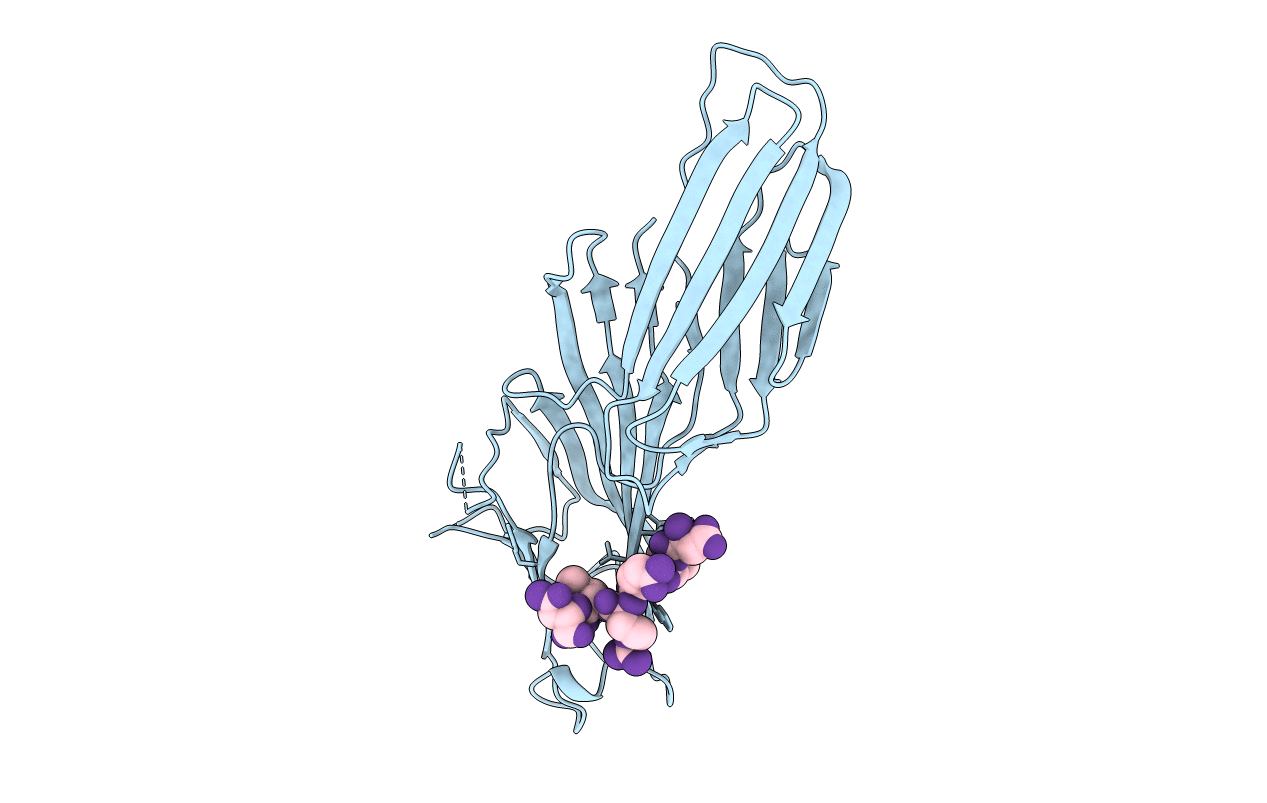
1bxx image
Deposition Date 1998-10-08
Release Date 1998-11-25
Last Version Date 2023-08-09
Entry Detail
PDB ID:
1BXX
Title:
MU2 ADAPTIN SUBUNIT (AP50) OF AP2 ADAPTOR (SECOND DOMAIN), COMPLEXED WITH TGN38 INTERNALIZATION PEPTIDE DYQRLN
Biological Source:
Source Organism:
Host Organism:
Method Details:
Experimental Method:
Resolution:
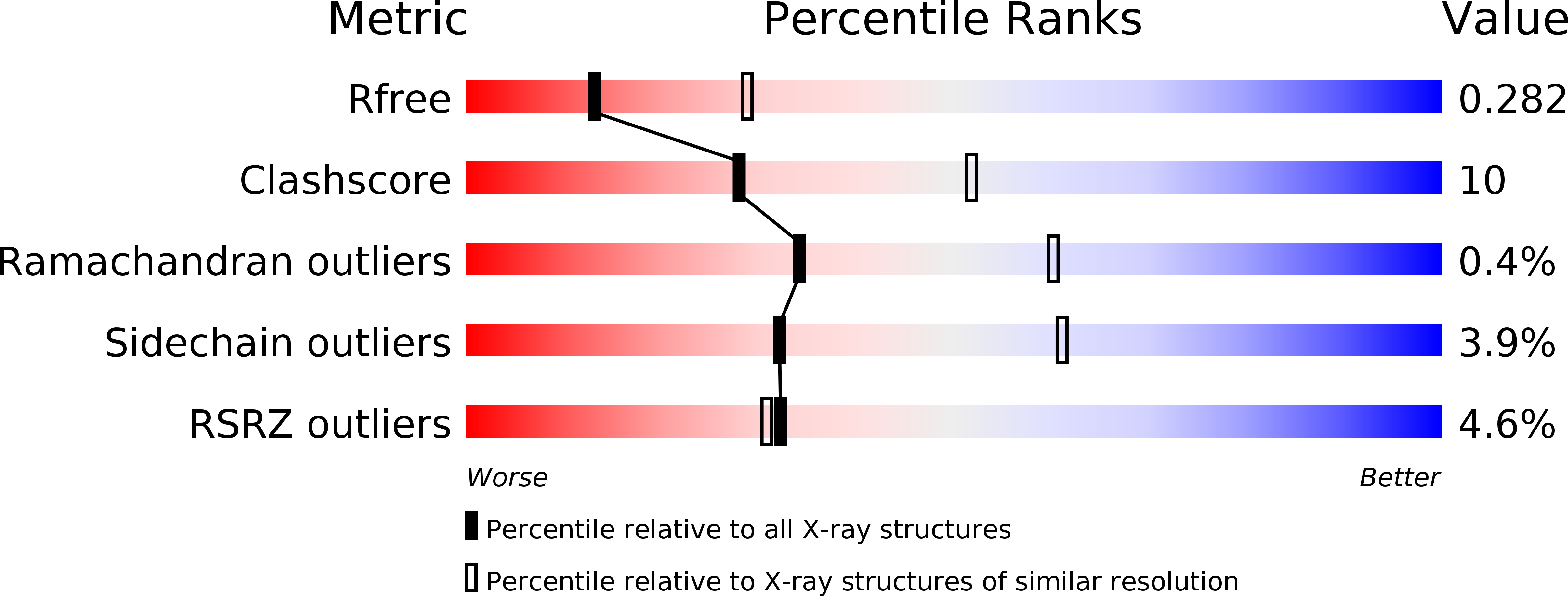
2.70 Å
R-Value Free:
0.32
R-Value Work:
0.26
R-Value Observed:
0.28
Space Group:
P 64
Macromolecular Entities
Structures with similar UniProt ID
Protein Blast
Polymer Type:polypeptide(L)
Molecule:PROTEIN (AP50)
Gene (Uniprot):Ap2m1
Chain IDs:A
Chain Length:285
Number of Molecules:1
Biological Source:Rattus norvegicus
Polymer Type:polypeptide(L)
Molecule:PROTEIN (TGN38 PEPTIDE)
Chain IDs:B (auth: P)
Chain Length:6
Number of Molecules:1
Biological Source:synthetic construct
Primary Citation
A structural explanation for the recognition of tyrosine-based endocytotic signals.
Science 282 1327 1332 (1998)
PMID: 9812899 DOI: 10.1126/science.282.5392.1327

Abstact

Many cell surface proteins are marked for endocytosis by a cytoplasmic sequence motif, tyrosine-X-X-(hydrophobic residue), that is recognized by the mu2 subunit of AP2 adaptors. Crystal structures of the internalization signal binding domain of mu2 complexed with the internalization signal peptides of epidermal growth factor receptor and the trans-Golgi network protein TGN38 have been determined at 2.7 angstrom resolution. The signal peptides adopted an extended conformation rather than the expected tight turn. Specificity was conferred by hydrophobic pockets that bind the tyrosine and leucine in the peptide. In the crystal, the protein forms dimers that could increase the strength and specificity of binding to dimeric receptors.

Legend

Protein

Chemical

Disease

Primary Citation of related structures
Feedback Form
Name
Email
Institute
Feedback