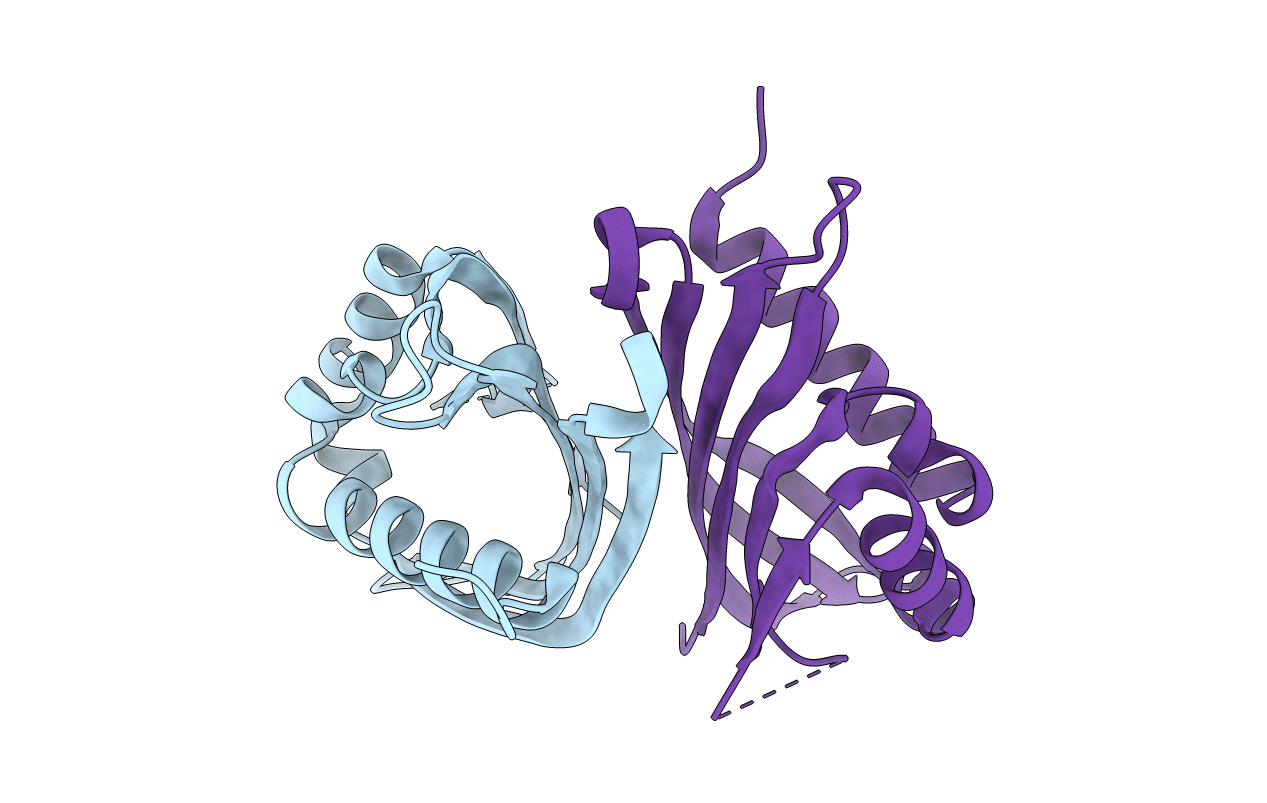
1ZX2 image
Deposition Date 2005-06-06
Release Date 2005-06-21
Last Version Date 2024-10-16
Entry Detail
PDB ID:
1ZX2
Title:
Crystal Structure of Yeast UBP3-associated Protein BRE5
Biological Source:
Source Organism:
Method Details:
Experimental Method:
Resolution:
2.10 Å
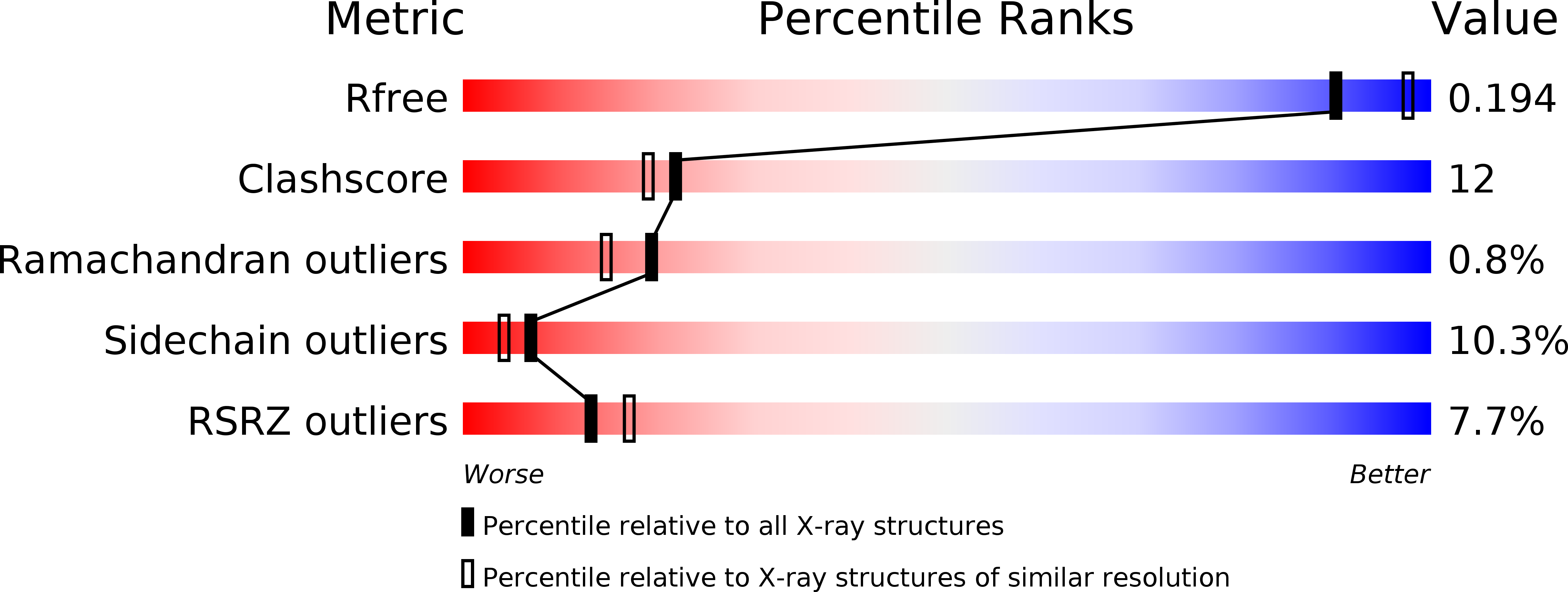
R-Value Free:
0.21
R-Value Work:
0.18
R-Value Observed:
0.18
Space Group:
P 61 2 2
Macromolecular Entities
Structures with similar UniProt ID
Protein Blast
Polymer Type:polypeptide(L)
Molecule:UBP3-associated protein BRE5
Gene (Uniprot):BRE5
Chain IDs:A, B
Chain Length:147
Number of Molecules:2
Biological Source:Saccharomyces cerevisiae
Primary Citation
Structural basis for interaction between the Ubp3 deubiquitinating enzyme and its Bre5 cofactor
J.Biol.Chem. 280 29176 29185 (2005)
PMID: 15955808 DOI: 10.1074/jbc.M502975200

Abstact

The Bre5 protein is a cofactor for the deubiquitinating enzyme Ubp3, and it contains a nuclear transfer factor 2 (NTF2)-like protein recognition module that is essential for Ubp3 activity. In this study, we report the x-ray crystal structure of the Bre5 NTF2-like domain and show that it forms a homodimeric structure that is similar to other NTF2-like domains, except for the presence of an intermolecular disulfide bond in the crystals. Sedimentation equilibrium studies reveal that under non-reducing conditions, the Bre5 NTF2-like domain is exclusively dimeric, whereas a disulfide bond-deficient mutant undergoes a monomer-dimer equilibrium with a dissociation constant in the midnanomolar range, suggesting that dimer formation and possibly also disulfide bond formation may modulate Bre5 function in vivo. Using deletion analysis, we also identify a novel N-terminal domain of Ubp3 that is necessary and sufficient for interaction with Bre5 and use isothermal titration calorimetry to show that Bre5 and Ubp3 form a 2:1 complex, in contrast to other reported NTF2-like domain/protein interactions that form 1:1 complexes. Finally, we employ structure-based mutagenesis to map the Ubp3 binding surface of Bre5 to a region near the Bre5 dimer interface and show that this binding surface of Bre5 is important for Ubp3 function in vivo. Together, these studies provide novel insights into protein recognition by NTF2-like domains and provide a molecular scaffold for understanding how Ubp3 function is regulated by Bre5 cofactor binding.

Legend

Protein

Chemical

Disease

Primary Citation of related structures
Feedback Form
Name
Email
Institute
Feedback