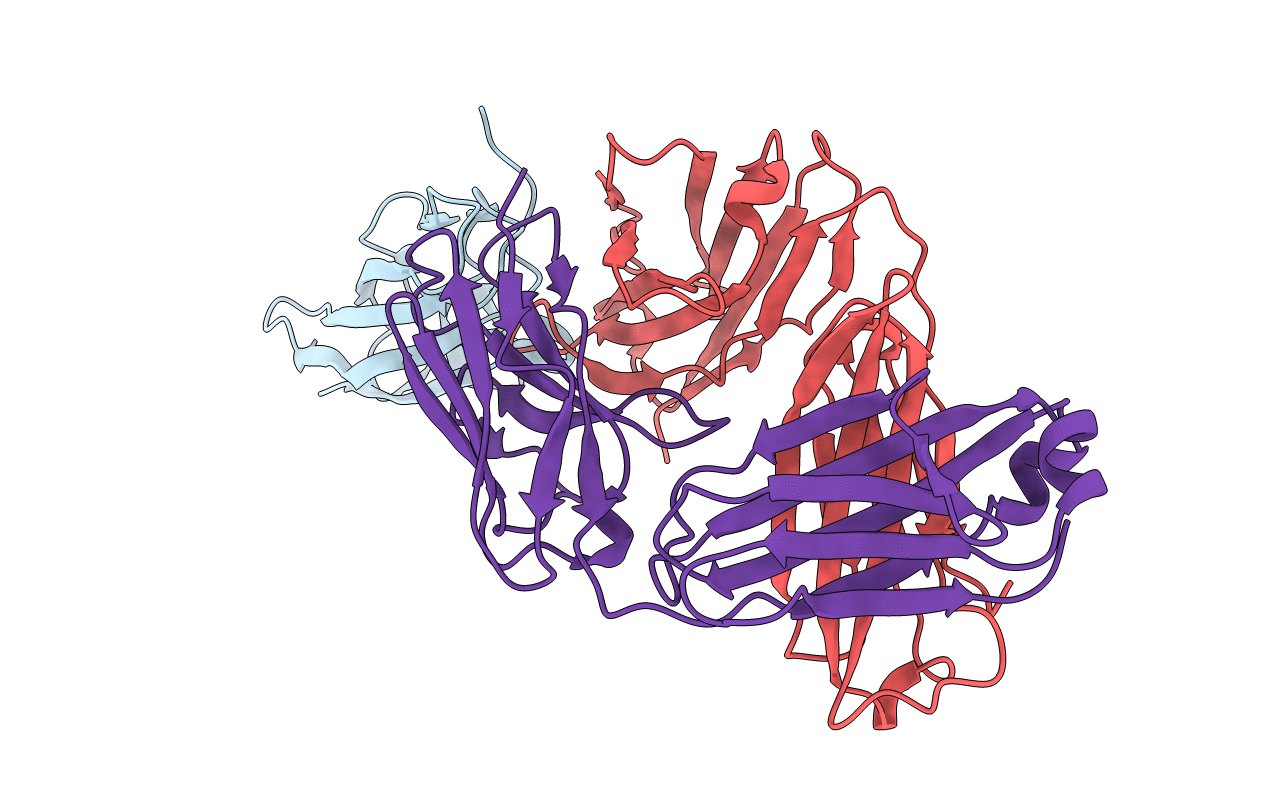
1ZTX image
Deposition Date 2005-05-27
Release Date 2005-10-04
Last Version Date 2024-10-30
Entry Detail
PDB ID:
1ZTX
Title:
West Nile Virus Envelope Protein DIII in complex with neutralizing E16 antibody Fab
Biological Source:
Source Organism:
West Nile virus (Taxon ID: 11082)
Mus musculus (Taxon ID: 10090)
Host Organism:
Method Details:
Experimental Method:
Resolution:
2.50 Å
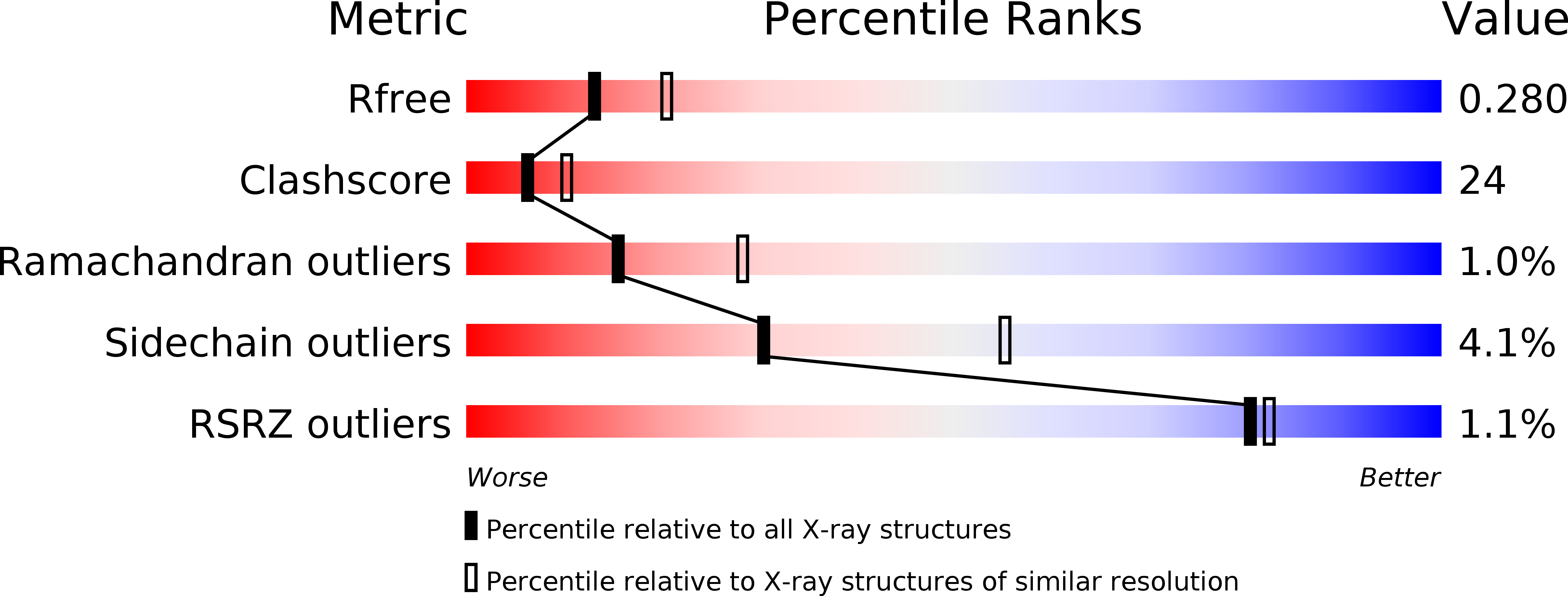
R-Value Free:
0.28
R-Value Work:
0.20
R-Value Observed:
0.22
Space Group:
P 21 21 21
Macromolecular Entities
Structures with similar UniProt ID
Protein Blast
Polymer Type:polypeptide(L)
Molecule:Envelope protein
Gene (Uniprot):E
Chain IDs:A (auth: E)
Chain Length:108
Number of Molecules:1
Biological Source:West Nile virus
Polymer Type:polypeptide(L)
Molecule:Heavy Chain of E16 Antibody
Chain IDs:B (auth: H)
Chain Length:219
Number of Molecules:1
Biological Source:Mus musculus
Polymer Type:polypeptide(L)
Molecule:Light Chain of E16 Antibody
Chain IDs:C (auth: L)
Chain Length:212
Number of Molecules:1
Biological Source:Mus musculus
Primary Citation
Structural basis of West Nile virus neutralization by a therapeutic antibody.
Nature 437 764 769 (2005)
PMID: 16193056 DOI: 10.1038/nature03956

Abstact

West Nile virus is a mosquito-borne flavivirus closely related to the human epidemic-causing dengue, yellow fever and Japanese encephalitis viruses. In establishing infection these icosahedral viruses undergo endosomal membrane fusion catalysed by envelope glycoprotein rearrangement of the putative receptor-binding domain III (DIII) and exposure of the hydrophobic fusion loop. Humoral immunity has an essential protective function early in the course of West Nile virus infection. Here, we investigate the mechanism of neutralization by the E16 monoclonal antibody that specifically binds DIII. Structurally, the E16 antibody Fab fragment engages 16 residues positioned on four loops of DIII, a consensus neutralizing epitope sequence conserved in West Nile virus and distinct in other flaviviruses. The E16 epitope protrudes from the surface of mature virions in three distinct environments, and docking studies predict Fab binding will leave five-fold clustered epitopes exposed. We also show that E16 inhibits infection primarily at a step after viral attachment, potentially by blocking envelope glycoprotein conformational changes. Collectively, our results suggest that a vaccine strategy targeting the dominant DIII epitope may elicit safe and effective immune responses against flaviviral diseases.

Legend

Protein

Chemical

Disease

Primary Citation of related structures
Feedback Form
Name
Email
Institute
Feedback