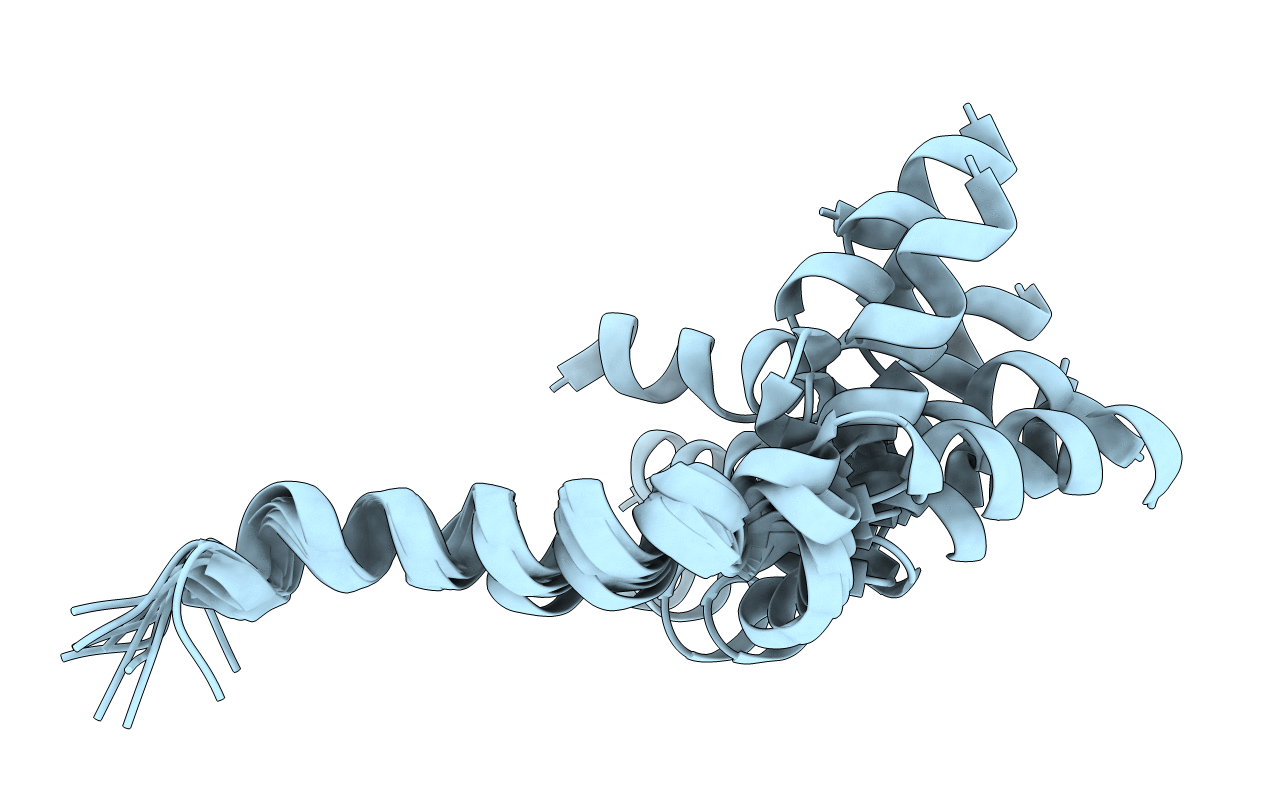
1ZRX image
Deposition Date 2005-05-23
Release Date 2005-10-04
Last Version Date 2024-05-22
Entry Detail
PDB ID:
1ZRX
Title:
solution structure of stomoxyn in H20/TFE 50%
Method Details:
Experimental Method:
Conformers Calculated:
100
Conformers Submitted:
10
Selection Criteria:
structures with the lowest energy and the least restraint violations
Macromolecular Entities
Structures with similar UniProt ID
Protein Blast
Polymer Type:polypeptide(L)
Molecule:stomoxyn
Chain IDs:A
Chain Length:42
Number of Molecules:1
Biological Source:
Ligand Molecules
Primary Citation
Solution structures of stomoxyn and spinigerin, two insect antimicrobial peptides with an alpha-helical conformation.
Biopolymers 81 92 103 (2006)
PMID: 16170803 DOI: 10.1002/bip.20370

Abstact

Stomoxyn and spinigerin belong to the class of linear cysteine-free insect antimicrobial peptides that kill a range of microorganisms, parasites, and some viruses but without any lytic activity against mammalian erythrocytes. Stomoxyn is localized in the gut epithelium of the nonvector stable fly that is sympatric with the trypanosome vector tsetse fly. Spinigerin is stored and secreted by hemocytes from the fungus-growing termite. The structure of synthetic stomoxyn and spinigerin in aqueous solution and in TFE/water mixtures was analyzed by CD and NMR spectroscopy combined with molecular modeling calculations. Stomoxyn and spinigerin adopt a flexible random coil structure in water while both assume a stable helical structure in the presence of TFE. In 50% TFE, the structure of stomoxyn is typical of cecropins, including an amphipathic helix at the N-terminus and a hydrophobic C-terminus with helical features that probably fold in a helical conformation at higher TFE concentration. In contrast to stomoxyn, spinigerin acquires very rapidly a helical conformation. In 10% TFE the helix is highly bent and the structure is poorly defined. In 50% TFE, the helical structure is well defined all along its sequence, and the slightly bent alpha-helix displays an amphiphilic character, as observed for magainin 2. The structural similarities between stomoxyn and cecropin A from Hyalophora cecropia and between spinigerin and magainin 2 suggest a similar mode of action on the bacterial membranes of both pairs of peptides. Our results also confirm that TFE induces helix formation and propagation for amino acids showing helical propensity in water but also enhances the helix propagation propensity of nonpolar beta-branched residues.

Legend

Protein

Chemical

Disease

Primary Citation of related structures
Feedback Form
Name
Email
Institute
Feedback