1ZP2 image
Deposition Date 2005-05-16
Release Date 2005-07-19
Last Version Date 2024-02-14
Entry Detail
PDB ID:
1ZP2
Title:
Structure of the Mediator subunit cyclin C
Biological Source:
Source Organism:
Host Organism:
Method Details:
Experimental Method:
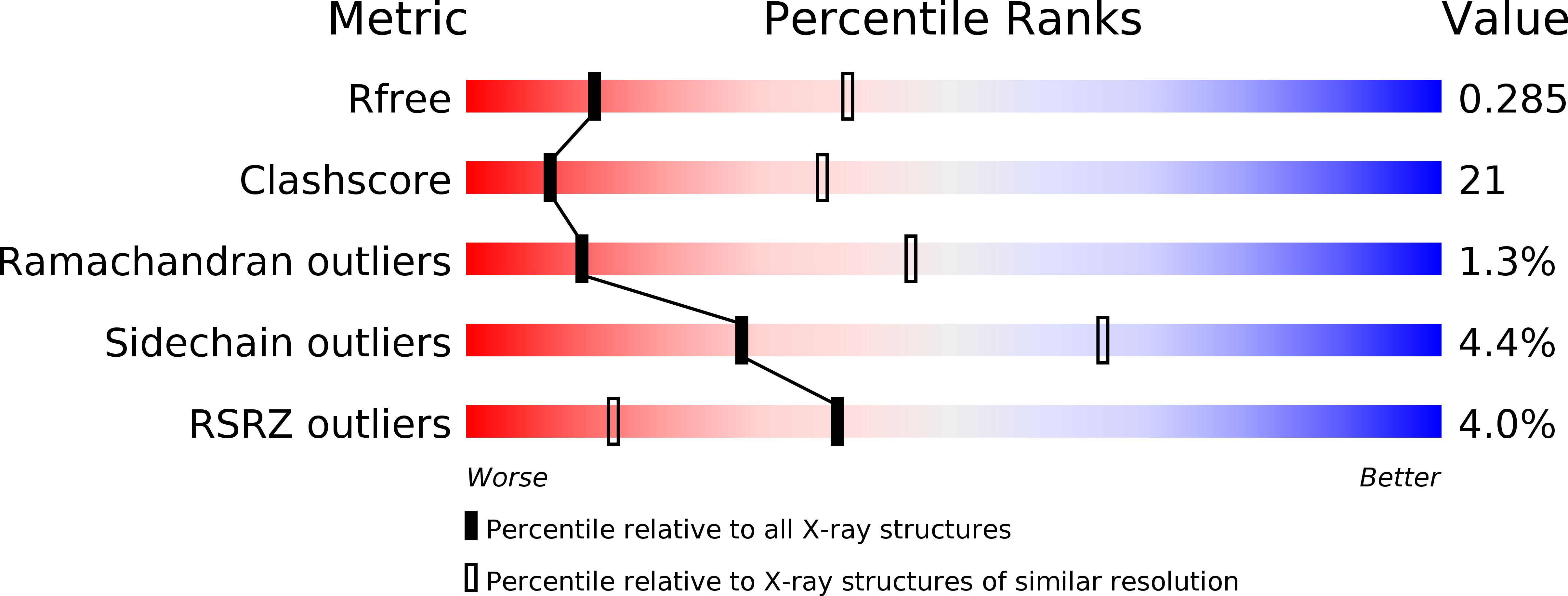
Resolution:
3.00 Å
R-Value Free:
0.28
R-Value Work:
0.24
R-Value Observed:
0.29
Space Group:
P 31 2 1
Macromolecular Entities
Structures with similar UniProt ID
Protein Blast
Polymer Type:polypeptide(L)
Molecule:RNA polymerase II holoenzyme cyclin-like subunit
Gene (Uniprot):srb11
Chain IDs:A
Chain Length:235
Number of Molecules:1
Biological Source:Schizosaccharomyces pombe
Ligand Molecules
Primary Citation
Structure of the Mediator Subunit Cyclin C and its Implications for CDK8 Function.
J.Mol.Biol. 350 833 842 (2005)
PMID: 15979093 DOI: 10.1016/j.jmb.2005.05.041

Abstact

Cyclin C binds the cyclin-dependent kinases CDK8 and CDK3, which regulate mRNA transcription and the cell cycle, respectively. The crystal structure of cyclin C reveals two canonical five-helix repeats and a specific N-terminal helix. In contrast to other cyclins, the N-terminal helix is short, mobile, and in an exposed position that allows for interactions with proteins other than the CDKs. A model of the CDK8/cyclin C pair reveals two regions in the interface with apparently distinct roles. A conserved region explains promiscuous binding of cyclin C to CDK8 and CDK3, and a non-conserved region may be responsible for discrimination of CDK8 against other CDKs involved in transcription. A conserved and cyclin C-specific surface groove may recruit substrates near the CDK8 active site. Activation of CDKs generally involves phosphorylation of a loop at a threonine residue. In CDK8, this loop is longer and the threonine is absent, suggesting an alternative mechanism of activation that we discuss based on a CDK8-cyclin C model.

Legend

Protein

Chemical

Disease

Primary Citation of related structures
Feedback Form
Name
Email
Institute
Feedback