1ZGS image
Deposition Date 2005-04-22
Release Date 2005-10-11
Last Version Date 2024-03-13
Entry Detail
PDB ID:
1ZGS
Title:
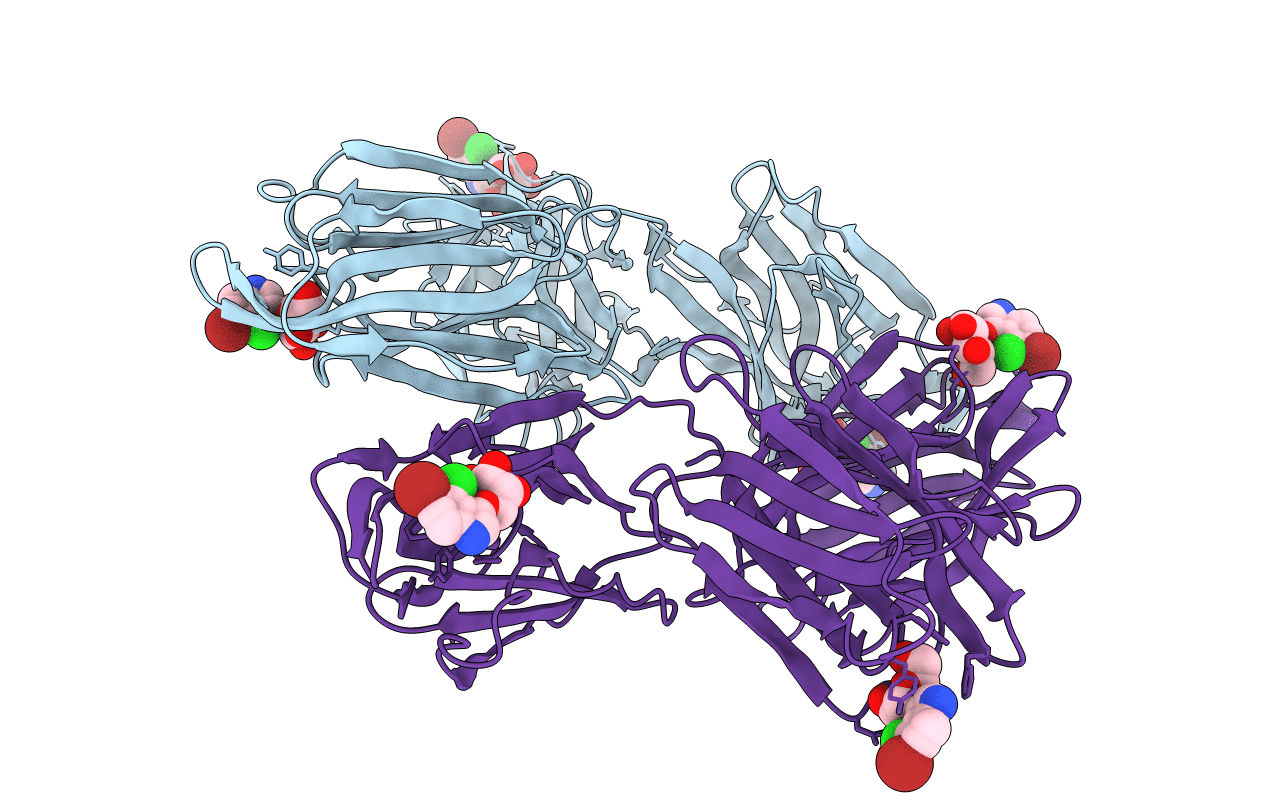
Parkia platycephala seed lectin in complex with 5-bromo-4-chloro-3-indolyl-a-D-mannose
Biological Source:
Source Organism:
Method Details:
Experimental Method:
Resolution:
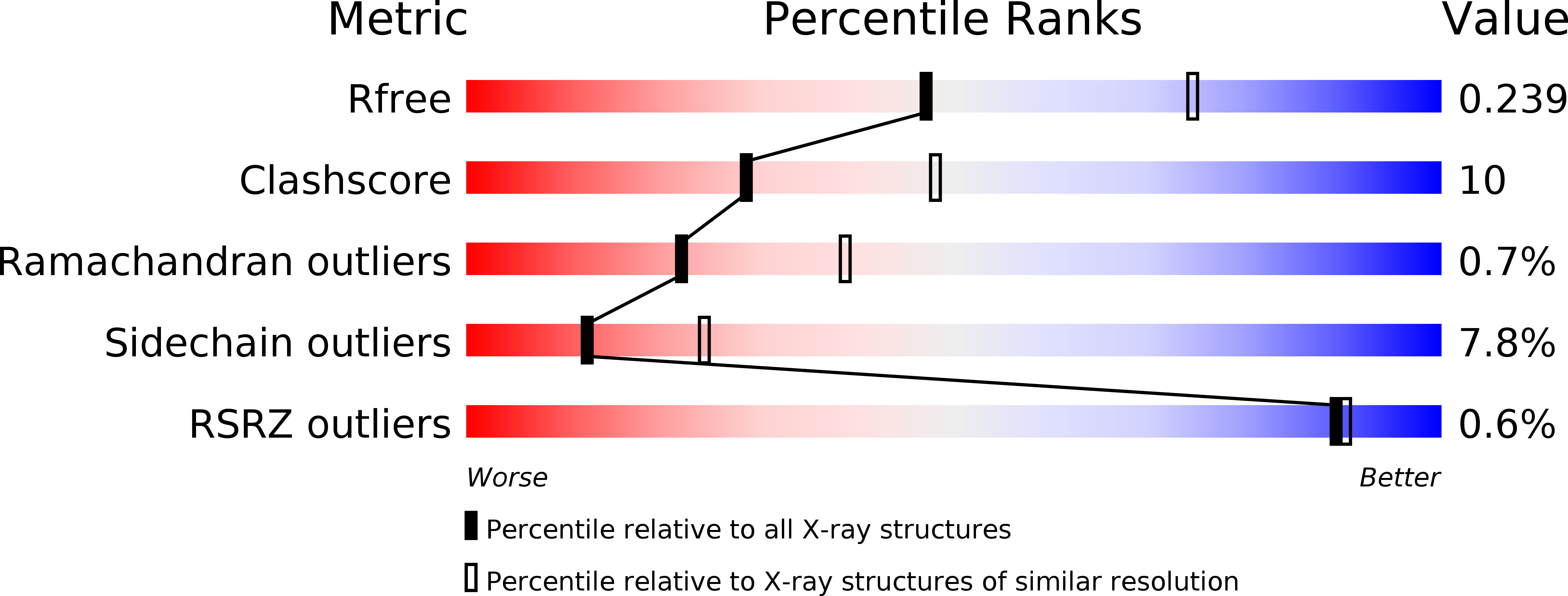
2.50 Å
R-Value Free:
0.24
R-Value Work:
0.20
R-Value Observed:
0.21
Space Group:
P 1 21 1
Macromolecular Entities
Structures with similar UniProt ID
Protein Blast
Polymer Type:polypeptide(L)
Molecule:Mannose/glucose-specific lectin
Chain IDs:A, B
Chain Length:447
Number of Molecules:2
Biological Source:Parkia platycephala
Ligand Molecules
Primary Citation
The first crystal structure of a mimosoideae lectin reveals a novel quaternary arrangement of a widespread domain.
J.Mol.Biol. 353 574 583 (2005)
PMID: 16185708 DOI: 10.1016/j.jmb.2005.08.055

Abstact

The crystal structures of the apo and mannose-bound Parkia platycephala seed lectin represent the first structure of a Mimosoideae lectin and a novel circular arrangement of beta-prism domains, and highlight the adaptability of the beta-prism fold as a building block in the evolution of plant lectins. The P.platycephala lectin is a dimer both in solution and in the crystals. Mannose binding to each of the three homologous carbohydrate-recognition domains of the lectin occurs through different modes, and restrains the flexibility of surface-exposed loops and residues involved in carbohydrate recognition. The planar array of carbohydrate-binding sites on the rim of the toroid-shaped structure of the P.platycephala lectin dimer immediately suggests a mechanism to promote multivalent interactions leading to cross-linking of carbohydrate ligands as part of the host strategy against phytopredators and pathogens. The cyclic structure of the P.platycephala lectin points to the convergent evolution of a structural principle for the construction of lectins involved in host defense or in attacking other organisms.

Legend

Protein

Chemical

Disease

Primary Citation of related structures
Feedback Form
Name
Email
Institute
Feedback