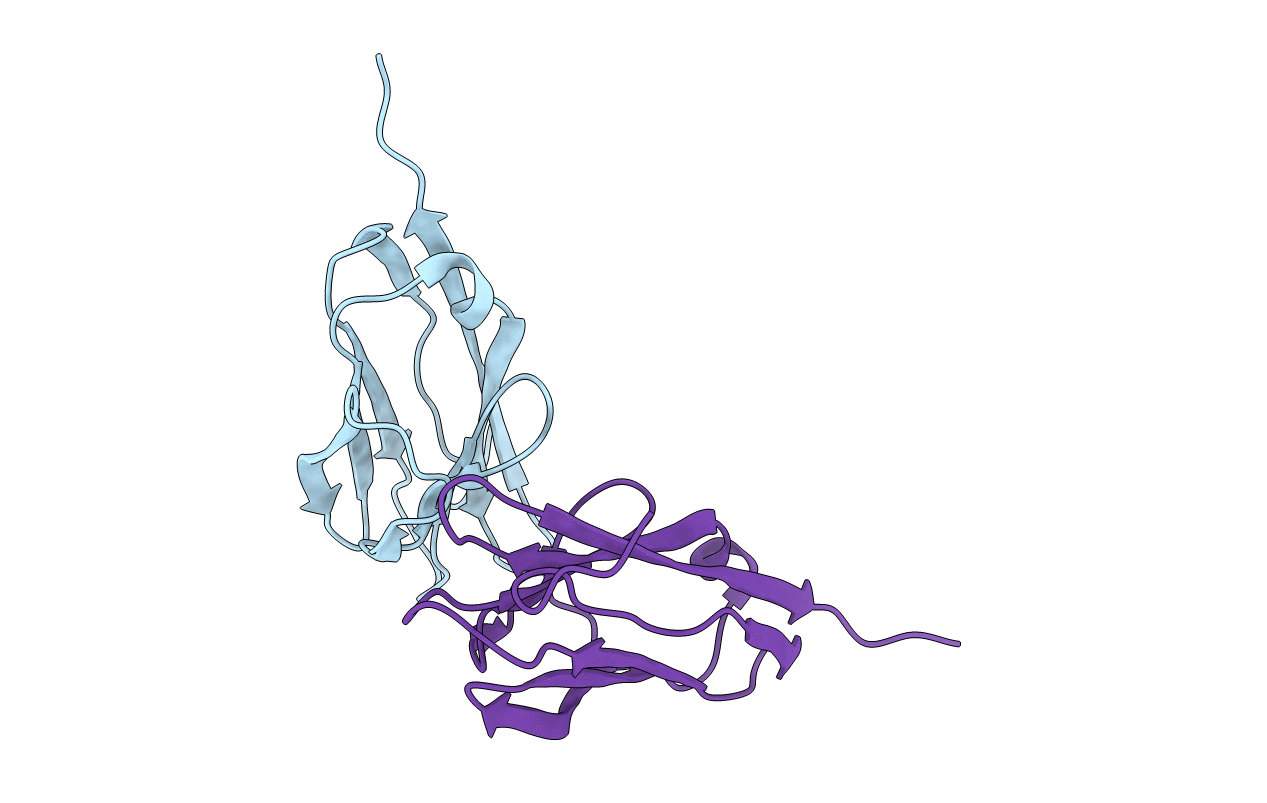
1Z9M image
Deposition Date 2005-04-03
Release Date 2006-02-07
Last Version Date 2024-10-16
Entry Detail
PDB ID:
1Z9M
Keywords:
Title:
Crystal Structure of Nectin-like molecule-1 protein Domain 1
Biological Source:
Source Organism:
Homo sapiens (Taxon ID: 9606)
Host Organism:
Method Details:
Experimental Method:
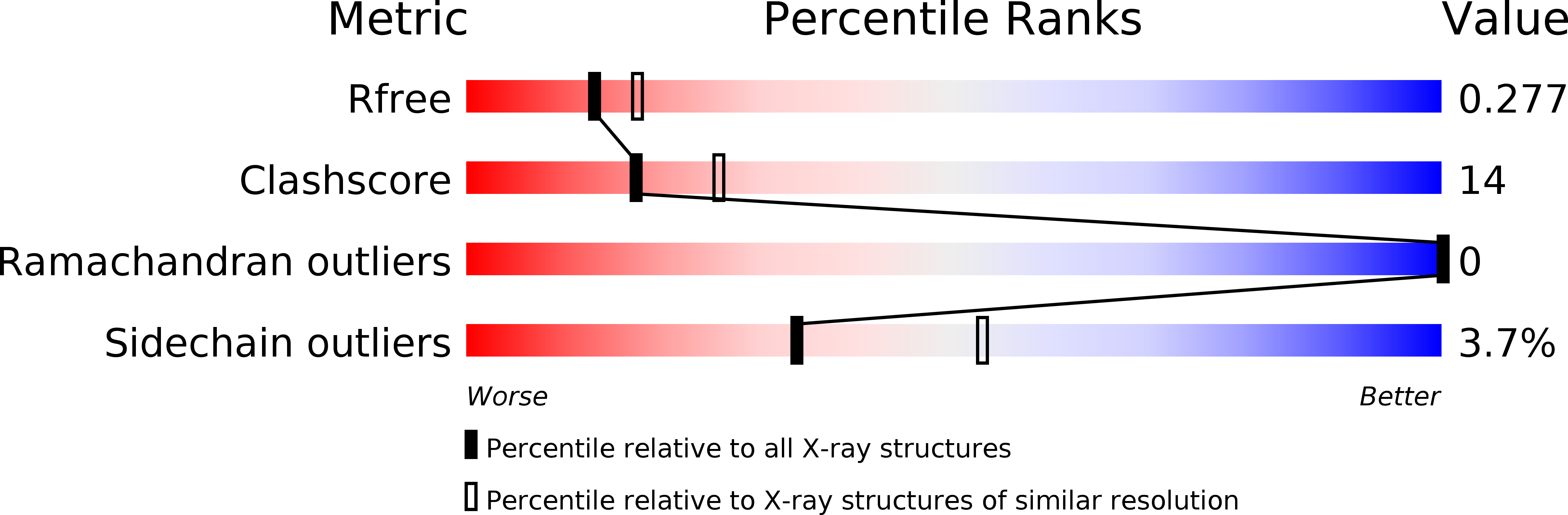
Resolution:
2.40 Å
R-Value Free:
0.27
R-Value Work:
0.22
R-Value Observed:
0.24
Space Group:
C 2 2 21
Macromolecular Entities
Structures with similar UniProt ID
Protein Blast
Polymer Type:polypeptide(L)
Molecule:GAPA225
Chain IDs:A, B
Chain Length:145
Number of Molecules:2
Biological Source:Homo sapiens
Primary Citation
Crystal Structure of the V Domain of Human Nectin-like Molecule-1/Syncam3/Tsll1/Igsf4b, a Neural Tissue-specific Immunoglobulin-like Cell-Cell Adhesion Molecule
J.Biol.Chem. 281 10610 10617 (2006)
PMID: 16467305 DOI: 10.1074/jbc.M513459200

Abstact

Nectins are Ca(2+)-independent immunoglobulin (Ig) superfamily proteins that participate in the organization of epithelial and endothelial junctions. Nectins have three Ig-like domains in the extracellular region, and the first one is essential in cell-cell adhesion and plays a central role in the interaction with the envelope glycoprotein D of several viruses. Five Nectin-like molecules (Necl-1 through -5) with similar domain structures to those of Nectins have been identified. Necl-1 is specifically expressed in neural tissue, has Ca(2+)-independent homophilic and heterophilic cell-cell adhesion activity, and plays an important role in the formation of synapses, axon bundles, and myelinated axons. Here we report the first crystal structure of its N-terminal Ig-like V domain at 2.4 A, providing insight into trans-cellular recognition mediated by Necl-1. The protein crystallized as a dimer, and the dimeric form was confirmed by size-exclusion chromatography and chemical cross-linking experiments, indicating this V domain is sufficient for homophilic interaction. Mutagenesis work demonstrated that Phe(82) is a key residue for the adhesion activity of Necl-1. A model for homophilic adhesion of Necl-1 at synapses is proposed based on its structure and previous studies.

Legend

Protein

Chemical

Disease

Primary Citation of related structures
Feedback Form
Name
Email
Institute
Feedback