Planned Maintenance: Some services may turn out to be unavailable from 15th January, 2026 to 16th January, 2026. We apologize for the inconvenience!

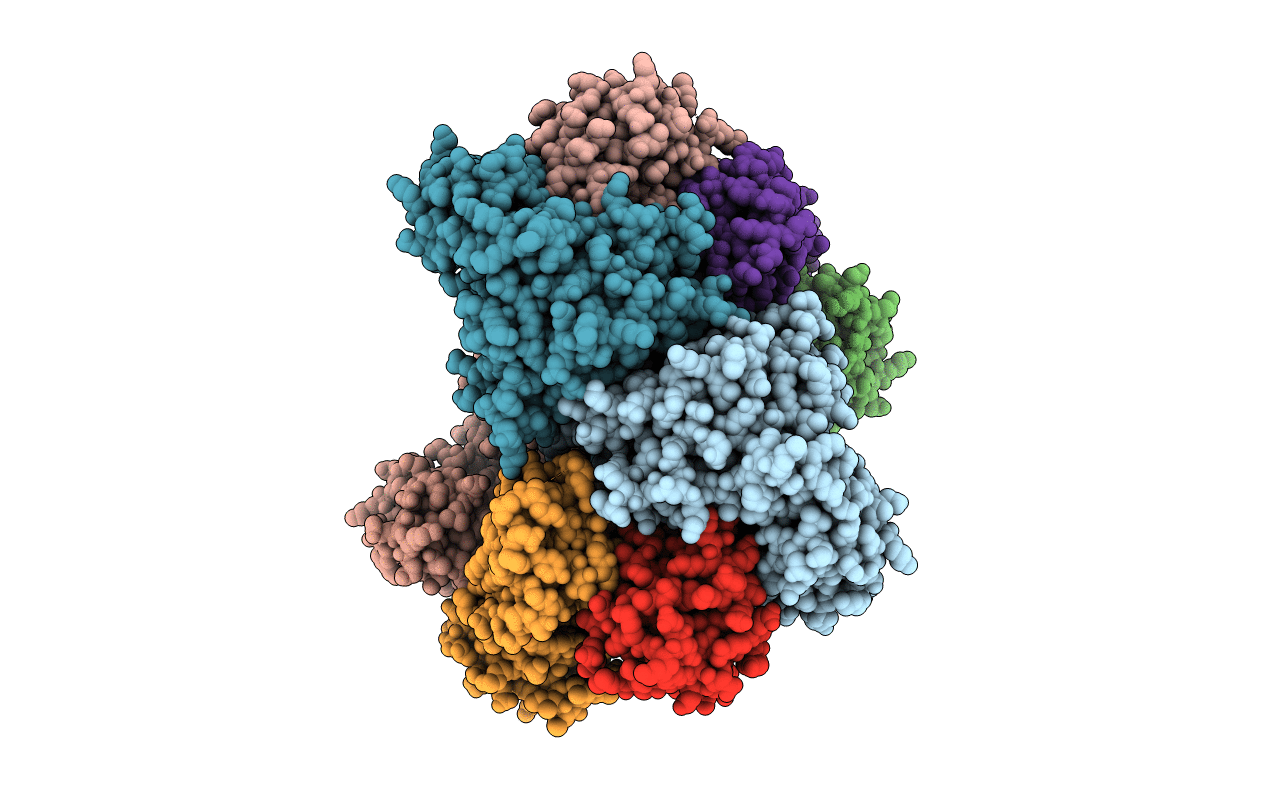
1Z7M image
Deposition Date 2005-03-25
Release Date 2005-08-09
Last Version Date 2024-02-14
Entry Detail
PDB ID:
1Z7M
Keywords:
Title:
ATP Phosphoribosyl transferase (HisZG ATP-PRTase) from Lactococcus lactis
Biological Source:
Source Organism(s):
Expression System(s):
Method Details:
Experimental Method:
Resolution:
2.90 Å
R-Value Free:
0.28
R-Value Work:
0.24
R-Value Observed:
0.29
Space Group:
P 21 21 2
Macromolecular Entities
Structures with similar UniProt ID
Protein Blast
Polymer Type:polypeptide(L)
Molecule:ATP phosphoribosyltransferase regulatory subunit
Gene (Uniprot):hisZ
Chain IDs:A, B, C, D
Chain Length:344
Number of Molecules:4
Biological Source:Lactococcus lactis
Structures with similar UniProt ID
Protein Blast
Polymer Type:polypeptide(L)
Molecule:ATP phosphoribosyltransferase
Gene (Uniprot):hisG
Chain IDs:E, F, G, H
Chain Length:208
Number of Molecules:4
Biological Source:Lactococcus lactis
Primary Citation
Activation of the hetero-octameric ATP phosphoribosyl transferase through subunit interface rearrangement by a tRNA synthetase paralog.
J.Biol.Chem. 280 34096 34104 (2005)
PMID: 16051603 DOI: 10.1074/jbc.M505041200

Abstact

ATP phosphoribosyl transferase (ATP-PRT) joins ATP and 5-phosphoribosyl-1-pyrophosphate (PRPP) in a highly regulated reaction that initiates histidine biosynthesis. The unusual hetero-octameric version of ATP-PRT includes four HisG(S) catalytic subunits based on the periplasmic binding protein fold and four HisZ regulatory subunits that resemble histidyl-tRNA synthetases. Here, we present the first structure of a PRPP-bound ATP-PRT at 2.9 A and provide a structural model for allosteric activation based on comparisons with other inhibited and activated ATP-PRTs from both the hetero-octameric and hexameric families. The activated state of the octameric enzyme is characterized by an interstitial phosphate ion in the HisZ-HisG interface and new contacts between the HisZ motif 2 loop and the HisG(S) dimer interface. These contacts restructure the interface to recruit conserved residues to the active site, where they activate pyrophosphate to promote catalysis. Additionally, mutational analysis identifies the histidine binding sites within a region highly conserved between HisZ and the functional HisRS. Through the oligomerization and functional re-assignment of protein domains associated with aminoacylation and phosphate binding, the HisZ-HisG octameric ATP-PRT acquired the ability to initiate the synthesis of a key metabolic intermediate in an allosterically regulated fashion.

Legend

Protein

Chemical

Disease

Primary Citation of related structures
Feedback Form
Name
Email
Institute
Feedback