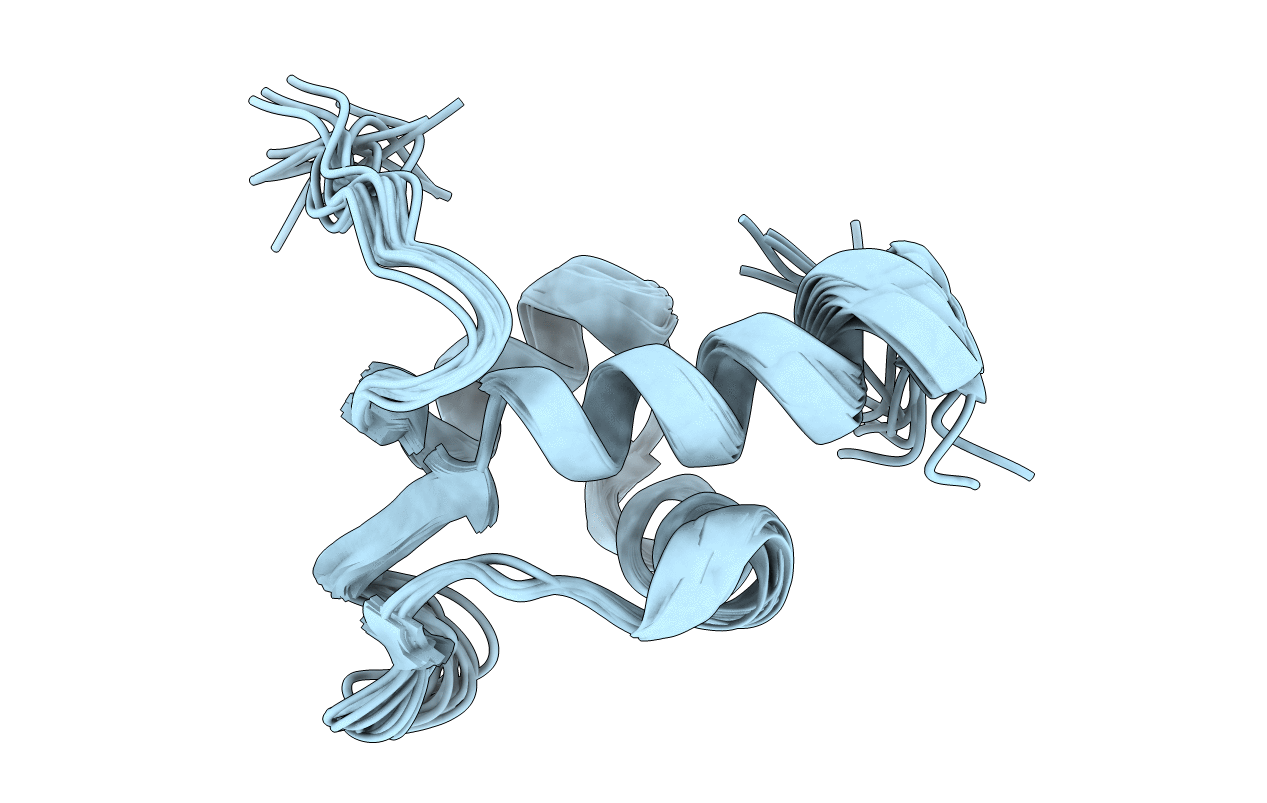
1Z4H image
Deposition Date 2005-03-16
Release Date 2005-08-09
Last Version Date 2024-05-22
Entry Detail
PDB ID:
1Z4H
Title:
The response regulator TorI belongs to a new family of atypical excisionase
Biological Source:
Source Organism:
Escherichia coli (Taxon ID: 562)
Method Details:
Experimental Method:
Conformers Calculated:
100
Conformers Submitted:
17
Selection Criteria:
structures with the least restraint violations

Macromolecular Entities
Structures with similar UniProt ID
Protein Blast
Polymer Type:polypeptide(L)
Molecule:Tor inhibition protein
Chain IDs:A
Chain Length:66
Number of Molecules:1
Biological Source:Escherichia coli
Ligand Molecules
Primary Citation
Structural and genetic analyses reveal a key role in prophage excision for the TorI response regulator inhibitor
J.Biol.Chem. 280 36802 36808 (2005)
PMID: 16079126 DOI: 10.1074/jbc.M507409200

Abstact

TorI (Tor inhibition protein) has been identified in Escherichia coli as a protein inhibitor acting through protein-protein interaction with the TorR response regulator. This interaction, which does not interfere with TorR DNA binding activity, probably prevents the recruitment of RNA polymerase to the torC promoter. In this study we have solved the solution structure of TorI, which adopts a prokaryotic winged-helix arrangement. Despite no primary sequence similarity, the three-dimensional structure of TorI is highly homologous to the (lambda)Xis, Mu bacteriophage repressor (MuR-DBD), and transposase (MuA-DBD) structures. We propose that the TorI protein is the structural missing link between the (lambda)Xis and MuR proteins. Moreover, in vivo assays demonstrated that TorI plays an essential role in prophage excision. Heteronuclear NMR experiments and site-directed mutagenesis studies have pinpointed out key residues involved in the DNA binding activity of TorI. Our findings suggest that TorI-related proteins identified in various pathogenic bacterial genomes define a new family of atypical excisionases.

Legend

Protein

Chemical

Disease

Primary Citation of related structures
Feedback Form
Name
Email
Institute
Feedback