1Z2L image
Deposition Date 2005-03-08
Release Date 2005-03-22
Last Version Date 2024-02-14
Entry Detail
PDB ID:
1Z2L
Keywords:
Title:
Crystal structure of Allantoate-amidohydrolase from E.coli K12 in complex with substrate Allantoate
Biological Source:
Source Organism(s):
Expression System(s):
Method Details:
Experimental Method:
Resolution:
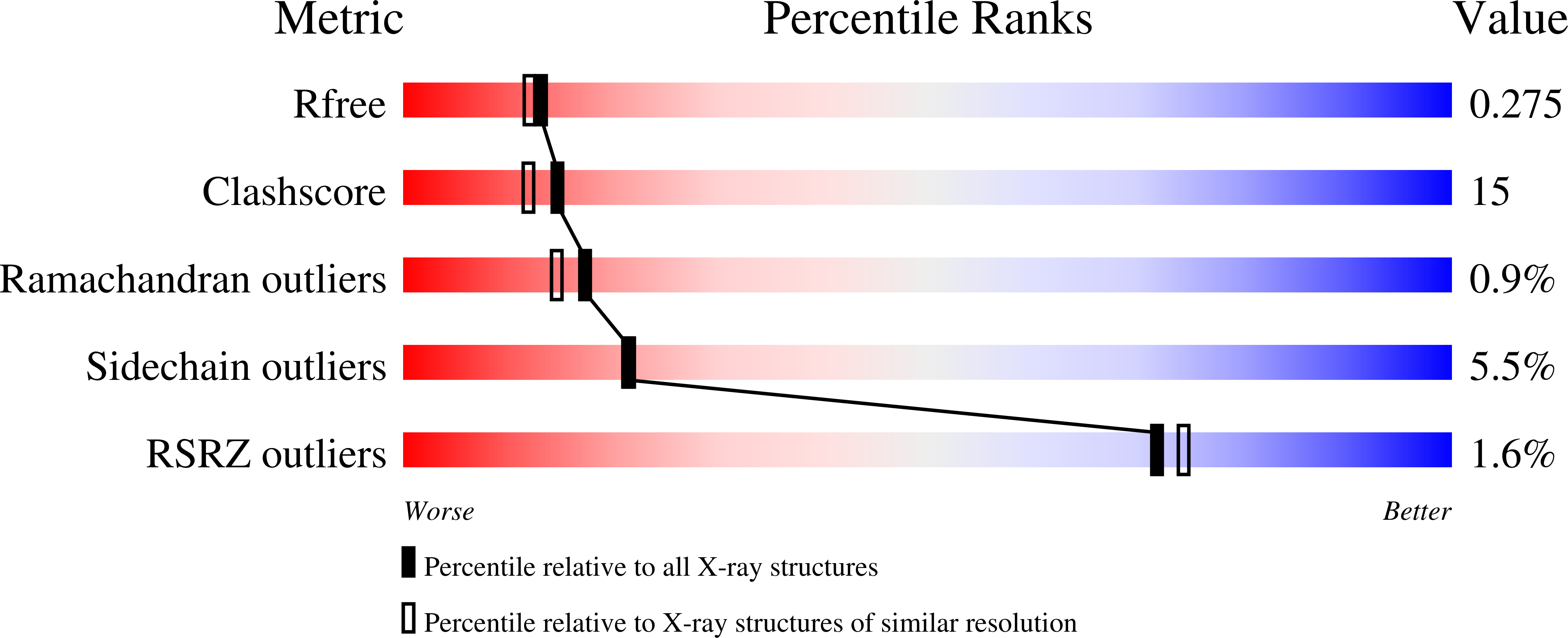
2.25 Å
R-Value Free:
0.27
R-Value Work:
0.22
R-Value Observed:
0.22
Space Group:
P 21 21 2
Macromolecular Entities
Structures with similar UniProt ID
Protein Blast
Polymer Type:polypeptide(L)
Molecule:Allantoate amidohydrolase
Gene (Uniprot):allC
Chain IDs:A, B
Chain Length:423
Number of Molecules:2
Biological Source:Escherichia coli
Primary Citation
Structural analysis of a ternary complex of allantoate amidohydrolase from Escherichia coli reveals its mechanics.
J.Mol.Biol. 368 450 463 (2007)
PMID: 17362992 DOI: 10.1016/j.jmb.2007.02.028

Abstact

Purine metabolism plays a major role in regulating the availability of purine nucleotides destined for nucleic acid synthesis. Allantoate amidohydrolase catalyzes the conversion of allantoate to (S)-ureidoglycolate, one of the crucial alternate steps in purine metabolism. The crystal structure of a ternary complex of allantoate amidohydrolase with its substrate allantoate and an allosteric effector, a sulfate ion, from Escherichia coli was determined to understand better the catalytic mechanism and substrate specificity. The 2.25 A resolution X-ray structure reveals an alpha/beta scaffold akin to zinc exopeptidases of the peptidase M20 family and lacks the (beta/alpha)(8)-barrel fold characteristic of the amidohydrolases. Arrangement of the substrate and the two co-catalytic zinc ions at the active site governs catalytic specificity for hydrolysis of N-carbamyl versus the peptide bond in exopeptidases. In its crystalline form, allantoate amidohydrolase adopts a relatively open conformation. However, structural analysis reveals the possibility of a significant movement of domains via rotation about two hinge regions upon allosteric effector and substrate binding resulting in a closed catalytically competent conformation by bringing the substrate allantoate closer to co-catalytic zinc ions. Two cis-prolyl peptide bonds found on either side of the dimerization domain in close proximity to the substrate and ligand-binding sites may be involved in protein folding and in preserving the integrity of the catalytic site.

Legend

Protein

Chemical

Disease

Primary Citation of related structures
Feedback Form
Name
Email
Institute
Feedback