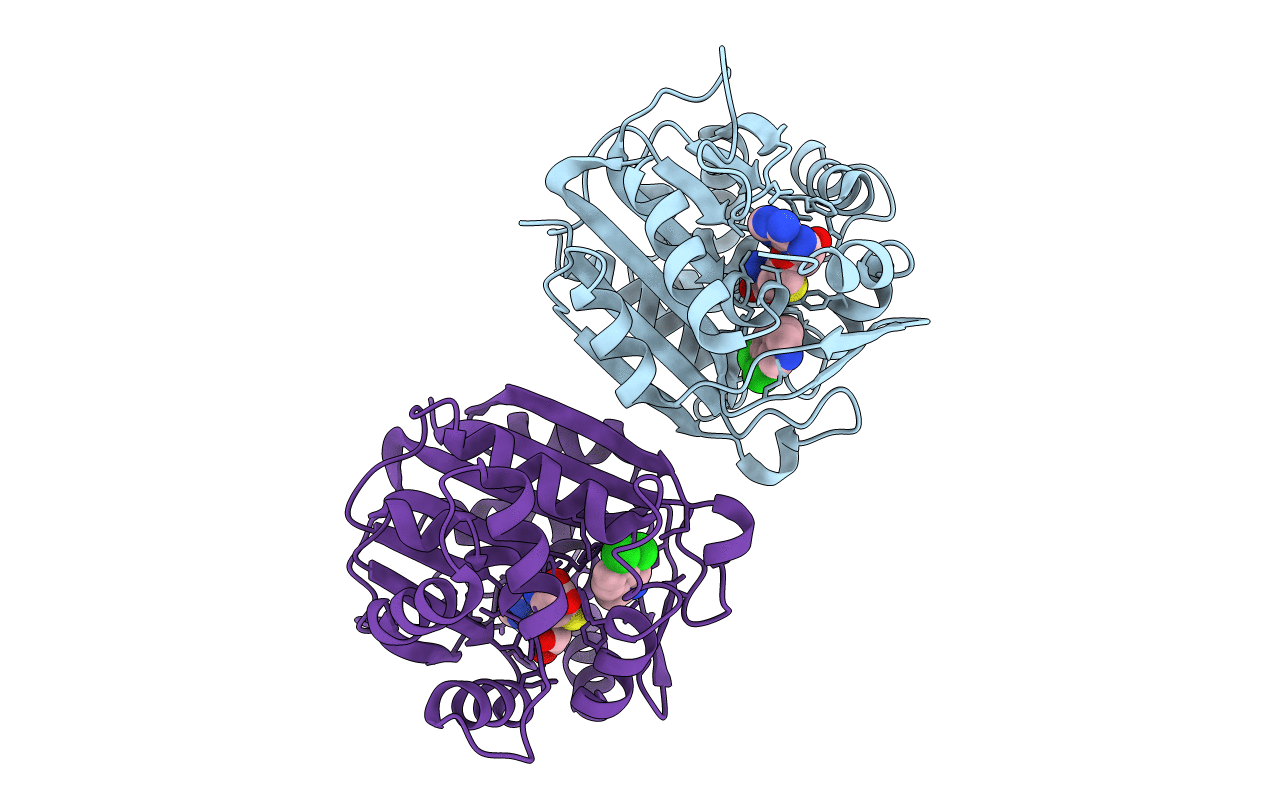
1YZ3 image
Deposition Date 2005-02-27
Release Date 2006-02-07
Last Version Date 2023-10-25
Entry Detail
PDB ID:
1YZ3
Keywords:
Title:
Structure of human pnmt complexed with cofactor product adohcy and inhibitor SK&F 64139
Biological Source:
Source Organism:
Homo sapiens (Taxon ID: 9606)
Host Organism:
Method Details:
Experimental Method:
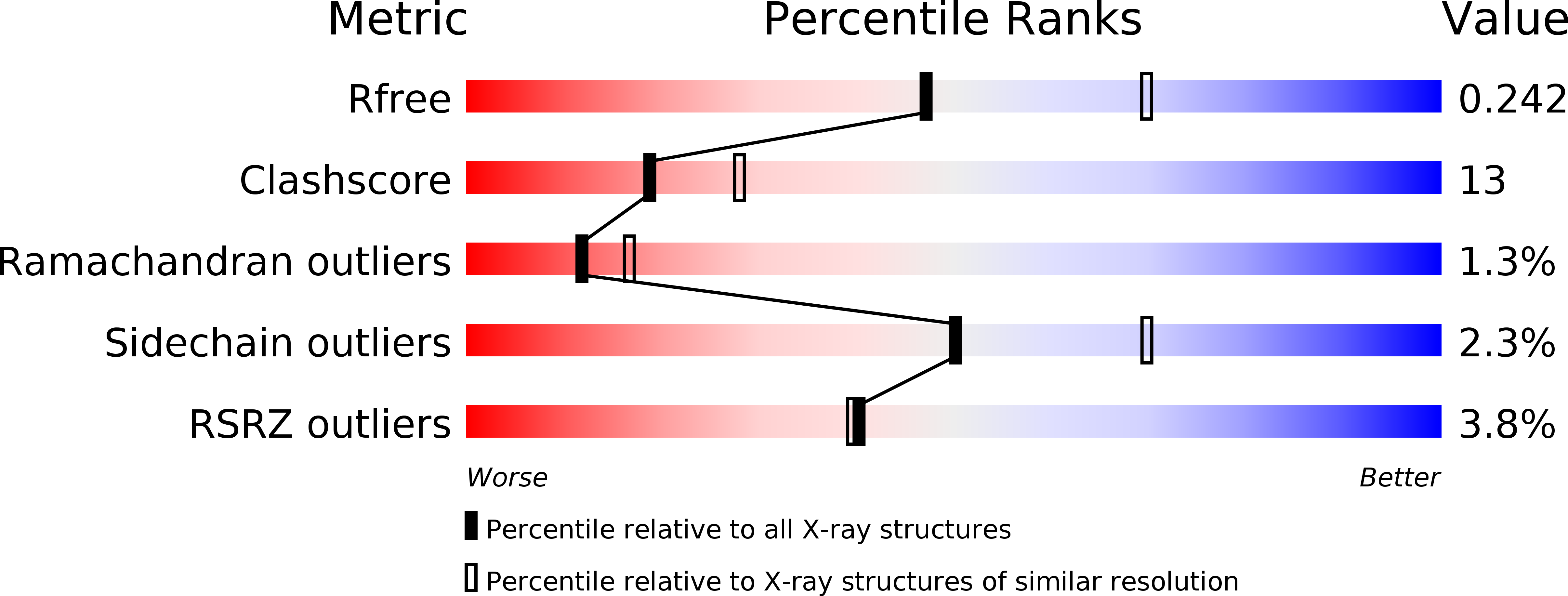
Resolution:
2.40 Å
R-Value Free:
0.24
R-Value Work:
0.21
R-Value Observed:
0.21
Space Group:
P 43 21 2
Macromolecular Entities
Structures with similar UniProt ID
Protein Blast
Polymer Type:polypeptide(L)
Molecule:Phenylethanolamine N-methyltransferase
Gene (Uniprot):PNMT
Chain IDs:A, B
Chain Length:289
Number of Molecules:2
Biological Source:Homo sapiens
Primary Citation
Structural, mutagenic, and kinetic analysis of the binding of substrates and inhibitors of human phenylethanolamine N-methyltransferase
J.Med.Chem. 48 7243 7252 (2005)
PMID: 16279783 DOI: 10.1021/jm050568o

Abstact

The X-ray structure of human phenylethanolamine N-methyltransferase (hPNMT) complexed with its product, S-adenosyl-L-homocysteine (4), and the most potent inhibitor reported to date, SK&F 64139 (7), was used to identify the residues involved in inhibitor binding. Four of these residues, Val53, Lys57, Glu219 and Asp267, were replaced, in turn, with alanine. All variants had increased Km values for phenylethanolamine (10), but only D267A showed a noteworthy (20-fold) decrease in its kcat value. Both WT hPNMT and D267A had similar kcat values for a rigid analogue, anti-9-amino-6-(trifluoromethyl)benzonorbornene (12), suggesting that Asp267 plays an important role in positioning the substrate but does not participate directly in catalysis. The Ki values for the binding of inhibitors such as 7 to the E219A and D267A variants increased by 2-3 orders of magnitude. Further, the inhibitors were shown to bind up to 50-fold more tightly in the presence of S-adenosyl-L-methionine (3), suggesting that the binding of the latter brings about a conformational change in the enzyme.

Legend

Protein

Chemical

Disease

Primary Citation of related structures
Feedback Form
Name
Email
Institute
Feedback