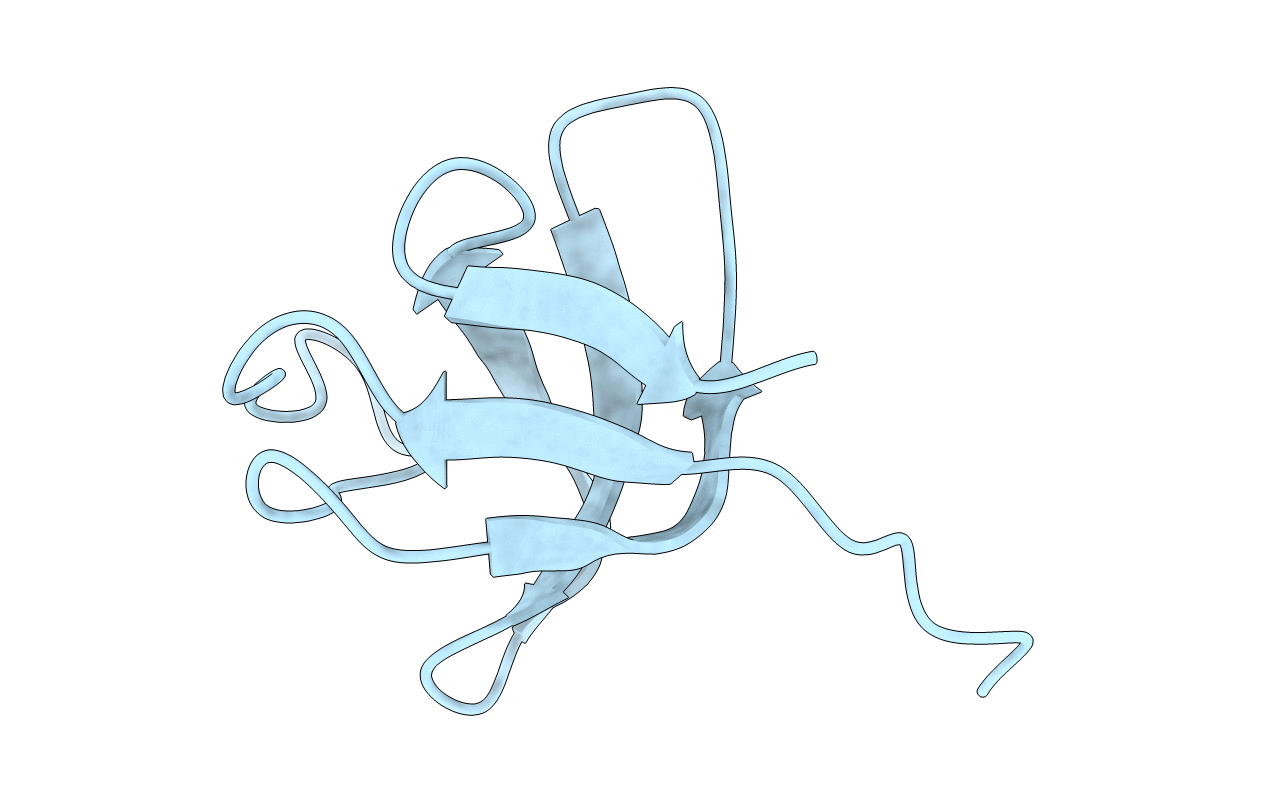
1YWP image
Deposition Date 2005-02-18
Release Date 2005-08-16
Last Version Date 2023-08-23
Entry Detail
PDB ID:
1YWP
Keywords:
Title:
Phospholipase Cgamma1 SH3
Biological Source:
Source Organism:
Method Details:
Experimental Method:
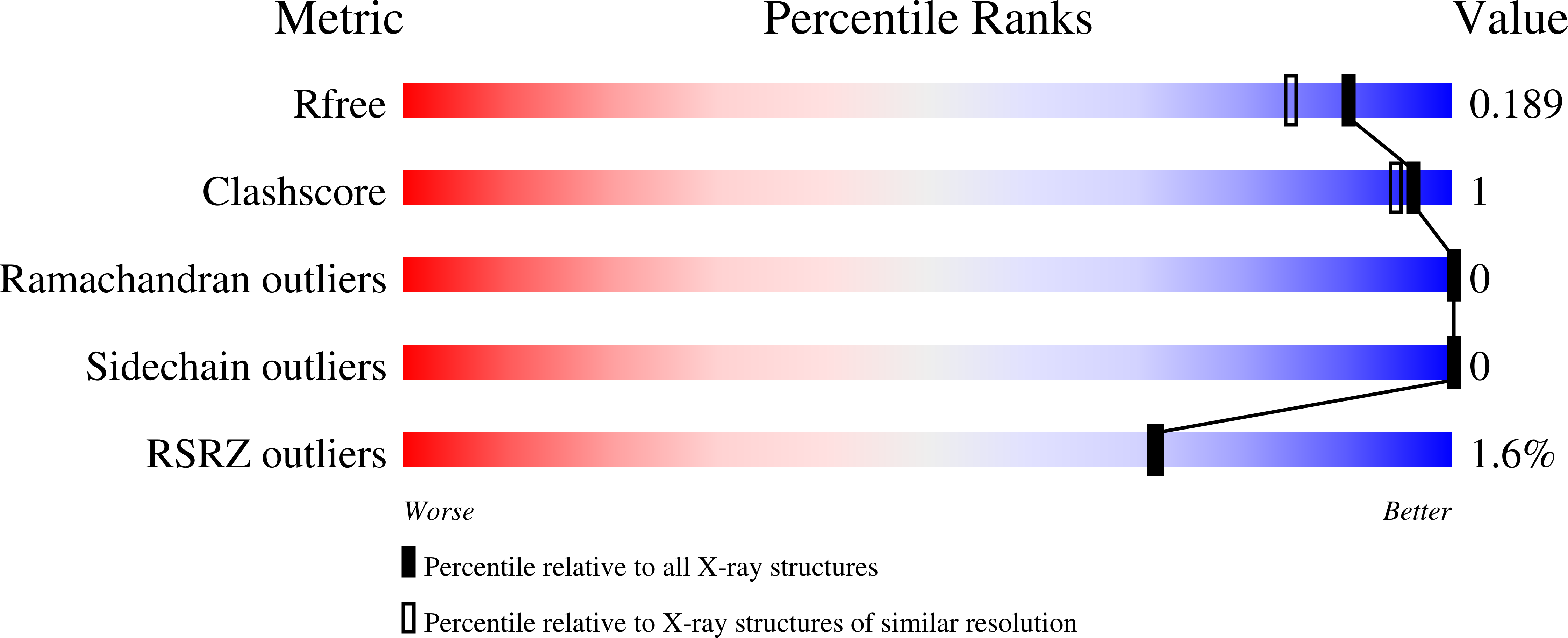
Resolution:
1.60 Å
R-Value Free:
0.18
R-Value Work:
0.14
R-Value Observed:
0.14
Space Group:
P 1 21 1
Macromolecular Entities
Structures with similar UniProt ID
Protein Blast
Polymer Type:polypeptide(L)
Molecule:1-phosphatidylinositol-4,5-bisphosphate phosphodiesterase gamma 1
Gene (Uniprot):Plcg1
Mutagens:C5S
Chain IDs:A
Chain Length:64
Number of Molecules:1
Biological Source:Rattus norvegicus
Primary Citation
Structural Basis for Recognition of the T Cell Adaptor Protein SLP-76 by the SH3 Domain of Phospholipase Cgamma1
J.Mol.Biol. 352 1 10 (2005)
PMID: 16061254 DOI: 10.1016/j.jmb.2005.06.072

Abstact

The enzyme phospholipase Cgamma1 (PLCgamma1) is essential for T cell signaling and activation. Following T cell receptor ligation, PLCgamma1 interacts through its SH2 and SH3 domains with the adaptors LAT and SLP-76, respectively, to form a multiprotein signaling complex that leads to activation of PLCgamma1 by Syk tyrosine kinases. To identify the binding site for PLCgamma1 in SLP-76, we used isothermal titration calorimetry to measure affinities for the interaction of PLCgamma1-SH3 with a set of overlapping peptides spanning the central proline-rich region of SLP-76. PLCgamma1-SH3 bound with high specificity to the SLP-76 motif 186PPVPPQRP193, which represents the minimal binding site. To understand the basis for selective recognition, we determined the crystal structures of PLCgamma1-SH3 in free form, and bound to a 10-mer peptide containing this site, to resolutions of 1.60 A and 1.81 A, respectively. The structures reveal that several key contacting residues of the SH3 shift toward the SLP-76 peptide upon complex formation, optimizing the fit and strengthening hydrophobic interactions. Selectivity results mainly from strict shape complementarity between protein and peptide, rather than sequence-specific hydrogen bonding. In addition, Pro193 of SLP-76 assists in positioning Arg192 into the compass pocket of PLCgamma1-SH3, which coordinates the compass residue through an unusual aspartate. The PLCgamma1-SH3/SLP-76 structure provides insights into ligand binding by SH3 domains related to PLCgamma1-SH3, as well as into recognition by PLCgamma1 of signaling partners other than SLP-76.

Legend

Protein

Chemical

Disease

Primary Citation of related structures
Feedback Form
Name
Email
Institute
Feedback