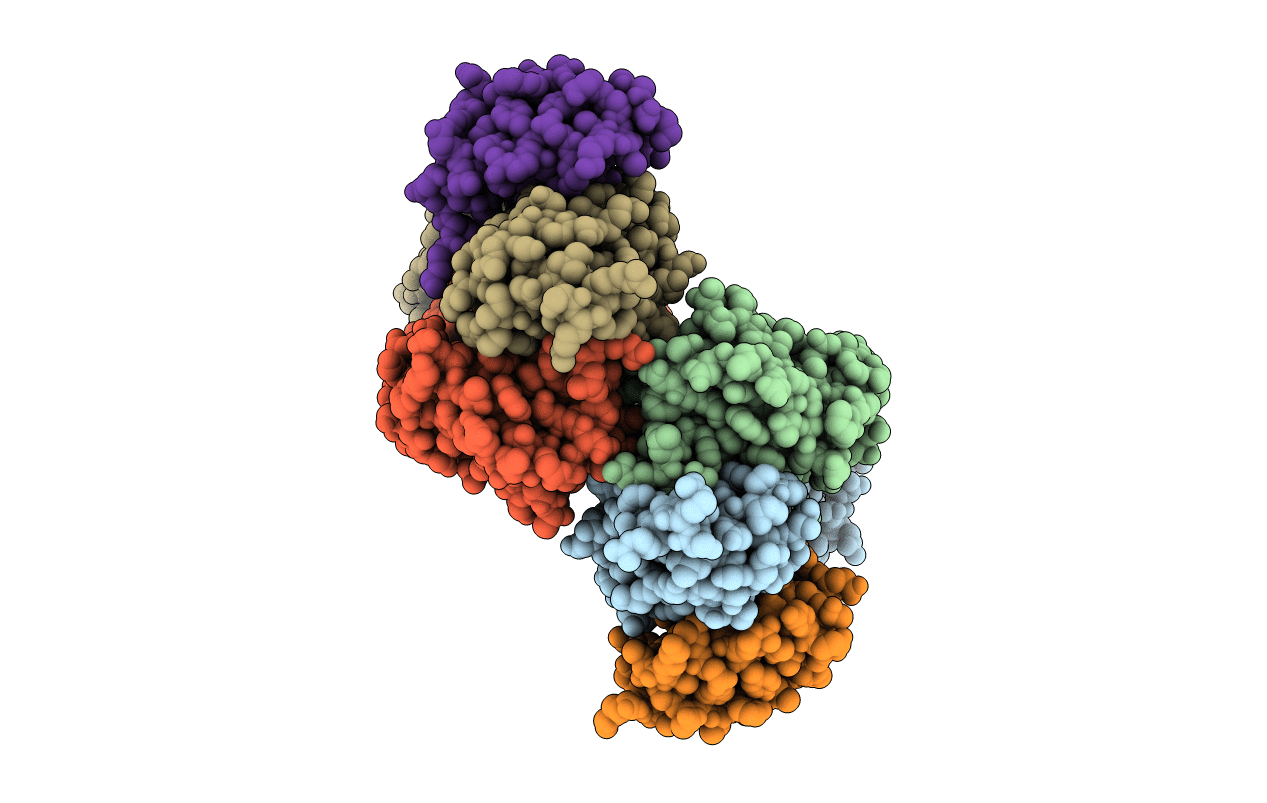
1YMH image
Deposition Date 2005-01-21
Release Date 2005-05-31
Last Version Date 2024-11-06
Entry Detail
PDB ID:
1YMH
Keywords:
Title:
anti-HCV Fab 19D9D6 complexed with protein L (PpL) mutant A66W
Biological Source:
Source Organism:
Finegoldia magna (Taxon ID: 334413)
Mus musculus (Taxon ID: 10090)
Host Organism:
Method Details:
Experimental Method:
Resolution:
2.60 Å
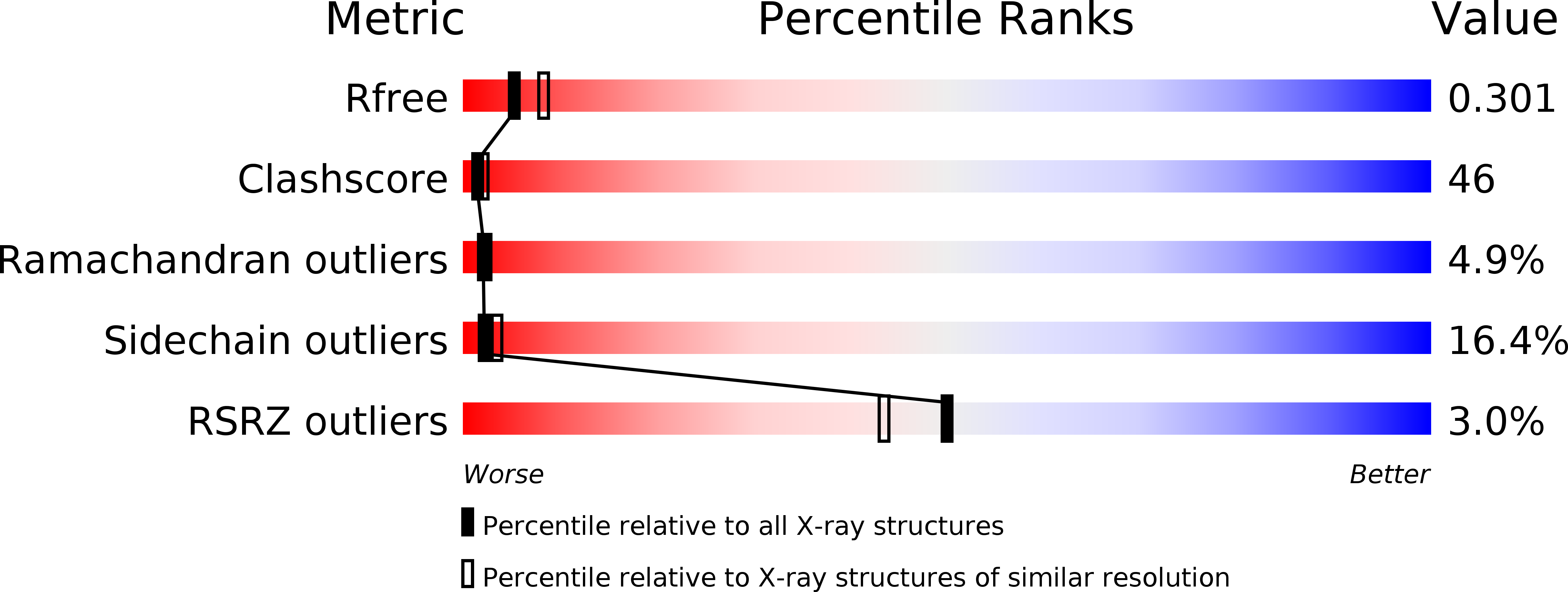
R-Value Free:
0.30
R-Value Work:
0.22
R-Value Observed:
0.22
Space Group:
P 21 21 21
Macromolecular Entities
Polymer Type:polypeptide(L)
Molecule:Fab 16D9D6, light chain
Chain IDs:A, D (auth: C)
Chain Length:220
Number of Molecules:2
Biological Source:Mus musculus
Polymer Type:polypeptide(L)
Molecule:Fab 16D9D6, heavy chain
Chain IDs:B, E (auth: D)
Chain Length:218
Number of Molecules:2
Biological Source:Mus musculus
Structures with similar UniProt ID
Protein Blast
Polymer Type:polypeptide(L)
Molecule:Protein L
Mutagens:A866W
Chain IDs:C (auth: E), F
Chain Length:65
Number of Molecules:2
Biological Source:Finegoldia magna
Primary Citation
Comparison of the crystallization and crystal packing of two Fab single-site mutant protein L complexes.
Acta Crystallogr.,Sect.D 61 750 754 (2005)
PMID: 15930633 DOI: 10.1107/S0907444905007110

Abstact

Protein L from Peptostreptococcus magnus (PpL) is a multidomain protein composed of four or five immunoglobulin-binding domains that target the kappa light chain of a large repertoire of human and murine antibodies. Thus, a single domain of this protein can be used to aid the crystallization of Fab, free or complexed to their antigen when it is not possible to obtain crystals without it. Each wild-type PpL domain has two light-chain binding sites that target the same region of the light chain and can thus bring together two Fab-antigen complexes within the crystal lattice. In this context the small PpL domain is sandwiched between two Fab and cannot participate in crystal contacts, thus mutants are unlikely to increase the chances of crystallizing a particular complex. However, it is possible to design mutants that can bind at only one site by making use of the crystal structures obtained so far. Such mutants will have a free surface that can participate in crystal contacts and that can be modified to improve its crystal contact-forming properties. Here, a comparison of two single-site mutants that differ at three different positions is reported. In both mutants two different tryptophan residues participate in crystal-packing interactions, suggesting that this residue may be particularly interesting for enhancing crystal-contact formation.

Legend

Protein

Chemical

Disease

Primary Citation of related structures
Feedback Form
Name
Email
Institute
Feedback