1YCK image
Deposition Date 2004-12-22
Release Date 2005-03-22
Last Version Date 2024-10-30
Entry Detail
PDB ID:
1YCK
Keywords:
Title:
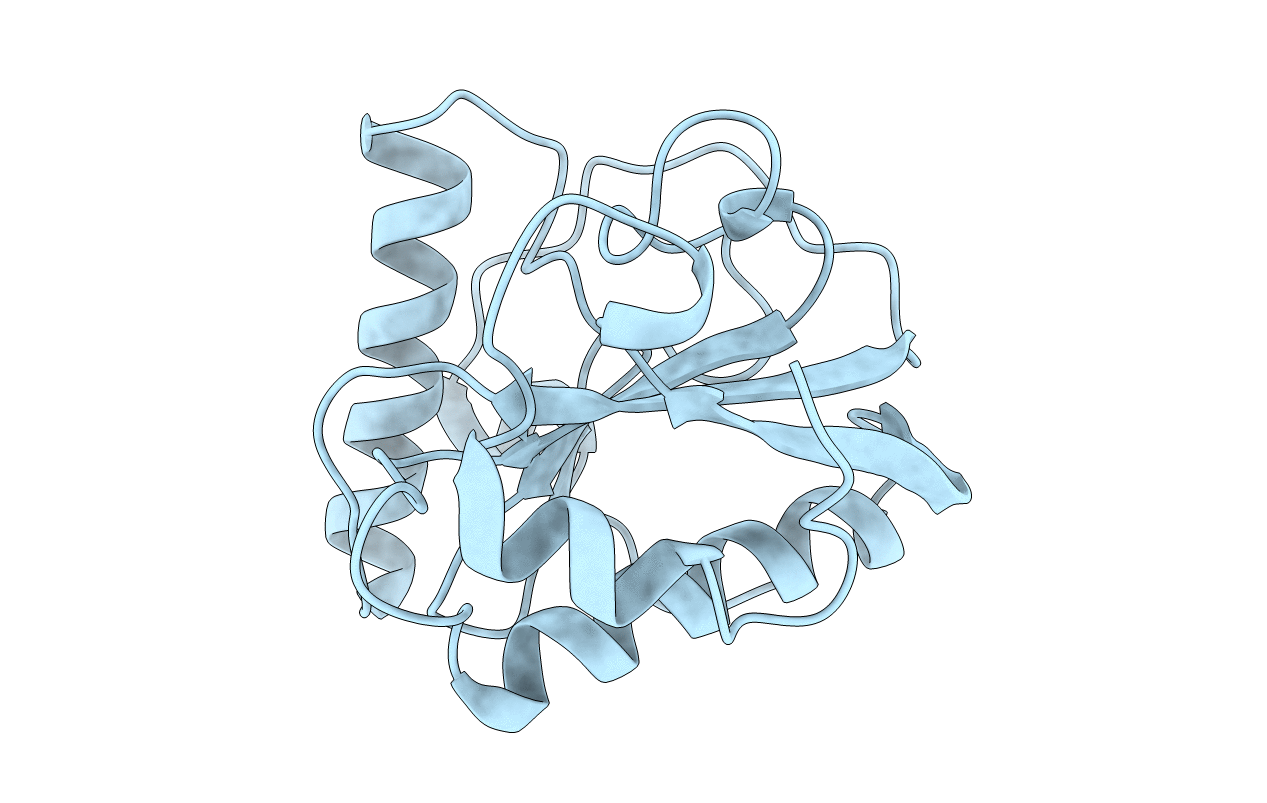
Crystal structure of human peptidoglycan recognition protein (PGRP-S)
Biological Source:
Source Organism:
Homo sapiens (Taxon ID: 9606)
Host Organism:
Method Details:
Experimental Method:
Resolution:
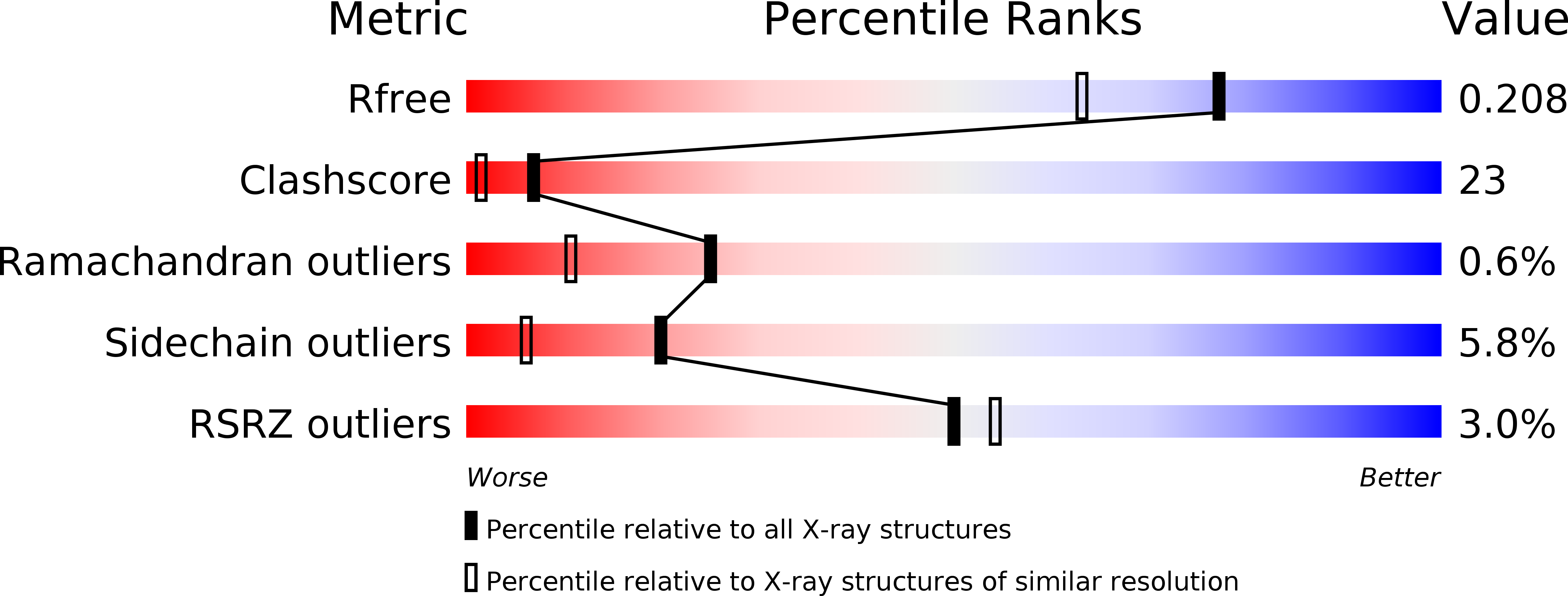
1.70 Å
R-Value Free:
0.21
R-Value Work:
0.18
R-Value Observed:
0.18
Space Group:
P 32 2 1
Macromolecular Entities
Structures with similar UniProt ID
Protein Blast
Polymer Type:polypeptide(L)
Molecule:Peptidoglycan recognition protein
Gene (Uniprot):PGLYRP1
Chain IDs:A
Chain Length:175
Number of Molecules:1
Biological Source:Homo sapiens
Primary Citation
Crystal structure of human peptidoglycan recognition protein S (PGRP-S) at 1.70 A resolution.
J.Mol.Biol. 347 683 691 (2005)
PMID: 15769462 DOI: 10.1016/j.jmb.2005.01.070

Abstact

Peptidoglycan recognition proteins (PGRPs) are pattern recognition receptors of the innate immune system that bind peptidoglycans (PGNs) of bacterial cell walls. These molecules, which are highly conserved from insects to mammals, contribute to host defense against infections by both Gram-positive and Gram-negative bacteria. Here, we present the crystal structure of human PGRP-S at 1.70A resolution. The overall structure of PGRP-S, which participates in intracellular killing of Gram-positive bacteria, is similar to that of other PGRPs, including Drosophila PGRP-LB and PGRP-SA and human PGRP-Ialpha. However, comparison with these PGRPs reveals important differences in both the PGN-binding site and a groove formed by the PGRP-specific segment on the opposite face of the molecule. This groove, which may constitute a binding site for effector or signaling proteins, is less hydrophobic and deeper in PGRP-S than in PGRP-IalphaC, whose PGRP-specific segments vary considerably in amino acid sequence. By docking a PGN ligand into the PGN-binding cleft of PGRP-S based on the known structure of a PGRP-Ialpha-PGN complex, we identified potential PGN-binding residues in PGRP-S. Differences in PGN-contacting residues and interactions suggest that, although PGRPs may engage PGNs in a similar mode, structural differences exist that likely regulate the affinity and fine specificity of PGN recognition.

Legend

Protein

Chemical

Disease

Primary Citation of related structures
Feedback Form
Name
Email
Institute
Feedback