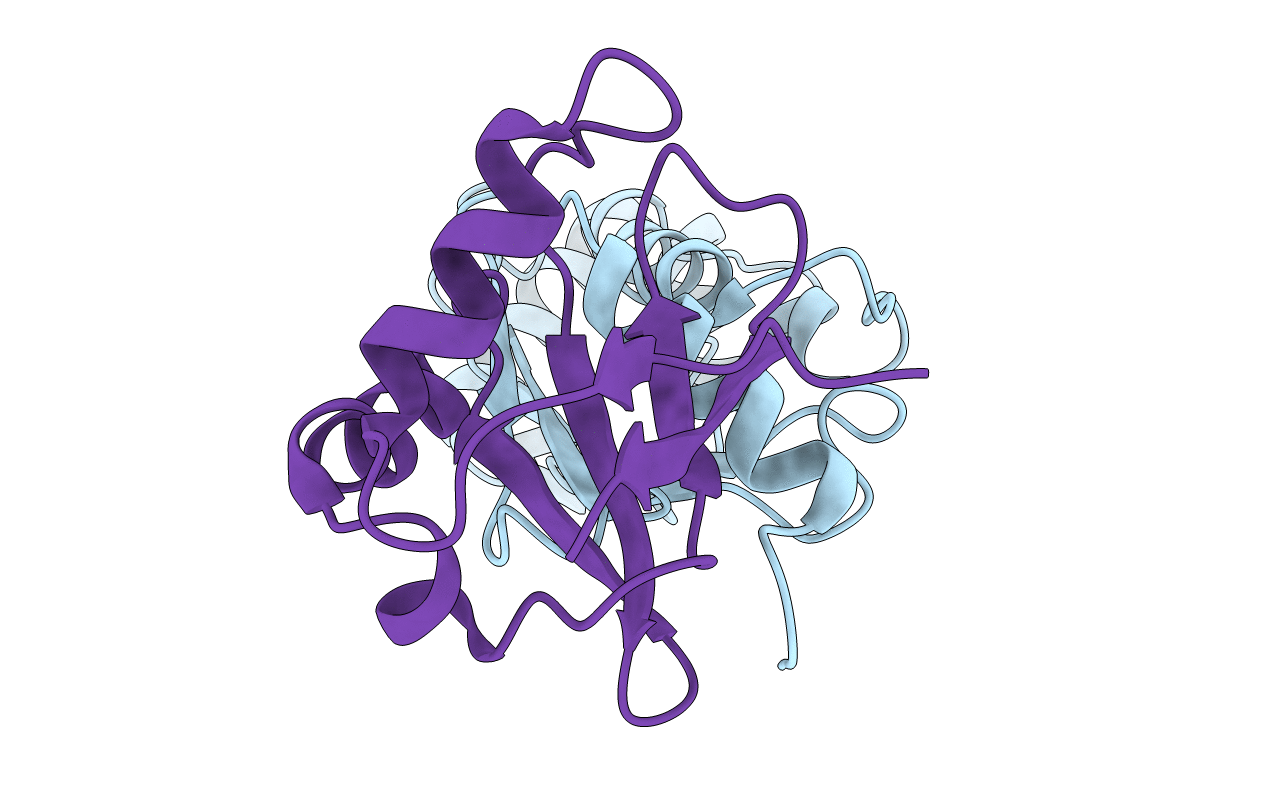
1Y8X image
Deposition Date 2004-12-13
Release Date 2005-02-08
Last Version Date 2024-11-06
Entry Detail
PDB ID:
1Y8X
Keywords:
Title:
Structural basis for recruitment of Ubc12 by an E2-binding domain in NEDD8's E1
Biological Source:
Source Organism:
Homo sapiens (Taxon ID: 9606)
Host Organism:
Method Details:
Experimental Method:
Resolution:
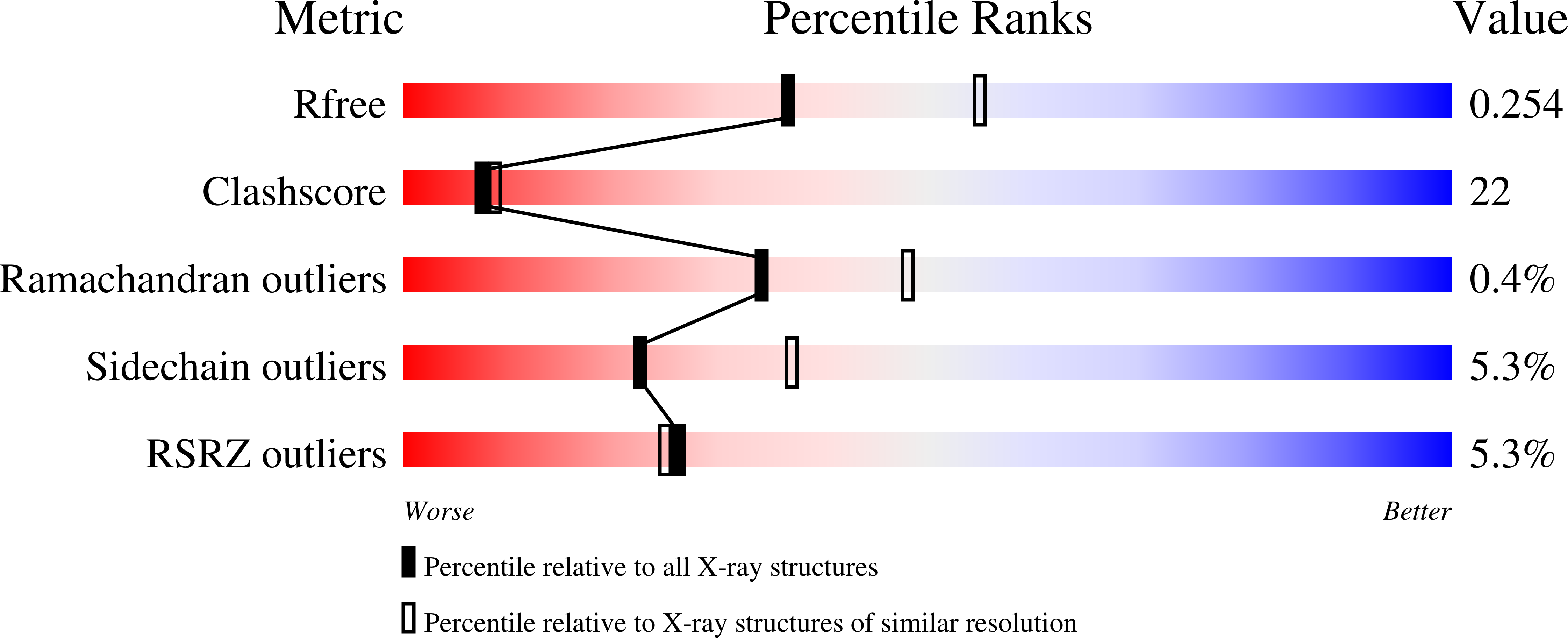
2.40 Å
R-Value Free:
0.25
R-Value Work:
0.24
Space Group:
P 21 21 21
Macromolecular Entities
Structures with similar UniProt ID
Protein Blast
Polymer Type:polypeptide(L)
Molecule:Ubiquitin-conjugating enzyme E2 M
Gene (Uniprot):UBE2M
Chain IDs:A
Chain Length:160
Number of Molecules:1
Biological Source:Homo sapiens
Structures with similar UniProt ID
Protein Blast
Polymer Type:polypeptide(L)
Molecule:Ubiquitin-activating enzyme E1C
Gene (Uniprot):UBA3
Chain IDs:B
Chain Length:98
Number of Molecules:1
Biological Source:Homo sapiens
Modified Residue
Compound ID Chain ID Parent Comp ID Details 2D Image
MSE A MET SELENOMETHIONINE
Primary Citation
Structural basis for recruitment of Ubc12 by an E2 binding domain in NEDD8's E1.
Mol.Cell 17 341 350 (2005)
PMID: 15694336 DOI: 10.1016/j.molcel.2004.12.020

Abstact

E2 conjugating enzymes play a central role in ubiquitin and ubiquitin-like protein (ublp) transfer cascades: the E2 accepts the ublp from the E1 enzyme and then the E2 often interacts with an E3 enzyme to promote ublp transfer to the target. We report here the crystal structure of a complex between the C-terminal domain from NEDD8's heterodimeric E1 (APPBP1-UBA3) and the catalytic core domain of NEDD8's E2 (Ubc12). The structure and associated mutational analyses reveal molecular details of Ubc12 recruitment by NEDD8's E1. Interestingly, the E1's Ubc12 binding domain resembles ubiquitin and recruits Ubc12 in a manner mimicking ubiquitin's interactions with ubiquitin binding domains. Structural comparison with E2-E3 complexes indicates that the E1 and E3 binding sites on Ubc12 may overlap and raises the possibility that crosstalk between E1 and E3 interacting with an E2 could influence the specificity and processivity of ublp transfer.

Legend

Protein

Chemical

Disease

Primary Citation of related structures
Feedback Form
Name
Email
Institute
Feedback