1XXE image
Deposition Date 2004-11-04
Release Date 2004-11-23
Last Version Date 2024-05-22
Entry Detail
PDB ID:
1XXE
Keywords:
Title:
RDC refined solution structure of the AaLpxC/TU-514 complex
Biological Source:
Source Organism:
Host Organism:
Method Details:
Experimental Method:
Conformers Calculated:
50
Conformers Submitted:
25
Selection Criteria:
structures with the lowest energy
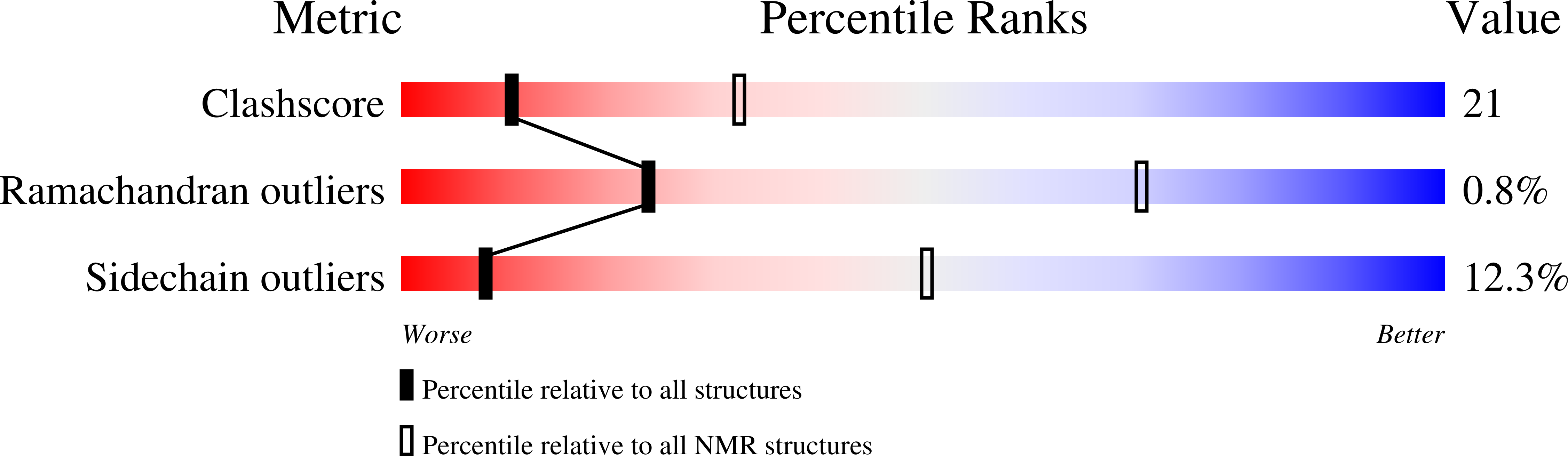
Macromolecular Entities
Structures with similar UniProt ID
Protein Blast
Polymer Type:polypeptide(L)
Molecule:UDP-3-O-[3-hydroxymyristoyl] N-acetylglucosamine deacetylase
Gene (Uniprot):lpxC
Chain IDs:A
Chain Length:282
Number of Molecules:1
Biological Source:Aquifex aeolicus
Primary Citation
Refined Solution Structure of the LpxC-TU-514 Complex and pK(a) Analysis of an Active Site Histidine: Insights into the Mechanism and Inhibitor Design
Biochemistry 44 1114 1126 (2005)
PMID: 15667205 DOI: 10.1021/bi047820z

Abstact

Lipopolysaccharide, the major constituent of the outer monolayer of the outer membrane of Gram-negative bacteria, is anchored into the membrane through the hydrophobic moiety lipid A, a hexaacylated disaccharide. The zinc-dependent metalloamidase UDP-3-O-acyl-N-acetylglucosamine deacetylase (LpxC) catalyzes the second and committed step in the biosynthesis of lipid A. LpxC shows no homology to mammalian metalloamidases and is essential for cell viability, making it an important target for the development of novel antibacterial compounds. Recent NMR and X-ray studies of the LpxC from Aquifex aeolicus have provided the first structural information about this family of proteins. Insight into the catalytic mechanism and the design of effective inhibitors could be facilitated by more detailed structural and biochemical studies that define substrate-protein interactions and the roles of specific residues in the active site. Here, we report the synthesis of the (13)C-labeled substrate-analogue inhibitor TU-514, and the subsequent refinement of the solution structure of the A. aeolicus LpxC-TU-514 complex using residual dipolar couplings. We also reevaluate the catalytic role of an active site histidine, H253, on the basis of both its pK(a) as determined by NMR titration and pH-dependent kinetic analyses. These results provide a structural basis for the design of more potent LpxC inhibitors than those that are currently available.

Legend

Protein

Chemical

Disease

Primary Citation of related structures
Feedback Form
Name
Email
Institute
Feedback