1XLS image
Deposition Date 2004-09-30
Release Date 2004-12-28
Last Version Date 2024-02-14
Entry Detail
PDB ID:
1XLS
Keywords:
Title:
Crystal structure of the mouse CAR/RXR LBD heterodimer bound to TCPOBOP and 9cRA and a TIF2 peptide containg the third LXXLL motifs
Biological Source:
Source Organism(s):
Homo sapiens (Taxon ID: 9606)
Mus musculus (Taxon ID: 10090)
Rattus norvegicus (Taxon ID: 10116)
Expression System(s):
Method Details:
Experimental Method:
Resolution:
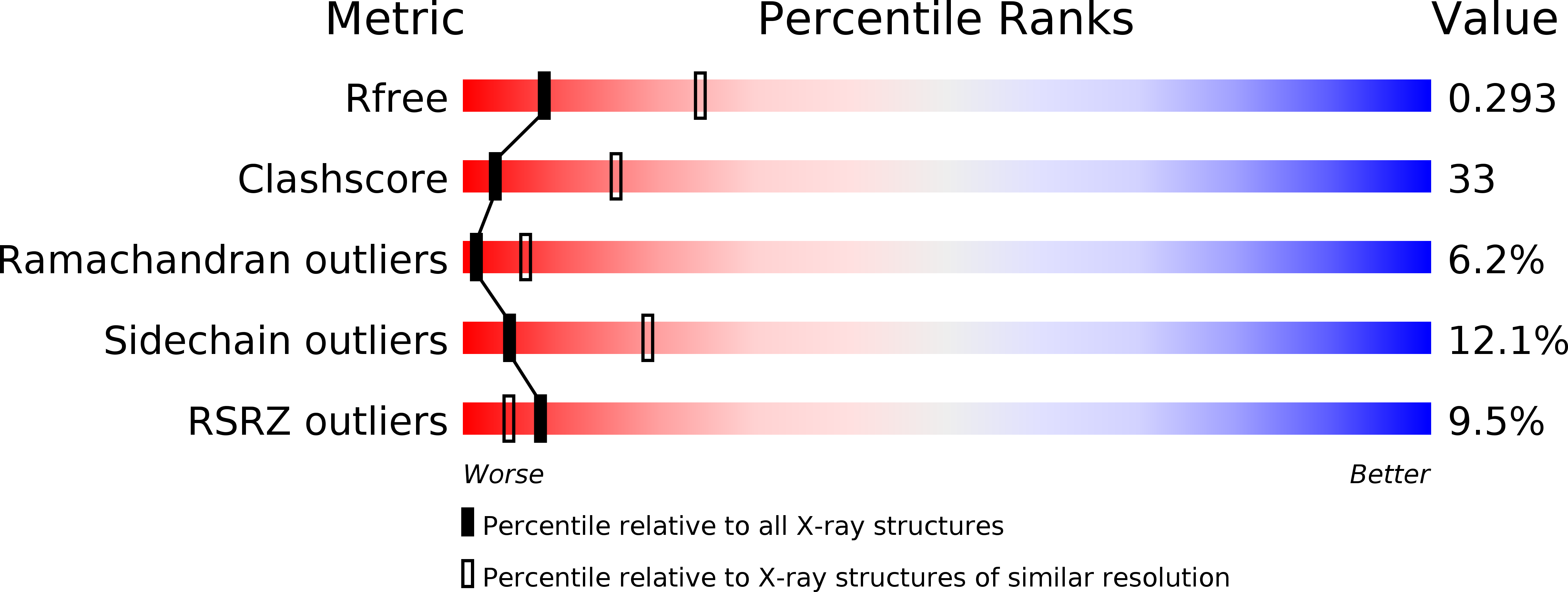
2.96 Å
R-Value Free:
0.30
R-Value Work:
0.25
R-Value Observed:
0.25
Space Group:
P 1
Macromolecular Entities
Structures with similar UniProt ID
Protein Blast
Polymer Type:polypeptide(L)
Molecule:Retinoic acid receptor RXR-alpha
Gene (Uniprot):RXRA
Mutagens:residues 116-238
Chain IDs:A, B, C, D
Chain Length:232
Number of Molecules:4
Biological Source:Homo sapiens
Structures with similar UniProt ID
Protein Blast
Polymer Type:polypeptide(L)
Molecule:Orphan nuclear receptor NR1I3
Gene (Uniprot):Nr1i3
Mutagens:residues 225-462
Chain IDs:E, F, G, H
Chain Length:242
Number of Molecules:4
Biological Source:Mus musculus
Structures with similar UniProt ID
Protein Blast
Polymer Type:polypeptide(L)
Molecule:Nuclear receptor coactivator 2
Gene (Uniprot):Ncoa2
Mutagens:the third LXXLL motif
Chain IDs:I, J, K, L, M, N, O, P
Chain Length:18
Number of Molecules:8
Biological Source:Rattus norvegicus
Primary Citation
The nuclear xenobiotic receptor CAR: structural determinants of constitutive activation and heterodimerization.
Mol.Cell 16 893 905 (2004)
PMID: 15610733 DOI: 10.1016/j.molcel.2004.11.036

Abstact

Constitutive androstane receptor (CAR) induces xenobiotic, bilirubin, and thyroid hormone metabolism as a heterodimer with the retinoid X receptor (RXR). Unlike ligand-dependent nuclear receptors, CAR is constitutively active. Here, we report the heterodimeric structure of the CAR and RXR ligand binding domains (LBDs), which reveals an unusually large dimerization interface and a small CAR ligand binding pocket. Constitutive CAR activity appears to be mediated by the compact nature of the CAR LBD that displays several unique features including a shortened AF2 helix and helix H10, which are linked by a two-turn helix that normally adopts an extended loop in other receptors, and an extended helix H2 that stabilizes the canonical LBD fold by packing tightly against helix H3. These structural observations provide a molecular framework for understanding the atypical transcriptional activation properties of CAR.

Legend

Protein

Chemical

Disease

Primary Citation of related structures
Feedback Form
Name
Email
Institute
Feedback