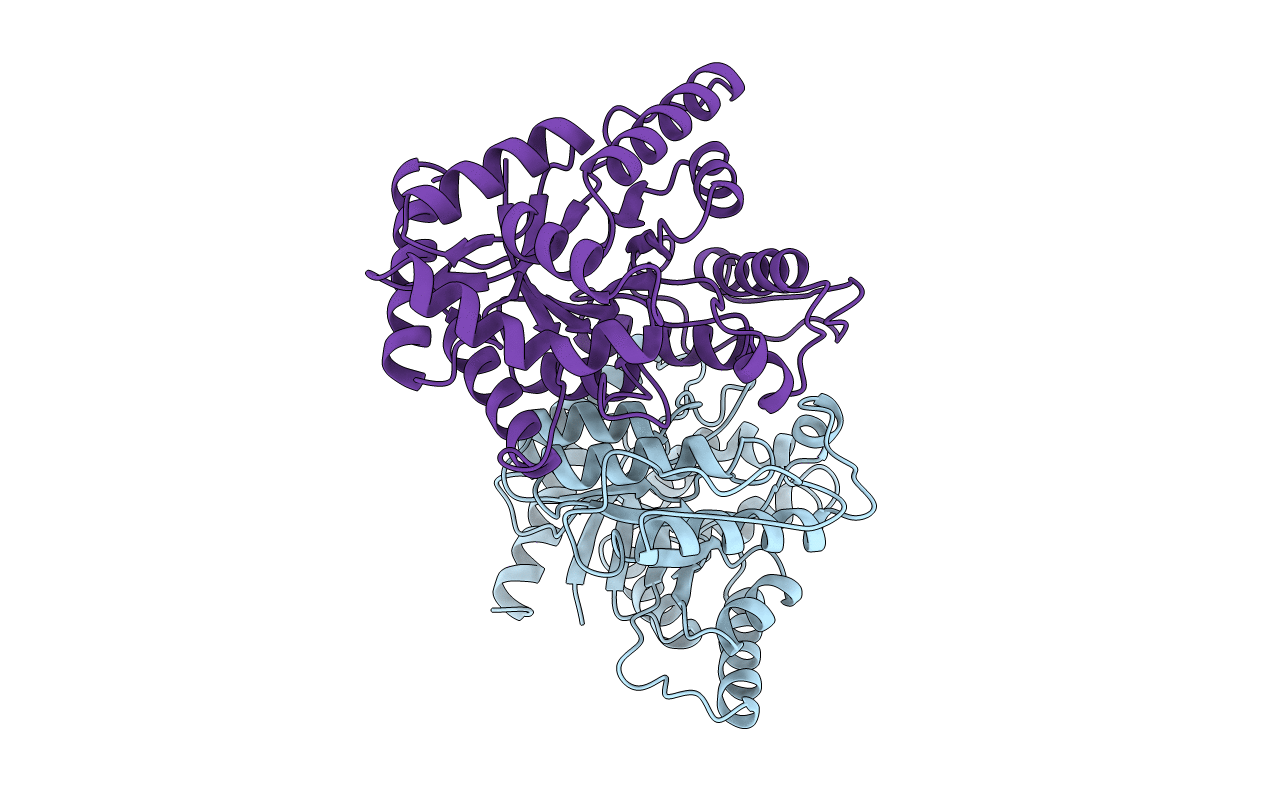
1XKJ image
Deposition Date 1996-10-08
Release Date 1997-07-07
Last Version Date 2024-05-22
Entry Detail
PDB ID:
1XKJ
Keywords:
Title:
BACTERIAL LUCIFERASE BETA2 HOMODIMER
Biological Source:
Source Organism:
Vibrio harveyi (Taxon ID: 669)
Host Organism:
Method Details:
Experimental Method:
Resolution:
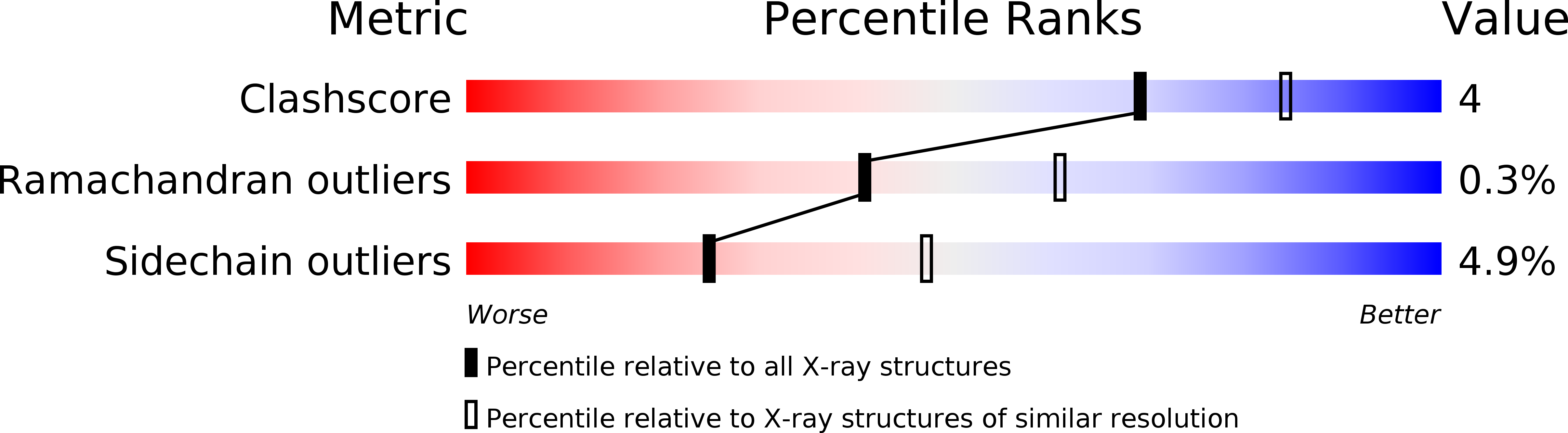
2.50 Å
R-Value Free:
0.24
R-Value Work:
0.19
R-Value Observed:
0.19
Space Group:
P 41 21 2
Macromolecular Entities
Structures with similar UniProt ID
Protein Blast
Polymer Type:polypeptide(L)
Molecule:BETA2 LUCIFERASE
Gene (Uniprot):luxB
Chain IDs:A, B
Chain Length:324
Number of Molecules:2
Biological Source:Vibrio harveyi
Primary Citation
Structure of bacterial luciferase beta 2 homodimer: implications for flavin binding.
Biochemistry 36 665 672 (1997)
PMID: 9020763 DOI: 10.1021/bi962511x

Abstact

The crystal structure of the beta 2 homodimer of Vibrio harveyi luciferase has been determined to 2.5 A resolution by molecular replacement. Crystals were grown serendipitously using the alpha beta form of the enzyme. The subunits of the homodimer share considerable structural homology to the beta subunit of the alpha beta luciferase heterodimer. The four C-terminal residues that are disordered in the alpha beta structure are fully resolved in our structure. Four peptide bonds have been flipped relative to their orientations in the beta subunit of the alpha beta structure. The dimer interface of the homodimer is smaller than the interface of the heterodimer in terms of buried surface area and number of hydrogen bonds and salt links. Inspection of the subunits of our structure suggests that FMNH2 cannot bind to the beta 2 enzyme at the site that has been proposed for the alpha beta enzyme. However, we do uncover a potential FMNH2 binding pocket in the dimer interface, and we model FMN into this site. This proposed flavin binding motif is consistent with several lines of biochemical and structural evidence and leads to several conclusions. First, only one FMNH2 binds per homodimer. Second, we predict that reduced FAD and riboflavin should be poor substrates for beta 2. Third, the reduced activity of beta 2 compared to alpha beta is due to solvent exposure of the isoalloxazine ring in the beta 2 active site. Finally, we raise the question of whether our proposed flavin binding site could also be the binding site for flavin in the alpha beta enzyme.

Legend

Protein

Chemical

Disease

Primary Citation of related structures
Feedback Form
Name
Email
Institute
Feedback