1XGI image
Deposition Date 2004-09-17
Release Date 2005-05-03
Last Version Date 2023-08-23
Entry Detail
PDB ID:
1XGI
Keywords:
Title:
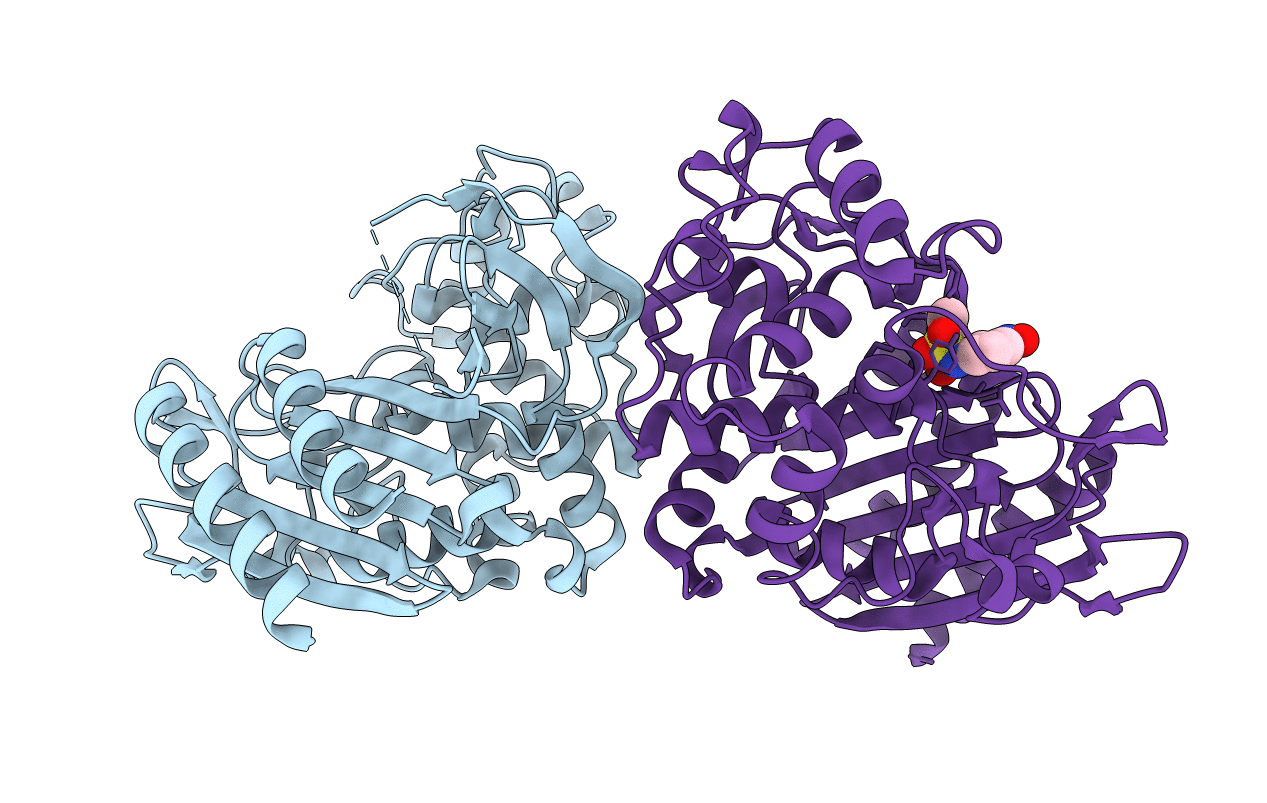
AmpC beta-lactamase in complex with 3-(3-nitro-phenylsulfamoyl)-thiophene-2-carboxylic acid
Biological Source:
Source Organism:
Escherichia coli (Taxon ID: 562)
Host Organism:
Method Details:
Experimental Method:
Resolution:
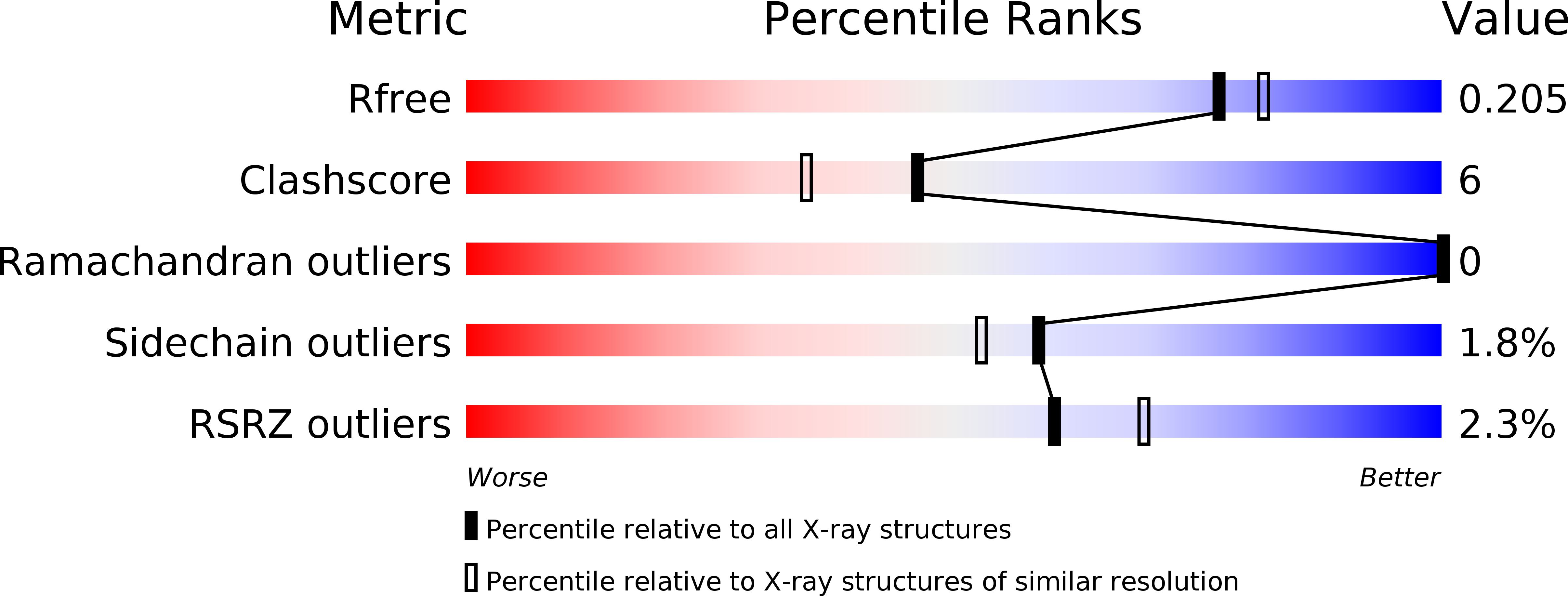
1.96 Å
R-Value Free:
0.22
R-Value Work:
0.19
R-Value Observed:
0.19
Space Group:
C 1 2 1
Macromolecular Entities
Structures with similar UniProt ID
Protein Blast
Polymer Type:polypeptide(L)
Molecule:Beta-lactamase
Gene (Uniprot):ampC
Chain IDs:A, B
Chain Length:358
Number of Molecules:2
Biological Source:Escherichia coli
Ligand Molecules
Primary Citation
Structure-based optimization of a non-beta-lactam lead results in inhibitors that do not up-regulate beta-lactamase expression in cell culture.
J.Am.Chem.Soc. 127 4632 4639 (2005)
PMID: 15796528 DOI: 10.1021/ja042984o

Abstact

Bacterial expression of beta-lactamases is the most widespread resistance mechanism to beta-lactam antibiotics, such as penicillins and cephalosporins. There is a pressing need for novel, non-beta-lactam inhibitors of these enzymes. One previously discovered novel inhibitor of the beta-lactamase AmpC, compound 1, has several favorable properties: it is chemically dissimilar to beta-lactams and is a noncovalent, competitive inhibitor of the enzyme. However, at 26 microM its activity is modest. Using the X-ray structure of the AmpC/1 complex as a template, 14 analogues were designed and synthesized. The most active of these, compound 10, had a K(i) of 1 microM, 26-fold better than the lead. To understand the origins of this improved activity, the structures of AmpC in complex with compound 10 and an analogue, compound 11, were determined by X-ray crystallography to 1.97 and 1.96 A, respectively. Compound 10 was active in cell culture, reversing resistance to the third generation cephalosporin ceftazidime in bacterial pathogens expressing AmpC. In contrast to beta-lactam-based inhibitors clavulanate and cefoxitin, compound 10 did not up-regulate beta-lactamase expression in cell culture but simply inhibited the enzyme expressed by the resistant bacteria. Its escape from this resistance mechanism derives from its dissimilarity to beta-lactam antibiotics.

Legend

Protein

Chemical

Disease

Primary Citation of related structures
Feedback Form
Name
Email
Institute
Feedback