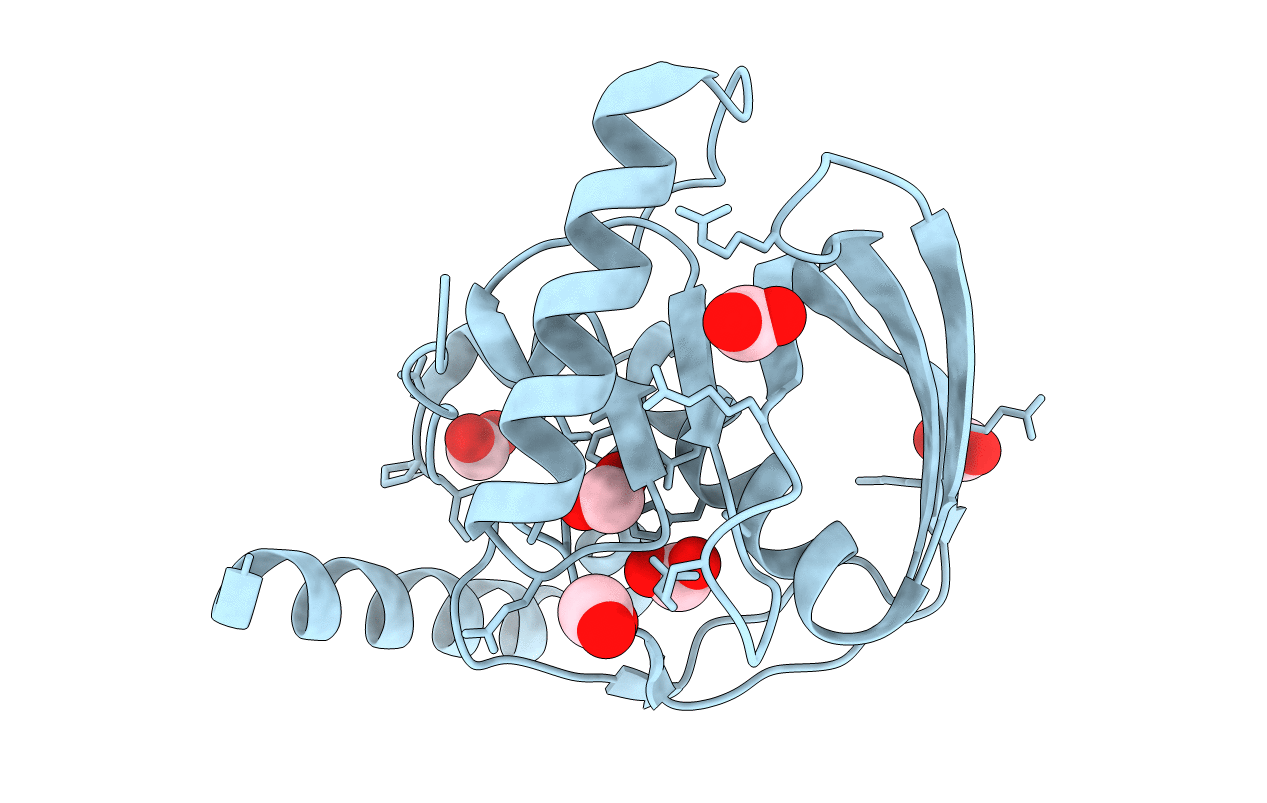
1XEN image
Deposition Date 2004-09-10
Release Date 2005-03-29
Last Version Date 2024-02-14
Entry Detail
PDB ID:
1XEN
Keywords:
Title:
High Resolution Crystal Structure of Escherichia coli Iron- Peptide Deformylase Bound To Formate
Biological Source:
Source Organism:
Method Details:
Experimental Method:
Resolution:
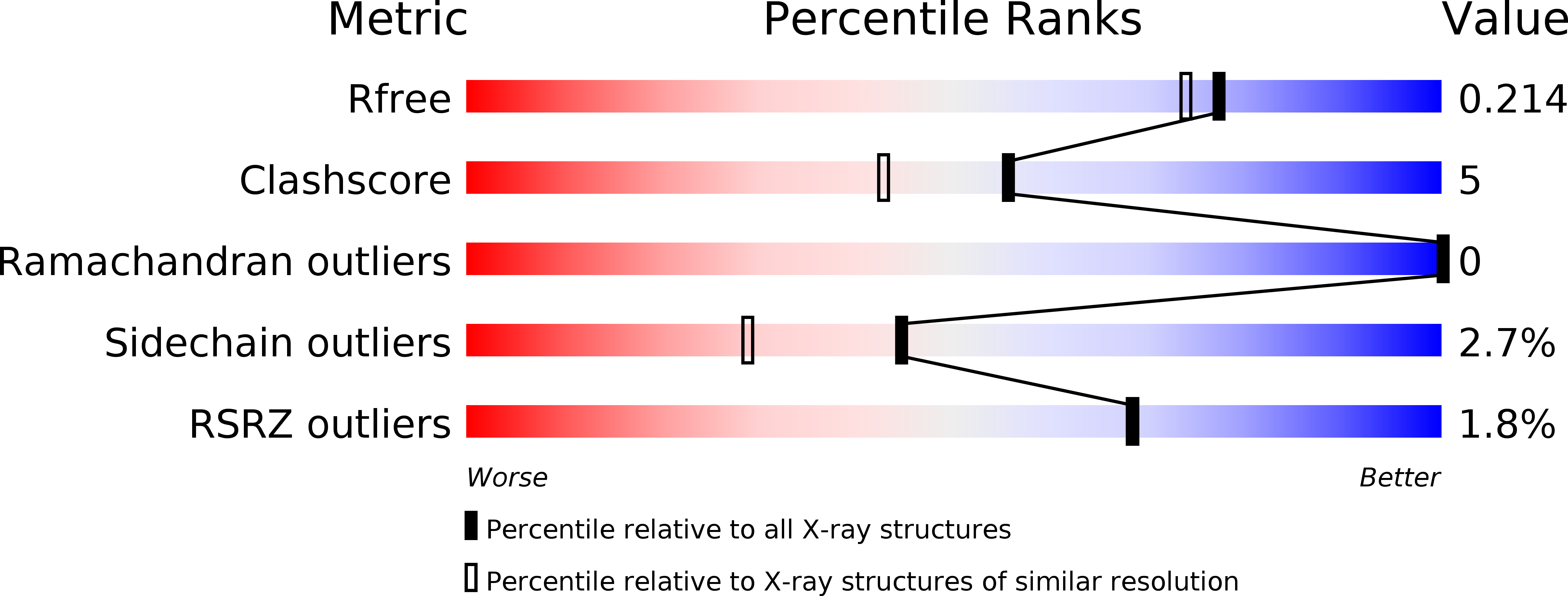
1.85 Å
R-Value Free:
0.21
R-Value Work:
0.17
R-Value Observed:
0.17
Space Group:
P 61 2 2
Macromolecular Entities
Structures with similar UniProt ID
Protein Blast
Polymer Type:polypeptide(L)
Molecule:Peptide deformylase
Gene (Uniprot):def
Chain IDs:A
Chain Length:168
Number of Molecules:1
Biological Source:Escherichia coli
Primary Citation
Structures of E. coli peptide deformylase bound to formate: insight into the preference for Fe2+ over Zn2+ as the active site metal
J.Am.Chem.Soc. 127 4558 4559 (2005)
PMID: 15796505 DOI: 10.1021/ja0503074

Abstact

E. coli peptide deformylase (PDF) catalyzes the deformylation of nascent polypeptides generated during protein synthesis. While PDF was originally thought to be a zinc enzyme, subsequent studies revealed that the active site metal is iron. In an attempt to understand this unusual metal preference, high-resolution structures of Fe-, Co-, and Zn-PDF were determined in complex with its deformylation product, formate. In all three structures, the formate ion binds the metal and forms hydrogen-bonding interactions with the backbone nitrogen of Leu91, the amide side chain of Gln50, and the carboxylate side chain of Glu133. One key difference, however, is how the formate binds the metal. In Fe-PDF and Co-PDF, formate binds in a bidentate fashion, while in Zn-PDF, it binds in a monodentate fashion. Importantly, these structural results provide the first clues into the origins of PDF's metal-dependent activity differences. On the basis of these structures, we propose that the basis for the higher activity of Fe-PDF stems from the better ability of iron to bind and activate the tetrahedral transition state required for cleavage of the N-terminal formyl group.

Legend

Protein

Chemical

Disease

Primary Citation of related structures
Feedback Form
Name
Email
Institute
Feedback