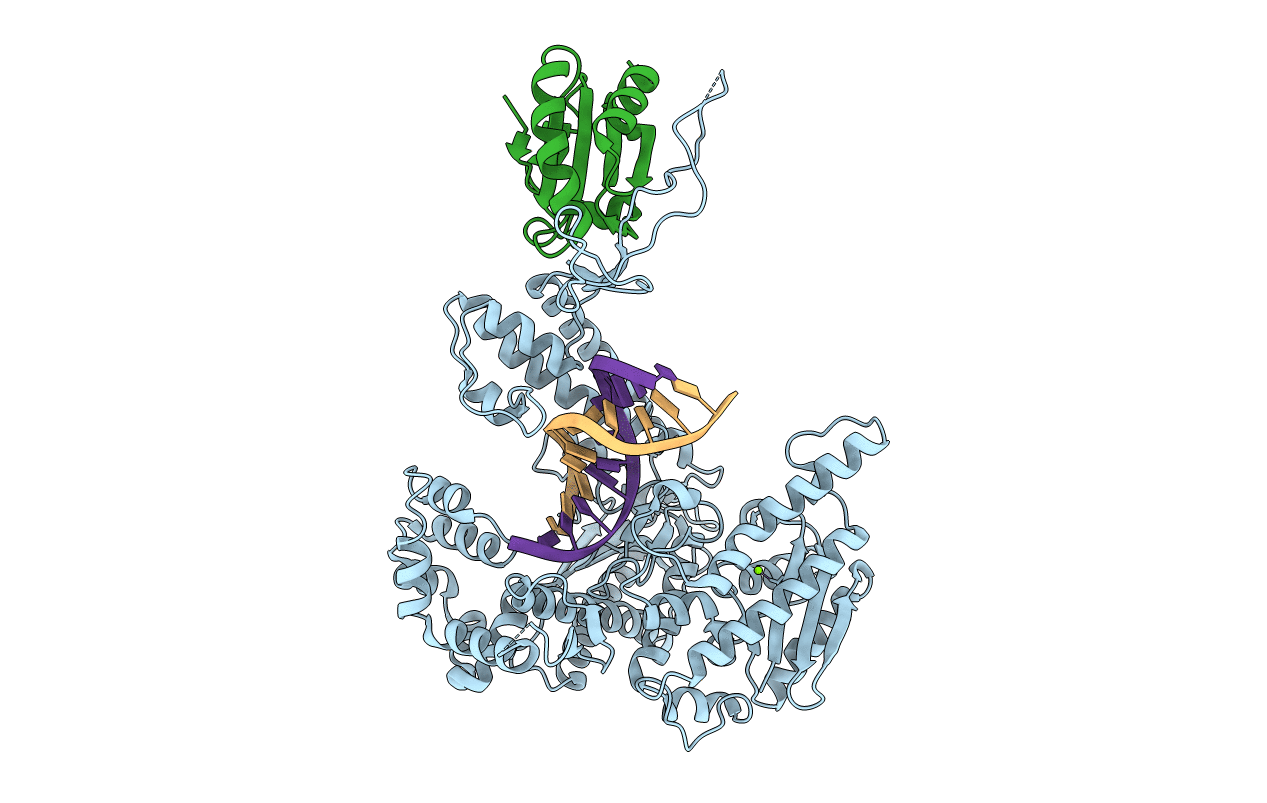
1X9W image
Deposition Date 2004-08-24
Release Date 2004-10-26
Last Version Date 2024-02-14
Entry Detail
PDB ID:
1X9W
Title:
T7 DNA polymerase in complex with a primer/template DNA containing a disordered N-2 aminofluorene on the template, crystallized with dideoxy-ATP as the incoming nucleotide.
Biological Source:
Source Organism:
Host Organism:
Method Details:
Experimental Method:
Resolution:
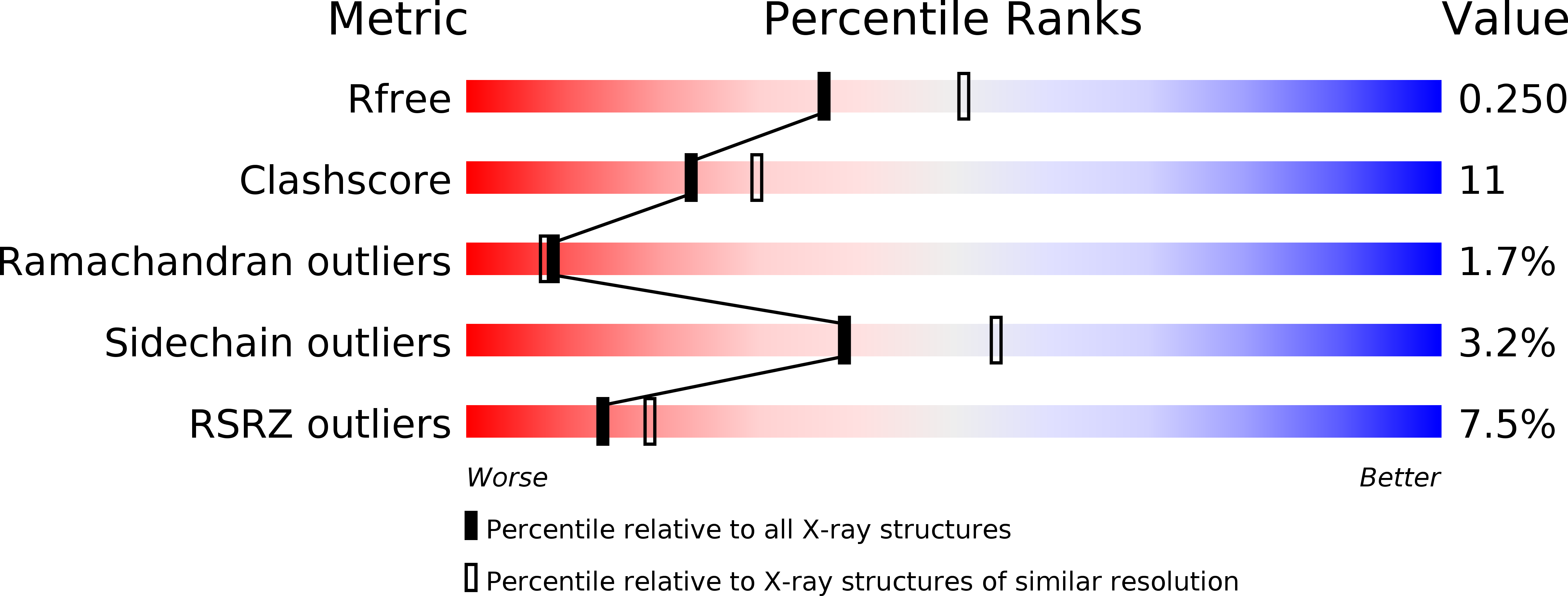
2.30 Å
R-Value Free:
0.25
R-Value Work:
0.23
R-Value Observed:
0.23
Space Group:
P 21 21 2
Macromolecular Entities
Structures with similar UniProt ID
Protein Blast
Polymer Type:polypeptide(L)
Molecule:DNA polymerase
Gene (Uniprot):5
Mutagens:deletion of 118-123
Chain IDs:C (auth: A)
Chain Length:698
Number of Molecules:1
Biological Source:Enterobacteria phage T7
Structures with similar UniProt ID
Protein Blast
Polymer Type:polypeptide(L)
Molecule:Thioredoxin 1
Gene (Uniprot):trxA
Chain IDs:D (auth: B)
Chain Length:108
Number of Molecules:1
Biological Source:Escherichia coli
Modified Residue
Compound ID Chain ID Parent Comp ID Details 2D Image
2DT A DT 3'-DEOXYTHYMIDINE-5'-MONOPHOSPHATE
Ligand Molecules
Primary Citation
Crystal structures of 2-acetylaminofluorene and 2-aminofluorene in complex with T7 DNA polymerase reveal mechanisms of mutagenesis.
Proc.Natl.Acad.Sci.Usa 101 16186 16191 (2004)
PMID: 15528277 DOI: 10.1073/pnas.0406516101

Abstact

The carcinogen 2-acetylaminofluorene forms two major DNA adducts: N-(2'-deoxyguanosin-8-yl)-2-acetylaminofluorene (dG-AAF) and its deacetylated derivative, N-(2'-deoxyguanosin-8-yl)-2-aminofluorene (dG-AF). Although the dG-AAF and dG-AF adducts are distinguished only by the presence or absence of an acetyl group, they have profoundly different effects on DNA replication. dG-AAF poses a strong block to DNA synthesis and primarily induces frameshift mutations in bacteria, resulting in the loss of one or two nucleotides during replication past the lesion. dG-AF is less toxic and more easily bypassed by DNA polymerases, albeit with an increased frequency of misincorporation opposite the lesion, primarily resulting in G --> T transversions. We present three crystal structures of bacteriophage T7 DNA polymerase replication complexes, one with dG-AAF in the templating position and two others with dG-AF in the templating position. Our crystallographic data suggest why a dG-AAF adduct blocks replication more strongly than does a dG-AF adduct and provide a possible explanation for frameshift mutagenesis during replication bypass of a dG-AAF adduct. The dG-AAF nucleoside adopts a syn conformation that facilitates the intercalation of its fluorene ring into a hydrophobic pocket on the surface of the fingers subdomain and locks the fingers in an open, inactive conformation. In contrast, the dG-AF base at the templating position is not well defined by the electron density, consistent with weak binding to the polymerase and a possible interchange of this adduct between the syn and anti conformations.

Legend

Protein

Chemical

Disease

Primary Citation of related structures
Feedback Form
Name
Email
Institute
Feedback