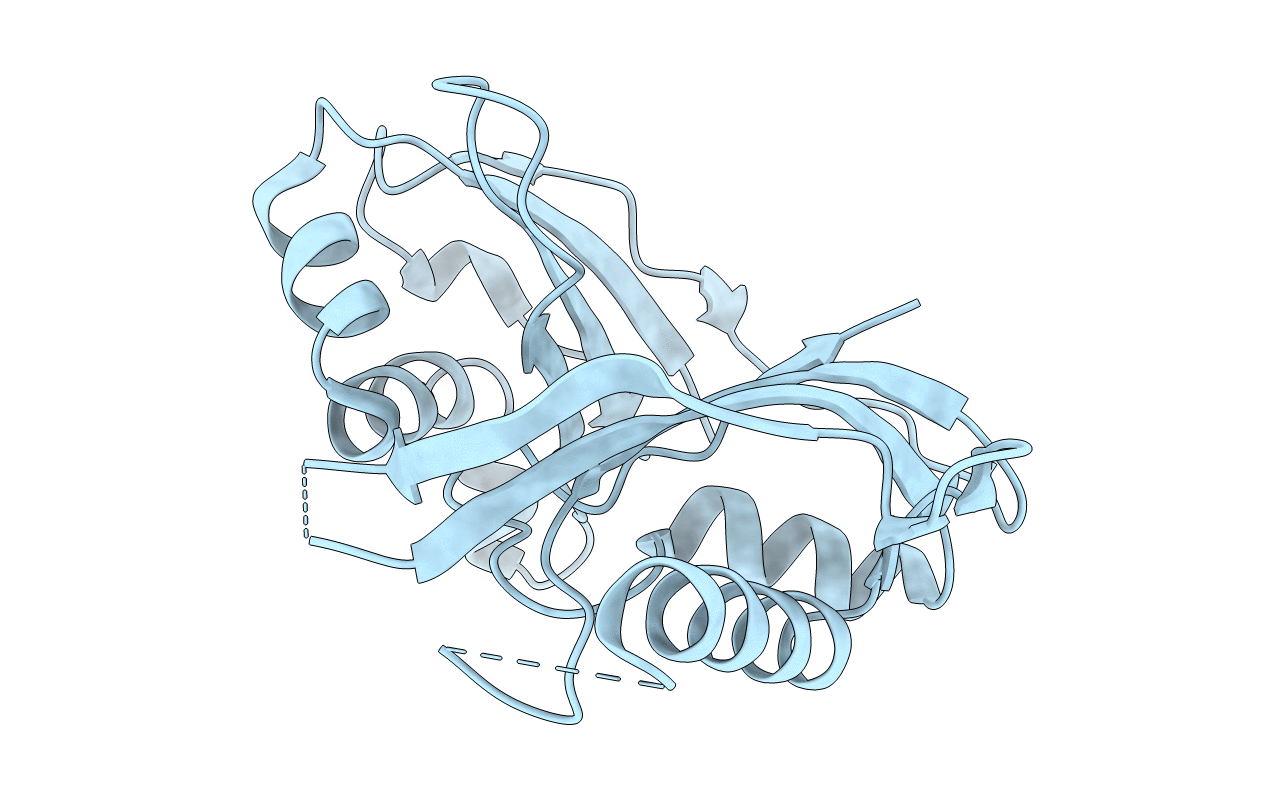
1WJ9 image
Deposition Date 2004-05-29
Release Date 2004-11-29
Last Version Date 2024-03-13
Entry Detail
PDB ID:
1WJ9
Title:
Crystal structure of a CRISPR-associated protein from thermus thermophilus
Biological Source:
Source Organism:
Method Details:
Experimental Method:
Resolution:
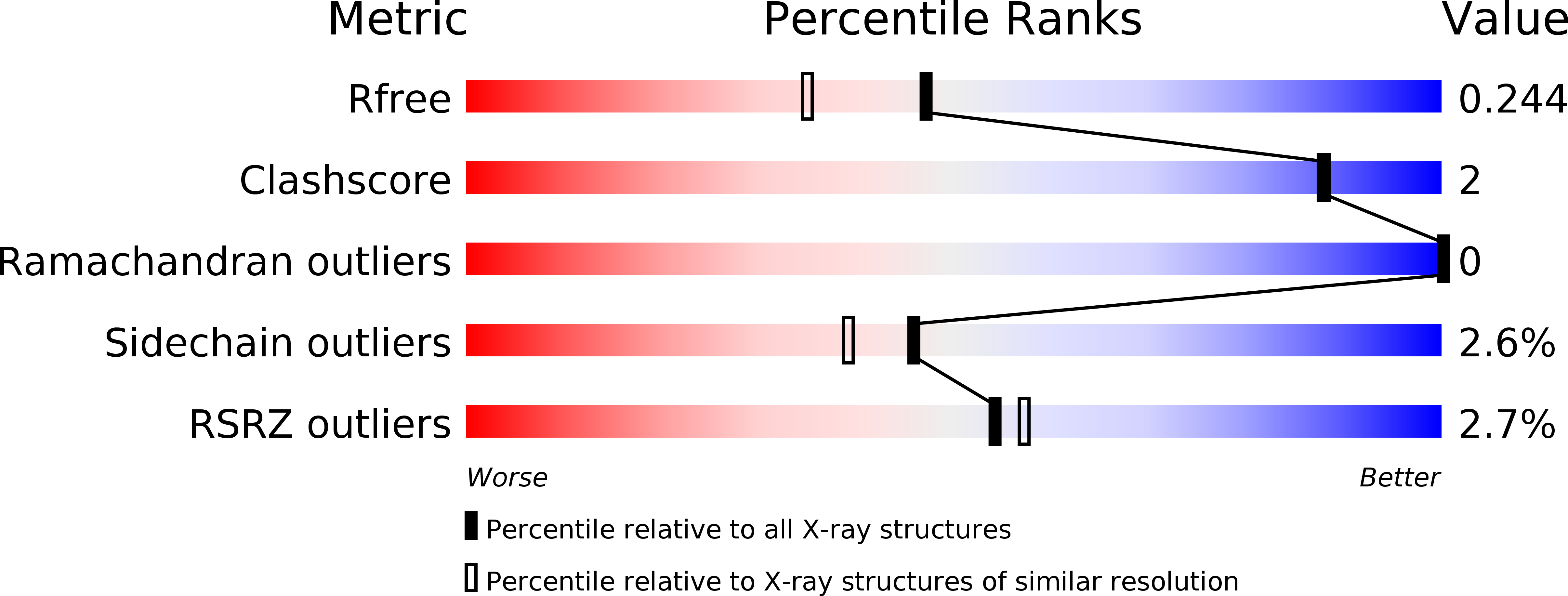
1.90 Å
R-Value Free:
0.24
R-Value Work:
0.22
R-Value Observed:
0.22
Space Group:
P 65
Macromolecular Entities
Structures with similar UniProt ID
Protein Blast
Polymer Type:polypeptide(L)
Molecule:CRISPR-associated protein
Gene (Uniprot):cse3
Chain IDs:A
Chain Length:211
Number of Molecules:1
Biological Source:Thermus thermophilus
Primary Citation
Crystal structure of hypothetical protein TTHB192 from Thermus thermophilus HB8 reveals a new protein family with an RNA recognition motif-like domain
Protein Sci. 15 1494 1499 (2006)
PMID: 16672237 DOI: 10.1110/ps.062131106

Abstact

We have determined the crystal structure of hypothetical protein TTHB192 from Thermus thermophilus HB8 at 1.9 A resolution. This protein is a member of the Escherichia coli ygcH sequence family, which contains approximately 15 sequence homologs of bacterial origin. These homologs have a high isoelectric point. The crystal structure reveals that TTHB192 consists of two independently folded domains, and that each domain exhibits a ferredoxin-like fold with a four-stranded antiparallel beta-sheet packed on one side by alpha-helices. These two tandem domains face each other to generate a beta-sheet platform. TTHB192 displays overall structural similarity to Sex-lethal protein and poly(A)-binding protein fragments. These proteins have RNA binding activity which is supported by a beta-sheet platform formed by two tandem repeats of an RNA recognition motif domain with signature sequence motifs on the beta-sheet surface. Although TTHB192 does not have the same signature sequence motif as the RNA recognition motif domain, the presence of an evolutionarily conserved basic patch on the beta-sheet platform could be functionally relevant for nucleic acid-binding. This report shows that TTHB192 and its sequence homologs adopt an RNA recognition motif-like domain and provides the first testable functional hypothesis for this protein family.

Legend

Protein

Chemical

Disease

Primary Citation of related structures
Feedback Form
Name
Email
Institute
Feedback