1WAQ image
Deposition Date 2004-10-27
Release Date 2005-05-19
Last Version Date 2024-10-16
Entry Detail
PDB ID:
1WAQ
Keywords:
Title:
Crystal structure of human Growth and Differentiation Factor 5 (GDF-5)
Biological Source:
Source Organism:
HOMO SAPIENS (Taxon ID: 9606)
Host Organism:
Method Details:
Experimental Method:
Resolution:
2.28 Å
R-Value Free:
0.23
R-Value Work:
0.22
R-Value Observed:
0.22
Space Group:
P 32 2 1
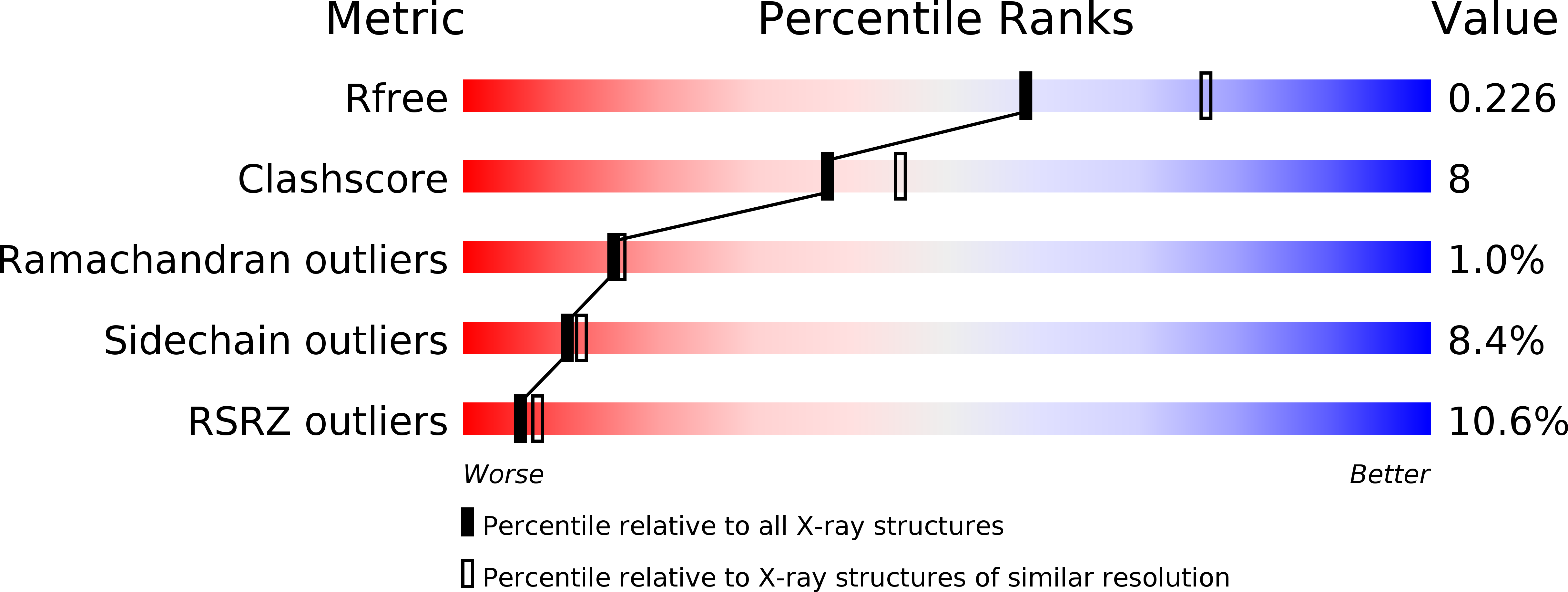
Macromolecular Entities
Structures with similar UniProt ID
Protein Blast
Polymer Type:polypeptide(L)
Molecule:GROWTH/DIFFERENTIATION FACTOR 5
Gene (Uniprot):GDF5
Chain IDs:A
Chain Length:117
Number of Molecules:1
Biological Source:HOMO SAPIENS
Ligand Molecules
Primary Citation
A Single Residue of Gdf-5 Defines Binding Specificity to Bmp Receptor Ib.
J.Mol.Biol. 349 933 ? (2005)
PMID: 15890363 DOI: 10.1016/J.JMB.2005.04.015

Abstact

Growth and differentiation factor 5 (GDF-5), a member of the TGF-beta superfamily, is involved in many developmental processes, like chondrogenesis and joint formation. Mutations in GDF-5 lead to diseases, e.g. chondrodysplasias like Hunter-Thompson, Grebe and DuPan syndromes and brachydactyly. Similar to other TGF-beta superfamily members, GDF-5 transmits signals through binding to two different types of membrane-bound serine-/threonine-kinase receptors termed type I and type II. In contrast to the large number of ligands, only seven type I and five type II receptors have been identified to date, implicating a limited promiscuity in ligand-receptor interaction. However, in contrast to other members of the TGF-beta superfamily, GDF-5 shows a pronounced specificity in type I receptor interaction in cross-link experiments binding only to BMP receptor IB (BMPR-IB). In mice, deletion of either GDF-5 or BMPR-IB results in a similar phenotype, indicating that GDF-5 signaling is highly dependent on BMPR-IB. Here, we demonstrate by biosensor analysis that GDF-5 also binds to BMP receptor IA (BMPR-IA) but with approximately 12-fold lower affinity. Structural and mutational analyses revealed a single residue of GDF-5, Arg57 located in the pre-helix loop, being solely responsible for the high binding specificity to BMPR-IB. In contrast to wild-type GDF-5, variant GDF-5R57A interacts with BMPR-IA and BMPR-IB with a comparable high binding affinity. These results provide important insights into how receptor-binding specificity is generated at the molecular level and might be useful for the generation of receptor subtype specific activators or inhibitors.

Legend

Protein

Chemical

Disease

Primary Citation of related structures
Feedback Form
Name
Email
Institute
Feedback