1W9G image
Deposition Date 2004-10-13
Release Date 2005-04-06
Last Version Date 2024-05-08
Entry Detail
PDB ID:
1W9G
Title:
Structure of ERH (Enhencer of Rudimentary Gene)
Biological Source:
Source Organism:
HOMO SAPIENS (Taxon ID: 9606)
Host Organism:
Method Details:
Experimental Method:
Resolution:
2.00 Å
R-Value Free:
0.25
R-Value Work:
0.19
R-Value Observed:
0.19
Space Group:
P 1 21 1
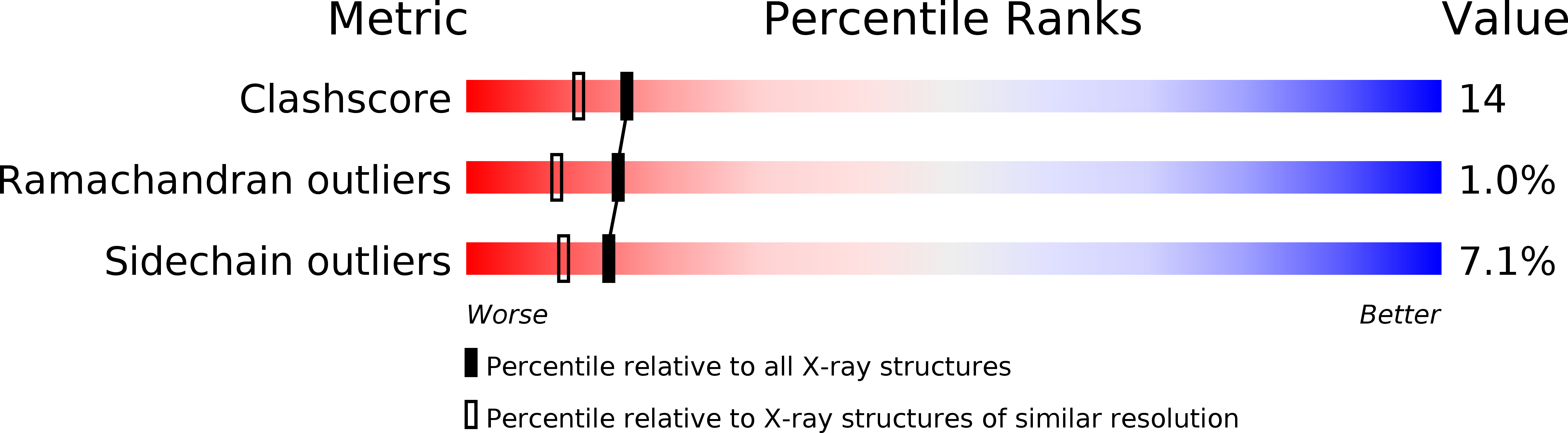
Macromolecular Entities
Structures with similar UniProt ID
Protein Blast
Polymer Type:polypeptide(L)
Molecule:ENHANCER OF RUDIMENTARY HOMOLOG
Gene (Uniprot):ERH
Chain IDs:A, B
Chain Length:104
Number of Molecules:2
Biological Source:HOMO SAPIENS
Primary Citation
Structure of the Conserved Transcriptional Repressor Enhancer of Rudimentary Homolog
Biochemistry 44 5017 ? (2005)
PMID: 15794639 DOI: 10.1021/BI047785W

Abstact

erh (enhancer of rudimentary homolog) is a ubiquitously expressed transcriptional coregulator that is highly conserved among eukaryotes, from humans to plants to protozoa. Functions attributed to erh include enhancement of pyrimidine biosynthesis, a role in cell cycle regulation, and repression of the tissue-specific transcription factor HNF-1 (hepatocyte nuclear factor-1) through binding the coactivator DCoH (dimerization cofactor of HNF1). No homologous sequences, other than erh orthologs, have been identified, and little is known about the interactions of erh. To further elucidate its function, we determined the crystal structure of erh to 2.0 A resolution. The erh structure is a novel alpha + beta fold consisting of a four-stranded antiparallel beta sheet with three amphipathic alpha helices situated on one face of the beta sheet. Structure-based searches of the Protein Data Bank, like sequence-based searches, failed to identify paralogs. We present structural and biochemical evidence that erh functions as a dimer. The dimer interface consists of a beta sandwich composed of the beta sheet from each monomer. Many of the surface residues of erh are conserved, including patches of hydrophobic and charged residues, suggesting protein-protein interaction interfaces. Two putative CKII phosphorylation sites are highly ordered in the structure and are predicted to disrupt dimerization and protein-protein interactions.

Legend

Protein

Chemical

Disease

Primary Citation of related structures
Feedback Form
Name
Email
Institute
Feedback