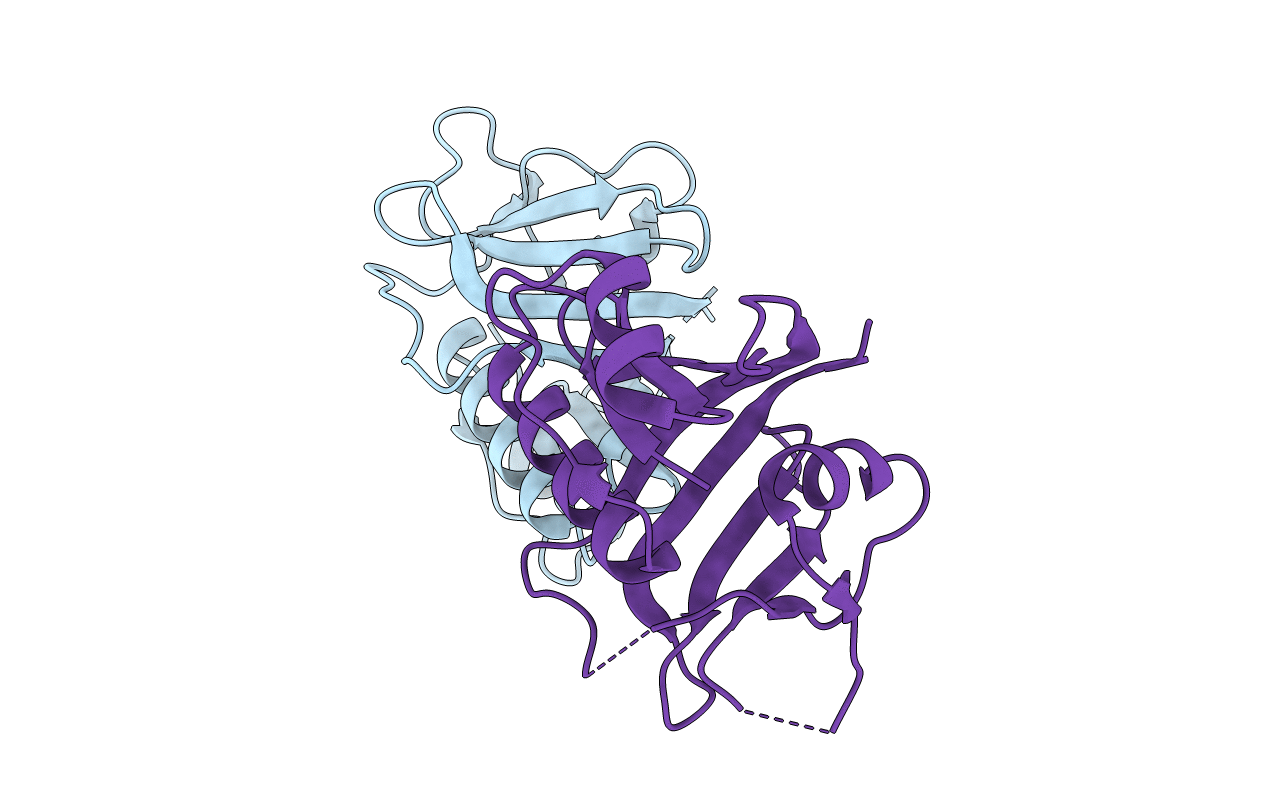
1W94 image
Deposition Date 2004-10-06
Release Date 2005-01-19
Last Version Date 2024-10-16
Entry Detail
PDB ID:
1W94
Title:
Crystal Structure of Mil (Mth680), an archaeal Imp4-like protein
Biological Source:
Source Organism:
Host Organism:
Method Details:
Experimental Method:
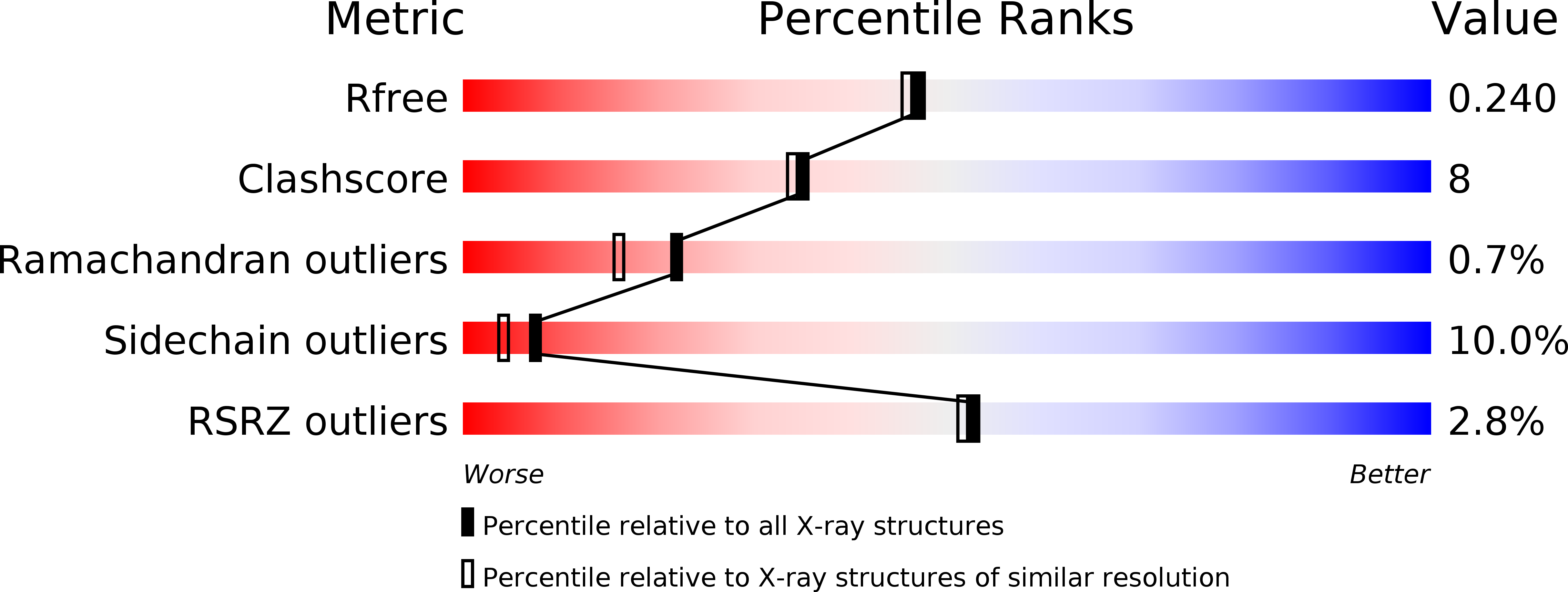
Resolution:
2.00 Å
R-Value Free:
0.24
R-Value Work:
0.19
R-Value Observed:
0.20
Space Group:
P 1 21 1
Macromolecular Entities
Structures with similar UniProt ID
Protein Blast
Polymer Type:polypeptide(L)
Molecule:PROBABLE BRIX-DOMAIN RIBOSOMAL BIOGENESIS PROTEIN
Gene (Uniprot):MTH_680
Chain IDs:A, B
Chain Length:156
Number of Molecules:2
Biological Source:METHANOTHERMOBACTER THERMAUTOTROPHICUS
Modified Residue
Compound ID Chain ID Parent Comp ID Details 2D Image
MSE A MET SELENOMETHIONINE
Primary Citation
Crystal Structure of Mil (Mth680): Internal Duplication and Similarity between the Imp4/Brix Domain and the Anticodon-Binding Domain of Class Iia Aminoacyl-tRNA Synthetases
Embo Rep. 6 140 ? (2005)
PMID: 15654320 DOI: 10.1038/SJ.EMBOR.7400328

Abstact

Proteins of the Imp4/Brix superfamily are involved in ribosomal RNA processing, an essential function in all cells. We report the first structure of an Imp4/Brix superfamily protein, the Mil (for Methanothermobacter thermautotrophicus Imp4-like) protein (gene product Mth680), from the archaeon M. thermautotrophicus. The amino- and carboxy-terminal halves of Mil show significant structural similarity to one another, suggesting an origin by means of an ancestral duplication. Both halves show the same fold as the anticodon-binding domain of class IIa aminoacyl-tRNA synthetases, with greater conservation seen in the N-terminal half. This structural similarity, together with the charge distribution in Mil, suggests that Imp4/Brix superfamily proteins could bind single-stranded segments of RNA along a concave surface formed by the N-terminal half of their beta-sheet and a central alpha-helix. The crystal structure of Mil is incompatible with the presence, in the Imp4/Brix domain, of a helix-turn-helix motif that was proposed to comprise the RNA-binding moiety of the Imp4/Brix proteins.

Legend

Protein

Chemical

Disease

Primary Citation of related structures
Feedback Form
Name
Email
Institute
Feedback