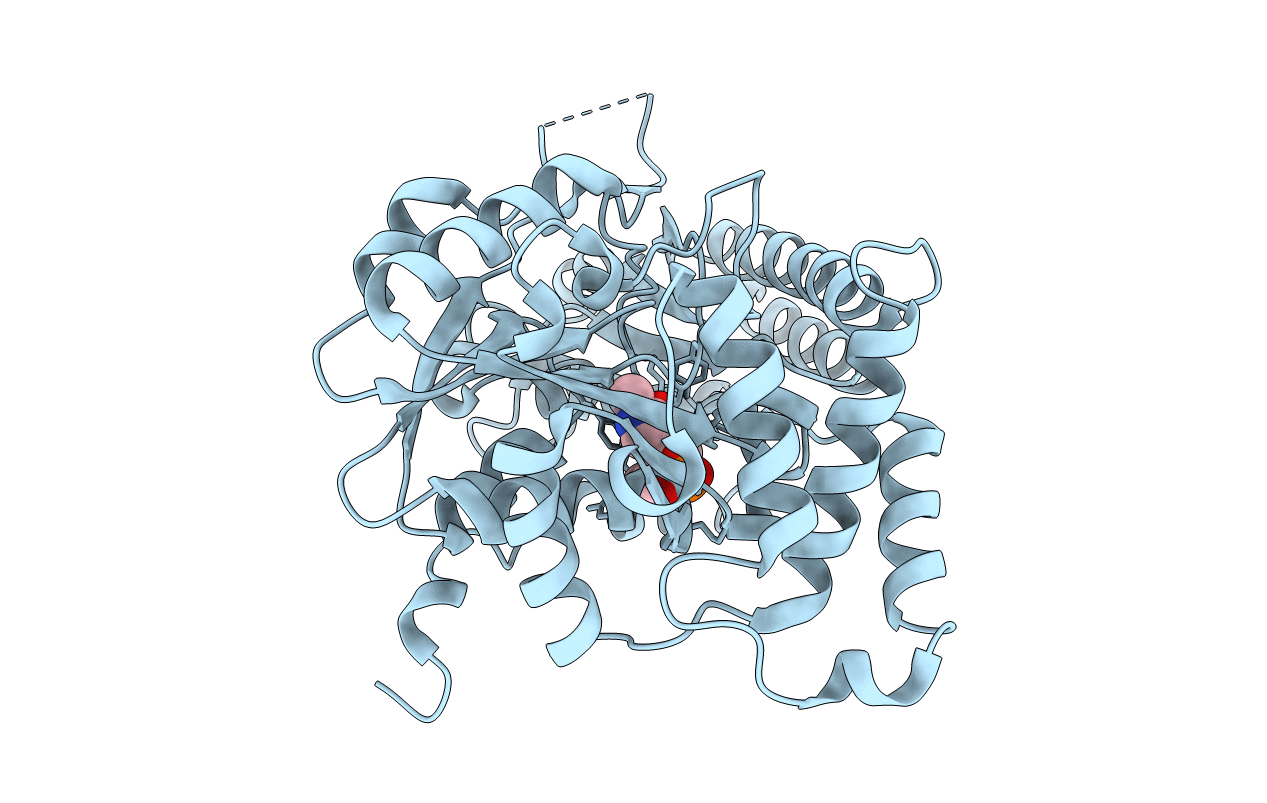
1W7M image
Deposition Date 2004-09-06
Release Date 2004-09-08
Last Version Date 2023-12-13
Entry Detail
PDB ID:
1W7M
Keywords:
Title:
Crystal structure of human kynurenine aminotransferase I in complex with L-Phe
Biological Source:
Source Organism:
HOMO SAPIENS (Taxon ID: 9606)
Host Organism:
Method Details:
Experimental Method:
Resolution:
2.70 Å
R-Value Free:
0.23
R-Value Work:
0.17
R-Value Observed:
0.17
Space Group:
P 32 2 1

Macromolecular Entities
Structures with similar UniProt ID
Protein Blast
Polymer Type:polypeptide(L)
Molecule:KYNURENINE--OXOGLUTARATE TRANSAMINASE I
Gene (Uniprot):KYAT1
Chain IDs:A
Chain Length:422
Number of Molecules:1
Biological Source:HOMO SAPIENS
Primary Citation
Crystal Structure of Human Kynurenine Aminotransferase I
J.Biol.Chem. 279 50214 ? (2004)
PMID: 15364907 DOI: 10.1074/JBC.M409291200

Abstact

The kynurenine pathway has long been regarded as a valuable target for the treatment of several neurological disorders accompanied by unbalanced levels of metabolites along the catabolic cascade, kynurenic acid among them. The irreversible transamination of kynurenine is the sole source of kynurenic acid, and it is catalyzed by different isoforms of the 5'-pyridoxal phosphate-dependent kynurenine aminotransferase (KAT). The KAT-I isozyme has also been reported to possess beta-lyase activity toward several sulfur- and selenium-conjugated molecules, leading to the proposal of a role of the enzyme in carcinogenesis associated with environmental pollutants. We solved the structure of human KAT-I in its 5'-pyridoxal phosphate and pyridoxamine phosphate forms and in complex with the competing substrate l-Phe. The enzyme active site revealed a striking crown of aromatic residues decorating the ligand binding pocket, which we propose as a major molecular determinant for substrate recognition. Ligand-induced conformational changes affecting Tyr(101) and the Trp(18)-bearing alpha-helix H1 appear to play a central role in catalysis. Our data reveal a key structural role of Glu(27), providing a molecular basis for the reported loss of enzymatic activity displayed by the equivalent Glu --> Gly mutation in KAT-I of spontaneously hypertensive rats.

Legend

Protein

Chemical

Disease

Primary Citation of related structures
Feedback Form
Name
Email
Institute
Feedback