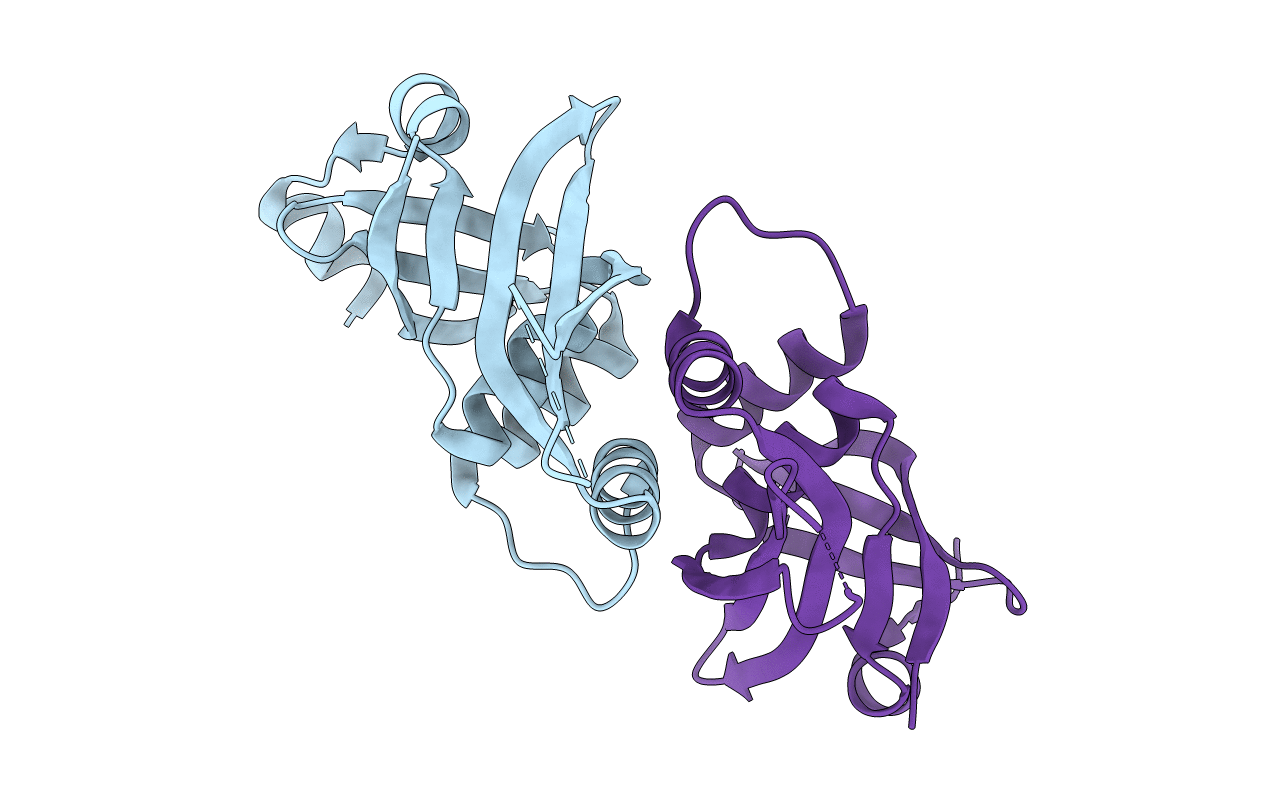
1VJL image
Deposition Date 2004-03-10
Release Date 2004-03-16
Last Version Date 2025-10-22
Entry Detail
PDB ID:
1VJL
Title:
Crystal structure of a duf151 family protein (tm0160) from thermotoga maritima at 1.90 A resolution
Biological Source:
Source Organism:
Host Organism:
Method Details:
Experimental Method:
Resolution:
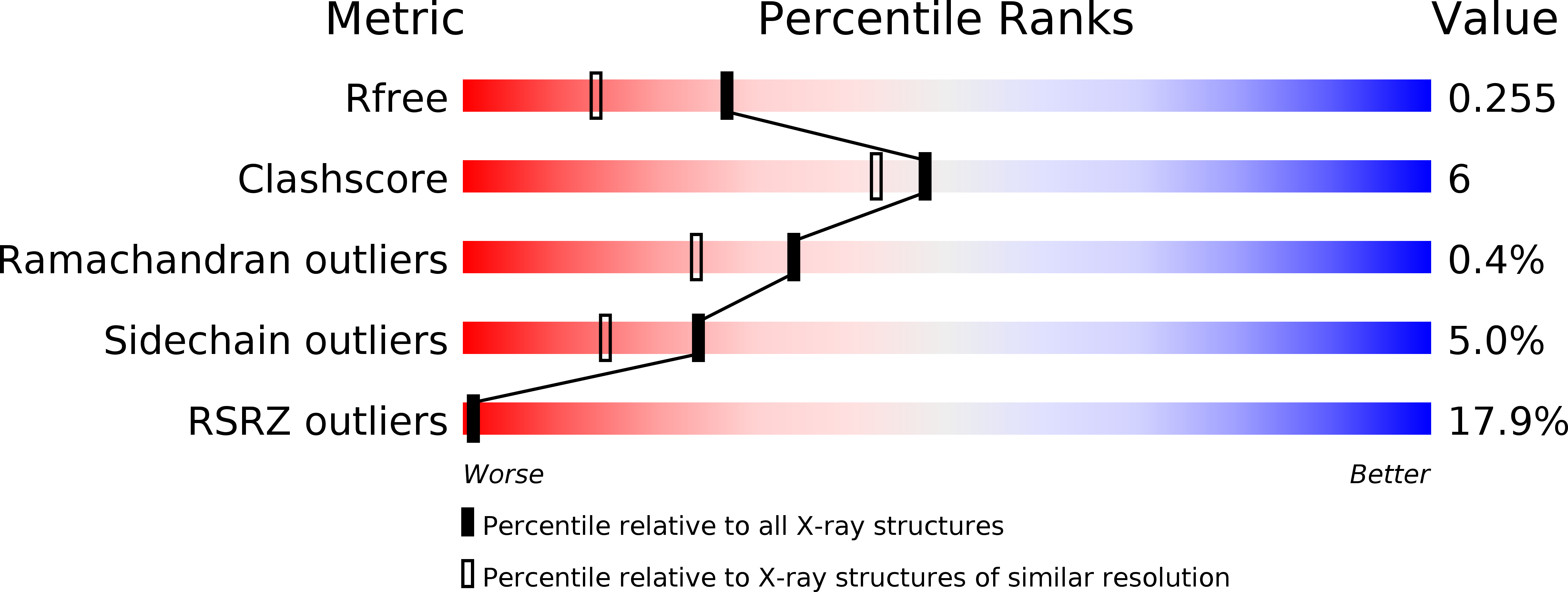
1.90 Å
R-Value Free:
0.25
R-Value Work:
0.19
R-Value Observed:
0.20
Space Group:
P 1 21 1
Macromolecular Entities
Structures with similar UniProt ID
Protein Blast
Polymer Type:polypeptide(L)
Molecule:hypothetical protein TM0160
Gene (Uniprot):TM_0160
Chain IDs:A, B
Chain Length:164
Number of Molecules:2
Biological Source:Thermotoga maritima
Modified Residue
Compound ID Chain ID Parent Comp ID Details 2D Image
MSE A MET SELENOMETHIONINE
Primary Citation
On the use of DXMS to produce more crystallizable proteins: structures of the T. maritima proteins TM0160 and TM1171.
Protein Sci. 13 3187 3199 (2004)
PMID: 15557262 DOI: 10.1110/ps.04939904

Abstact

The structure of two Thermotoga maritima proteins, a conserved hypothetical protein (TM0160) and a transcriptional regulator (TM1171), have now been determined at 1.9 A and 2.3 A resolution, respectively, as part of a large-scale structural genomics project. Our first efforts to crystallize full-length versions of these targets were unsuccessful. However, analysis of the recombinant purified proteins using the technique of enhanced amide hydrogen/deuterium exchange mass spectroscopy (DXMS) revealed substantial regions of rapid amide deuterium hydrogen exchange, consistent with flexible regions of the structures. Based on these exchange data, truncations were designed to selectively remove the disordered C-terminal regions, and the resulting daughter proteins showed greatly enhanced crystallizability. Comparative DXMS analysis of full-length protein versus truncated forms demonstrated complete and exact preservation of the exchange rate profiles in the retained sequence, indicative of conservation of the native folded structure. This study presents the first structures produced with the aid of the DXMS method for salvaging intractable crystallization targets. The structure of TM0160 represents a new fold and highlights the use of this approach where any prior structural knowledge is absent. The structure of TM1171 represents an example where the lack of a substrate/cofactor may impair crystallization. The details of both structures are presented and discussed.

Legend

Protein

Chemical

Disease

Primary Citation of related structures
Feedback Form
Name
Email
Institute
Feedback