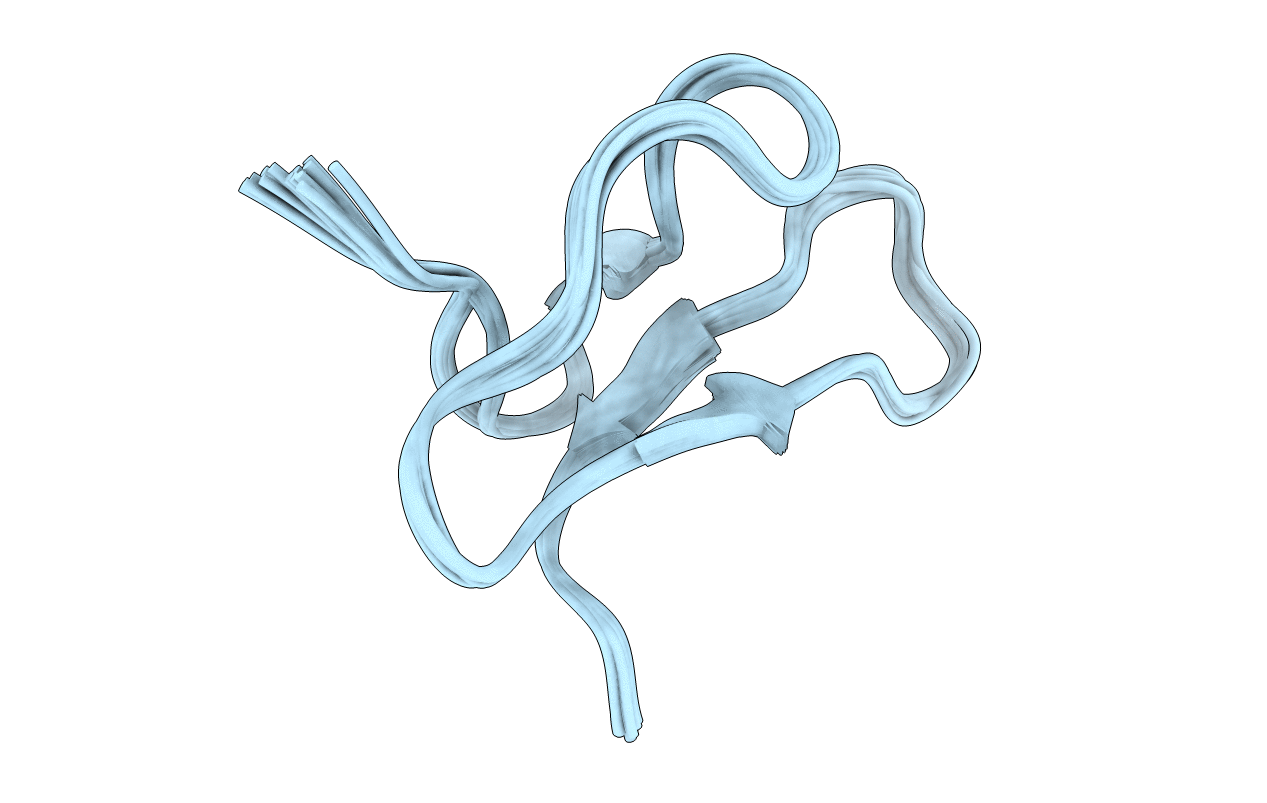
Delta-paluIT1 and delta-paluIT2 are toxins purified from the venom of the spider Paracoelotes luctuosus. Similar in sequence to mu-agatoxins from Agelenopsis aperta, their pharmacological target is the voltage-gated insect sodium channel, of which they alter the inactivation properties in a way similar to alpha-scorpion toxins, but they bind on site 4 in a way similar to beta-scorpion toxins. We determined the solution structure of the two toxins by use of two-dimensional nuclear magnetic resonance (NMR) techniques followed by distance geometry and molecular dynamics. The structures of delta-paluIT1 and delta-paluIT2 belong to the inhibitory cystine knot structural family, i.e. a compact disulfide-bonded core from which four loops emerge. Delta-paluIT1 and delta-paluIT2 contain respectively two- and three-stranded anti-parallel beta-sheets as unique secondary structure. We compare the structure and the electrostatic anisotropy of those peptides to other sodium and calcium channel toxins, analyze the topological juxtaposition of key functional residues, and conclude that the recognition of insect voltage-gated sodium channels by these toxins involves the beta-sheet, in addition to loops I and IV. Besides the position of culprit residues on the molecular surface, difference in dipolar moment orientation is another determinant of receptor binding and biological activity differences. We also demonstrate by electrophysiological experiments on the cloned insect voltage-gated sodium channel, para, heterologuously co-expressed with the tipE subunit in Xenopus laevis oocytes, that delta-paluIT1 and delta-paluIT2 procure an increase of Na+ current. delta-PaluIT1-OH seems to have less effect when the same concentrations are used.
Legend
Protein
Chemical
Disease