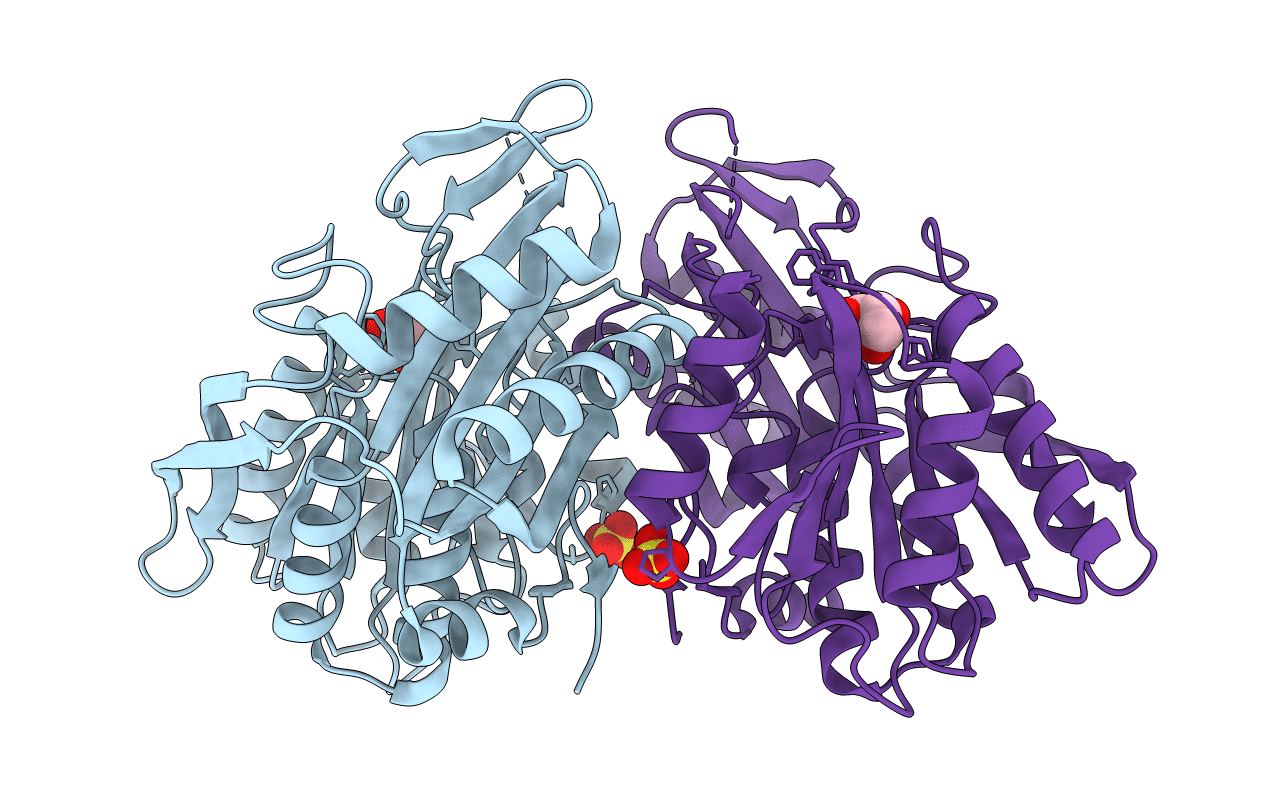
1UOE image
Deposition Date 2003-09-16
Release Date 2004-09-24
Last Version Date 2024-11-06
Entry Detail
PDB ID:
1UOE
Keywords:
Title:
Crystal structure of the dihydroxyacetone kinase from E. coli in complex with glyceraldehyde
Biological Source:
Source Organism:
ESCHERICHIA COLI (Taxon ID: 562)
Host Organism:
Method Details:
Experimental Method:
Resolution:
2.00 Å
R-Value Free:
0.23
R-Value Work:
0.17
R-Value Observed:
0.17
Space Group:
P 21 21 2

Macromolecular Entities
Structures with similar UniProt ID
Protein Blast
Polymer Type:polypeptide(L)
Molecule:DIHYDROXYACETONE KINASE
Gene (Uniprot):dhaK
Chain IDs:A, B
Chain Length:366
Number of Molecules:2
Biological Source:ESCHERICHIA COLI
Primary Citation
Phosphoenolpyruvate- and ATP-Dependent Dihydroxyacetone Kinases: Covalent Substrate-Binding and Kinetic Mechanism
Biochemistry 43 13037 ? (2004)
PMID: 15476397 DOI: 10.1021/BI048575M

Abstact

Dihydroxyacetone (Dha) kinases are a sequence-conserved family of enzymes, which utilize two different phosphoryldonors, ATP in animals, plants, and some bacteria, and a multiphosphoprotein of the phosphoenolpyruvate carbohydrate phosphotransferase system (PTS) in most bacteria. Here, we compare the PTS-dependent kinase of Escherichia coli and the ATP-dependent kinase of Citrobacter freundii. They display 30% sequence identity. The binding constants of the E. coli kinase for eleven short-chain carbonyl compounds were determined by acetone precipitation of the enzyme-substrate complexes. They are 3.4 microM for Dha, 780 microM for Dha-phosphate (DhaP), 50 microM for D,L-glyceraldehyde (GA), and 90 microM for D,L-glyceraldehyde-3-phosphate. The k(cat) for Dha of the PTS-dependent kinase is 290 min(-1), and that of the ATP-dependent kinase is 1050 min(-1). The Km for Dha of both kinases is <6 microM. The X-ray structures of the enzyme-GA and the enzyme-DhaP complex show that substrates as well as products are bound in hemiaminal linkage to an active-site histidine. Quantum-mechanical calculations offer no indication for activation of the reacting hydroxyl group by the formation of the hemiaminal. However, the formation of the hemiaminal bond allows selection for short-chain carbonyl compounds and discrimination against structurally similar polyols. The Dha kinase remains fully active in the presence of 2 M glycerol, and phosphorylates trace impurities of carbonyl compounds present in glycerol.

Legend

Protein

Chemical

Disease

Primary Citation of related structures
Feedback Form
Name
Email
Institute
Feedback