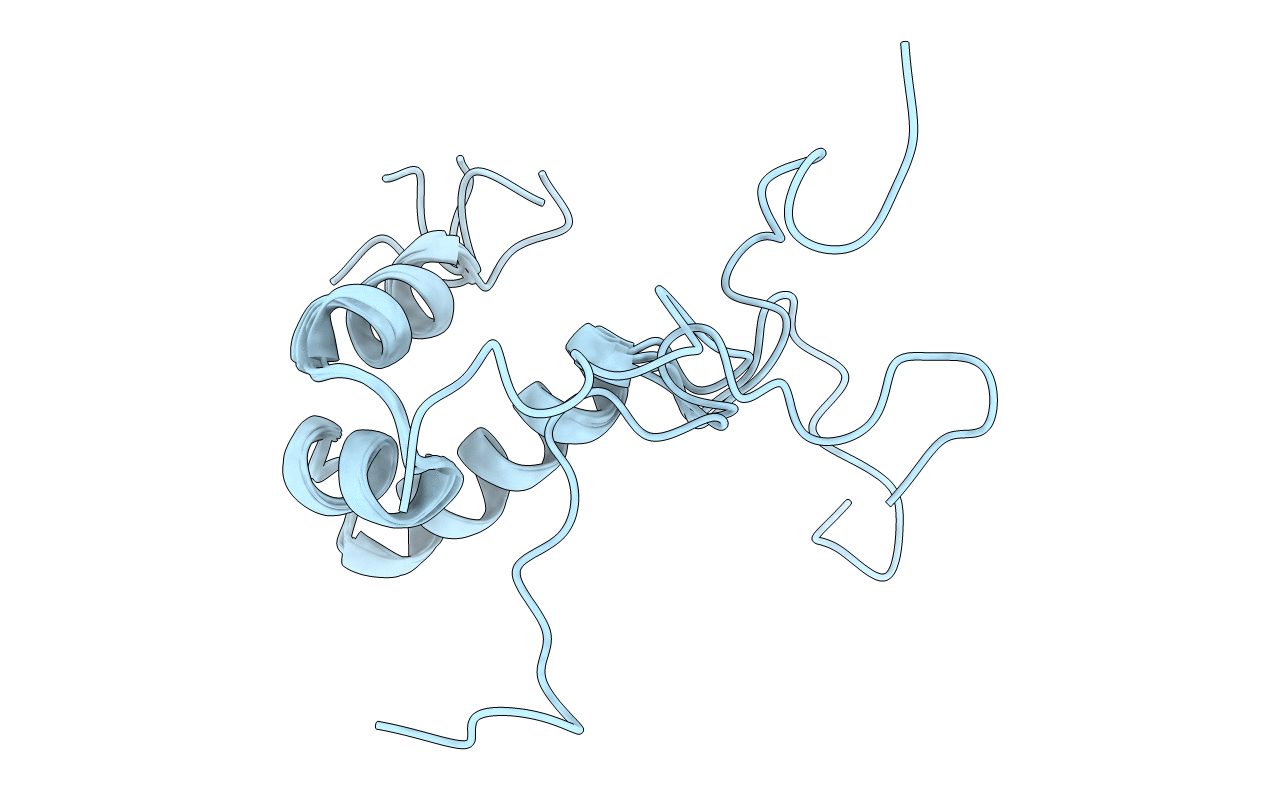
1UMQ image
Deposition Date 2003-08-28
Release Date 2003-11-21
Last Version Date 2024-06-19
Entry Detail
PDB ID:
1UMQ
Title:
solution structure and DNA binding of the effector domain from the global regulator PrrA(RegA) from R. sphaeroides: Insights into DNA binding specificity
Biological Source:
Source Organism:
Host Organism:
Method Details:
Experimental Method:
Conformers Calculated:
20
Conformers Submitted:
5
Selection Criteria:
RANDOM

Macromolecular Entities
Structures with similar UniProt ID
Protein Blast
Polymer Type:polypeptide(L)
Molecule:PHOTOSYNTHETIC APPARATUS REGULATORY PROTEIN
Gene (Uniprot):regA
Chain IDs:A
Chain Length:81
Number of Molecules:1
Biological Source:RHODOBACTER SPHAEROIDES
Ligand Molecules
Primary Citation
Solution Structure and DNA Binding of the Effector Domain from the Global Regulator Prra(Rega) from Rhodobacter Sphaeroides: Insights Into DNA Binding Specificity
Nucleic Acids Res. 31 6778 ? (2003)
PMID: 14627811 DOI: 10.1093/NAR/GKG891

Abstact

Prr/RegA response regulator is a global transcription regulator in purple bacteria Rhodobacter sphaeroides and Rhodobacter capsulatus, and is essential in controlling the metabolic changes between aerobic and anaerobic environments. We report here the structure determination by NMR of the C-terminal effector domain of PrrA, PrrAC. It forms a three-helix bundle containing a helix-turn-helix DNA binding motif. The fold is similar to FIS protein, but the domain architecture is different from previously characterised response regulator effector domains, as it is shorter than any characterised so far. Alignment of Prr/RegA DNA targets permitted a refinement of the consensus sequence, which contains two GCGNC inverted repeats with variable half-site spacings. NMR titrations of PrrAC with specific and non-specific DNA show which surfaces are involved in DNA binding and suggest residues important for binding specificity. A model of the PrrAC/DNA complex was constructed in which two PrrAC molecules are bound to DNA in a symmetrical manner.

Legend

Protein

Chemical

Disease

Primary Citation of related structures
Feedback Form
Name
Email
Institute
Feedback