1TUW image
Deposition Date 2004-06-25
Release Date 2004-08-03
Last Version Date 2024-02-14
Entry Detail
PDB ID:
1TUW
Title:
Structural and Functional Analysis of Tetracenomycin F2 Cyclase from Streptomyces glaucescens: A Type-II Polyketide Cyclase
Biological Source:
Source Organism:
Method Details:
Experimental Method:
Resolution:
1.90 Å
R-Value Free:
0.24
R-Value Work:
0.19
R-Value Observed:
0.19
Space Group:
P 65 2 2
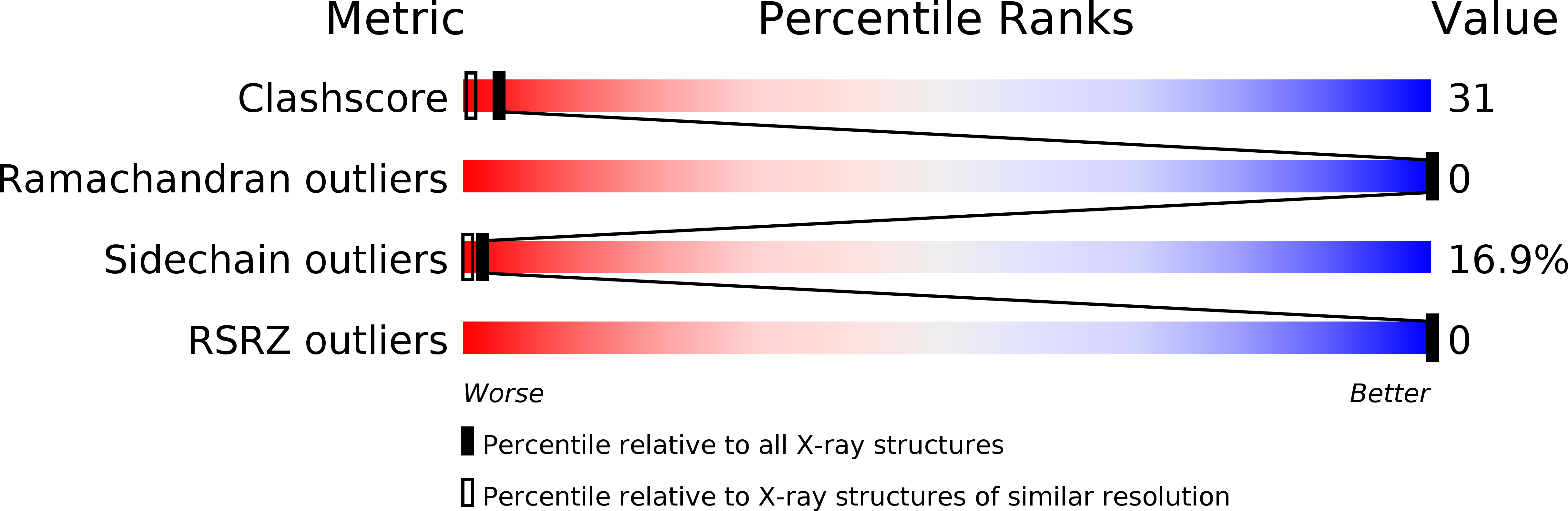
Macromolecular Entities
Structures with similar UniProt ID
Protein Blast
Polymer Type:polypeptide(L)
Molecule:Tetracenomycin polyketide synthesis protein tcmI
Gene (Uniprot):tcmI
Chain IDs:A
Chain Length:109
Number of Molecules:1
Biological Source:Streptomyces glaucescens
Ligand Molecules
Primary Citation
Structural and functional analysis of tetracenomycin F2 cyclase from Streptomyces glaucescens. A type II polyketide cyclase.
J.Biol.Chem. 279 37956 37963 (2004)
PMID: 15231835 DOI: 10.1074/jbc.M406144200

Abstact

Tetracenomycin F2 cyclase (tcmI gene product), catalyzes an aromatic rearrangement in the biosynthetic pathway for tetracenomycin C in Streptomyces glaucescens. The x-ray structure of this small enzyme has been determined to 1.9-A resolution together with an analysis of site-directed mutants of potential catalytic residues. The protein exhibits a dimeric betaalphabeta ferredoxin-like fold that utilizes strand swapping between subunits in its assembly. The fold is dominated by four strands of antiparallel sheet and a layer of alpha-helices, which creates a cavity that is proposed to be the active site. This type of secondary structural arrangement has been previously observed in polyketide monooxygenases and suggests an evolutionary relationship between enzymes that catalyze adjacent steps in these biosynthetic pathways. Mutational analysis of all of the obvious catalytic bases within the active site suggests that the enzyme functions to steer the chemical outcome of the cyclization rather than providing a specific catalytic group. Together, the structure and functional analysis provide insight into the structural framework necessary to perform the complex rearrangements catalyzed by this class of polyketide cyclases.

Legend

Protein

Chemical

Disease

Primary Citation of related structures
Feedback Form
Name
Email
Institute
Feedback