1TTE image
Deposition Date 2004-06-22
Release Date 2004-08-31
Last Version Date 2024-05-22
Entry Detail
PDB ID:
1TTE
Keywords:
Title:
The Structure of a Class II ubiquitin-conjugating enzyme, Ubc1.
Biological Source:
Source Organism:
Host Organism:
Method Details:
Experimental Method:
Conformers Calculated:
100
Conformers Submitted:
21
Selection Criteria:
structures with the lowest energy
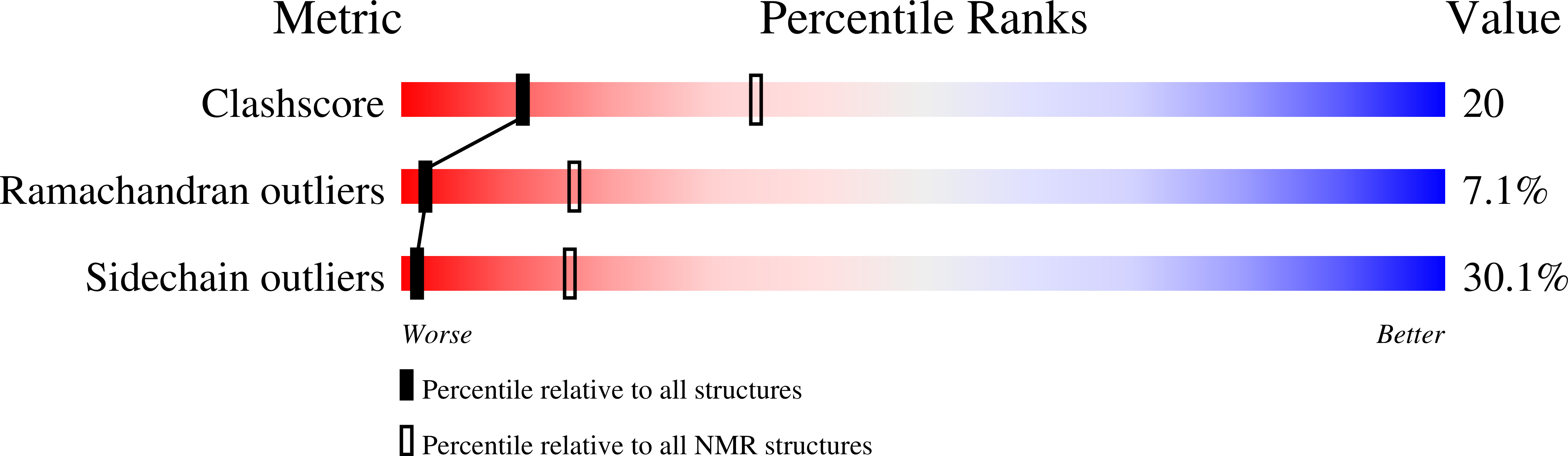
Macromolecular Entities
Structures with similar UniProt ID
Protein Blast
Polymer Type:polypeptide(L)
Molecule:Ubiquitin-conjugating enzyme E2-24 kDa
Gene (Uniprot):UBC1
Mutagens:K93R
Chain IDs:A
Chain Length:215
Number of Molecules:1
Biological Source:Saccharomyces cerevisiae
Ligand Molecules
Primary Citation
Solution structure of the flexible class II ubiquitin-conjugating enzyme Ubc1 provides insights for polyubiquitin chain assembly.
J.Biol.Chem. 279 47139 47147 (2004)
PMID: 15328341 DOI: 10.1074/jbc.M409576200

Abstact

E2 conjugating enzymes form a thiol ester intermediate with ubiquitin, which is subsequently transferred to a substrate protein targeted for degradation. While all E2 proteins comprise a catalytic domain where the thiol ester is formed, several E2s (class II) have C-terminal extensions proposed to control substrate recognition, dimerization, or polyubiquitin chain formation. Here we present the novel solution structure of the class II E2 conjugating enzyme Ubc1 from Saccharomyces cerevisiae. The structure shows the N-terminal catalytic domain adopts an alpha/beta fold typical of other E2 proteins. This domain is physically separated from its C-terminal domain by a 22-residue flexible tether. The C-terminal domain adopts a three-helix bundle that we have identified as an ubiquitin-associated domain (UBA). NMR chemical shift perturbation experiments show this UBA domain interacts in a regioselective manner with ubiquitin. This two-domain structure of Ubc1 was used to identify other UBA-containing class II E2 proteins, including human E2-25K, that likely have a similar architecture and to determine the role of the UBA domain in facilitating polyubiquitin chain formation.

Legend

Protein

Chemical

Disease

Primary Citation of related structures
Feedback Form
Name
Email
Institute
Feedback